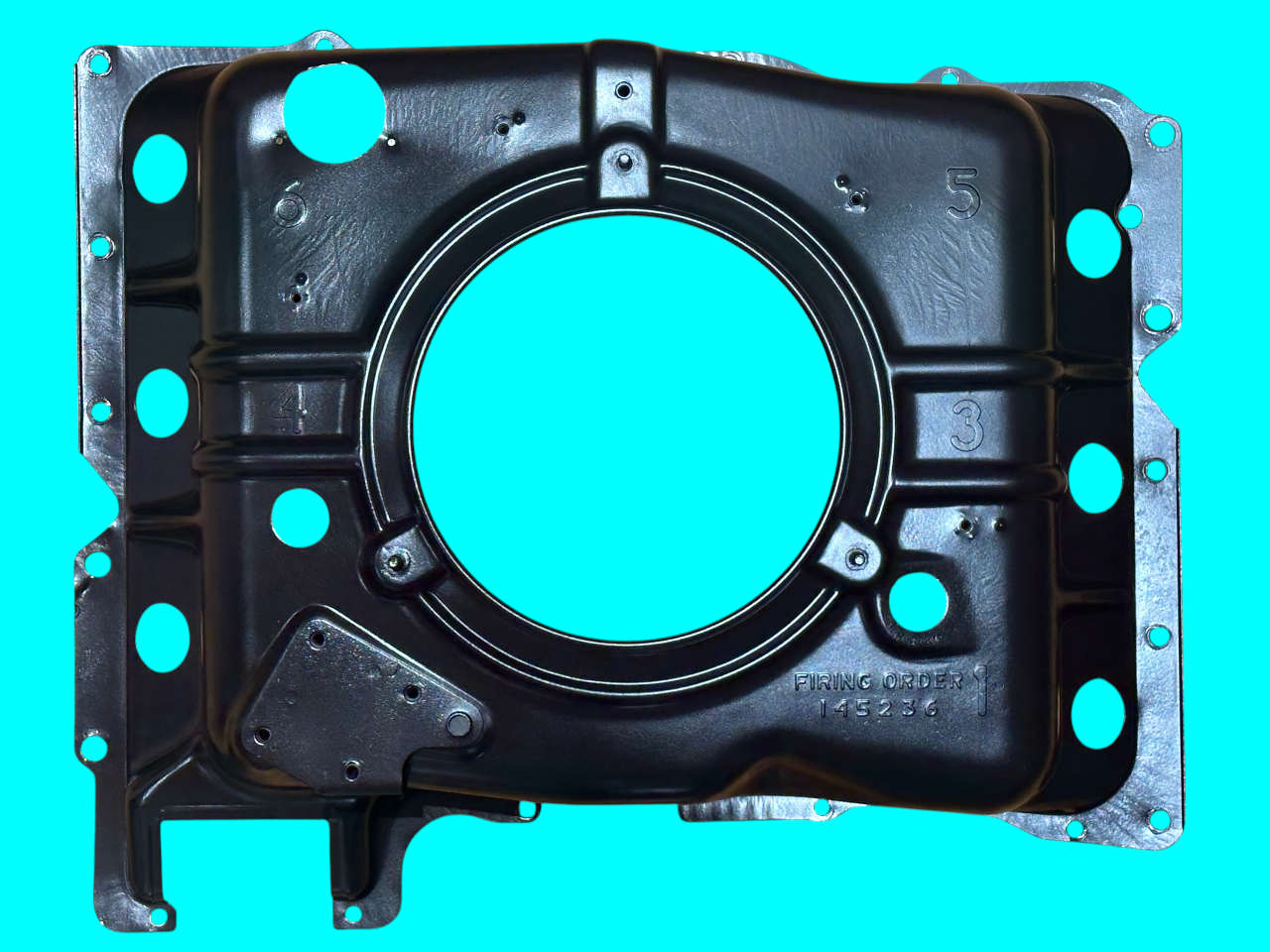
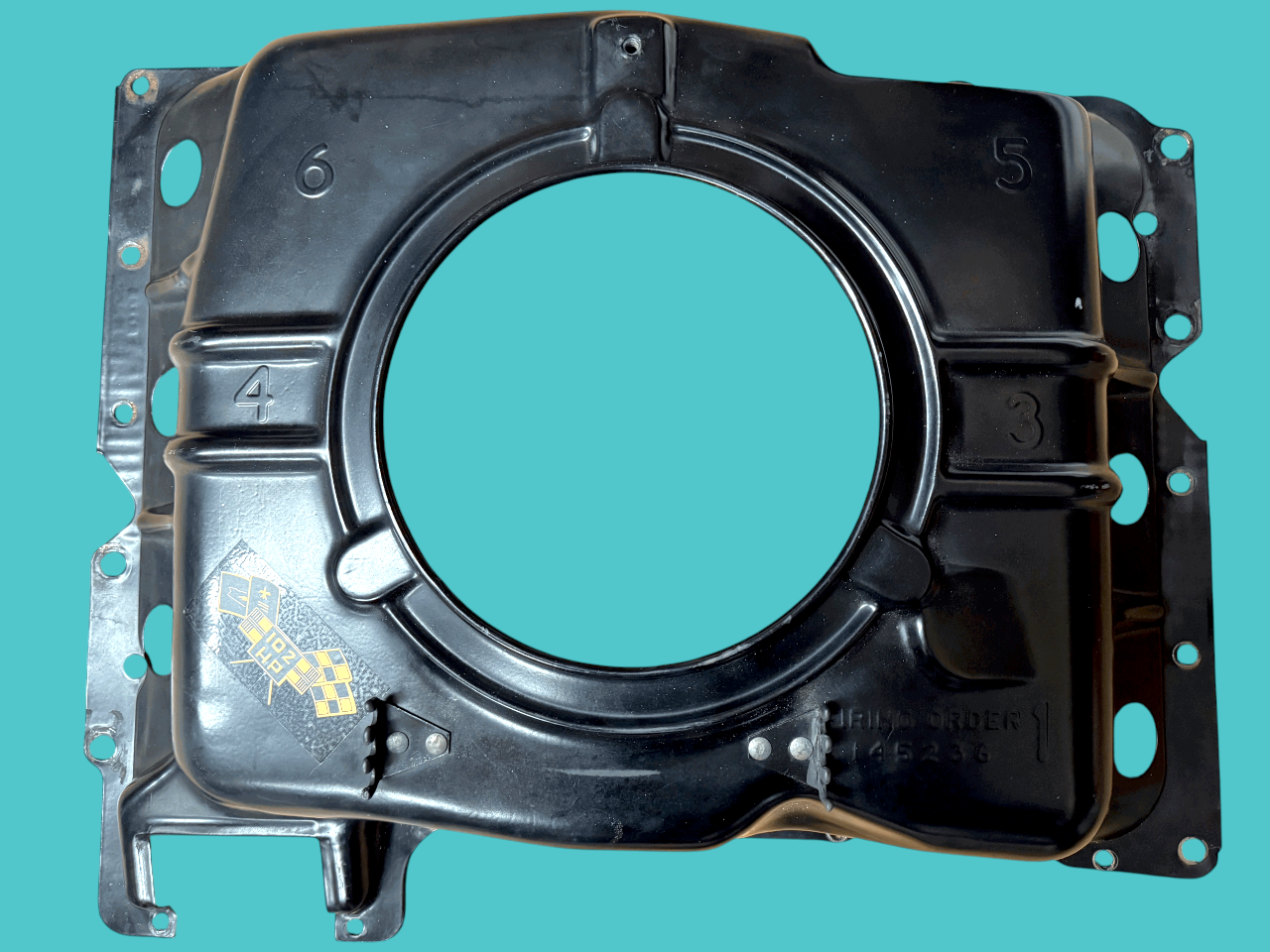
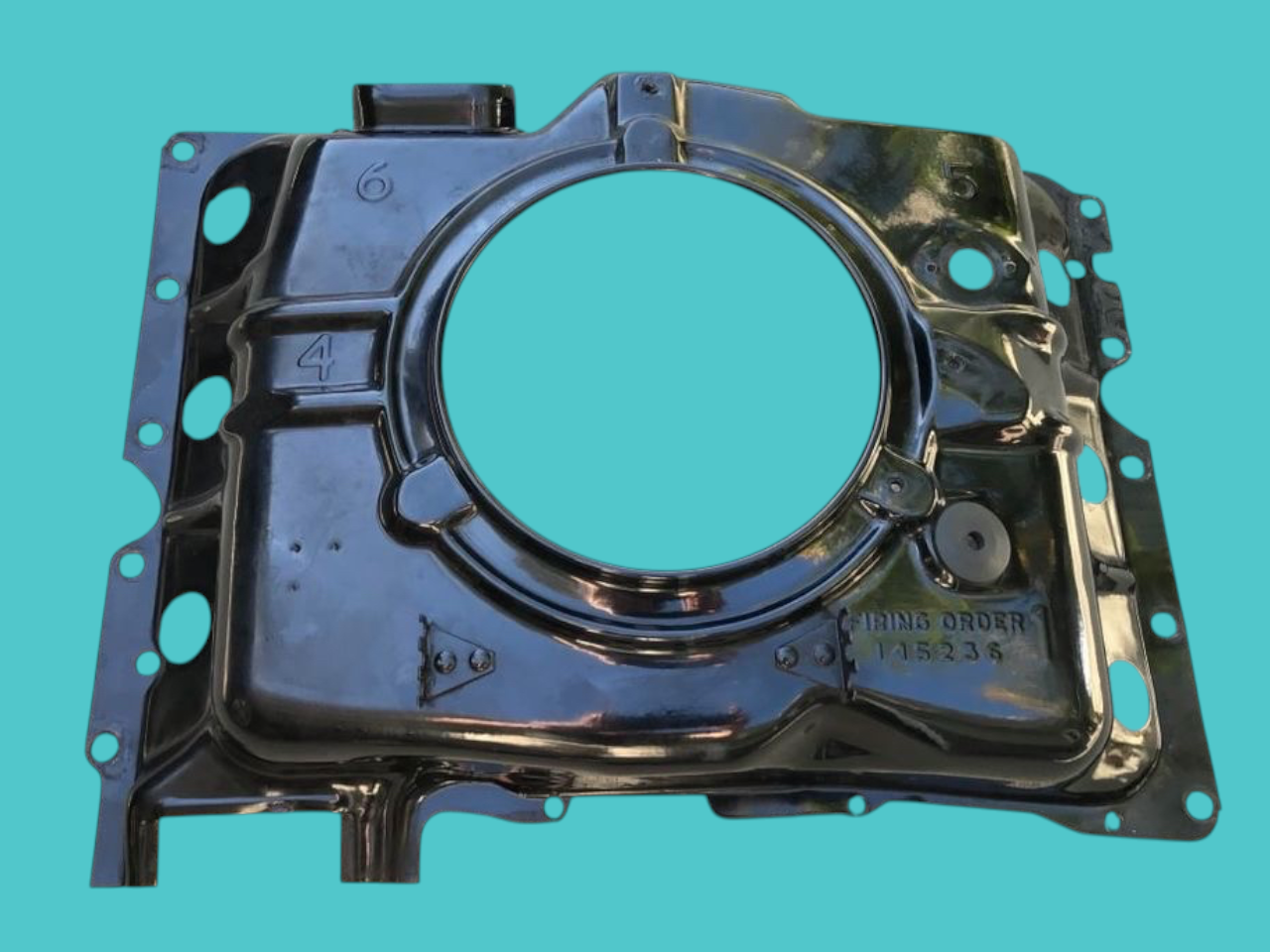
This article will discuss and document the various changes made to the top engine shroud (aka “blower shroud” or “turkey roaster”) over the 10 year production run of the Corvair flat-six engine. Some of these changes were regular production changes, others temporary fixes. This article will be updated from time to time as new information is received.
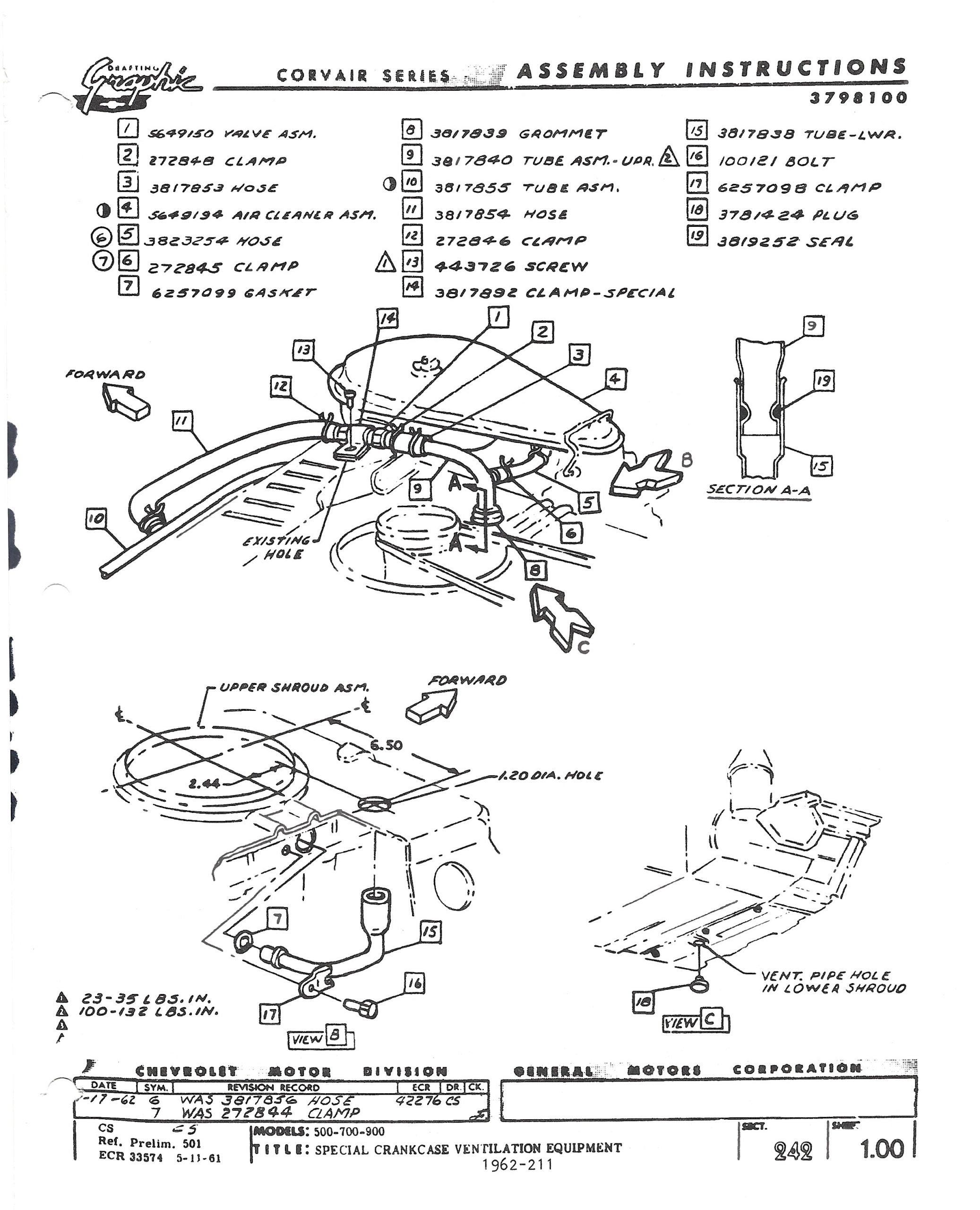
Our criteria for including a shroud on this list is that it must be a shroud for which we have clear documentation that it was created by GM, either as part of the original design or by way of a directed order to modify an existing shroud. Examples of directed orders include Assembly Manual instructions for an RPO modification at the assembly line (e.g. 1961 and 1962 Special Crankcase Ventilation) or Technical Service Bulletin (TSB) instructions to the dealerships (e.g. 1960 heat tube). We will include such documentation in this article where available. Photos of existing shrouds will provide additional documentation.
The basic shroud shapes were produced at metal stamping plants, weld nuts added, painted and then shipped to Vehicle Assembly Plants. Final assembly on the line included attaching spark plug wire guides, heater ducts, and A.I.R. brackets for that particular application.
1960
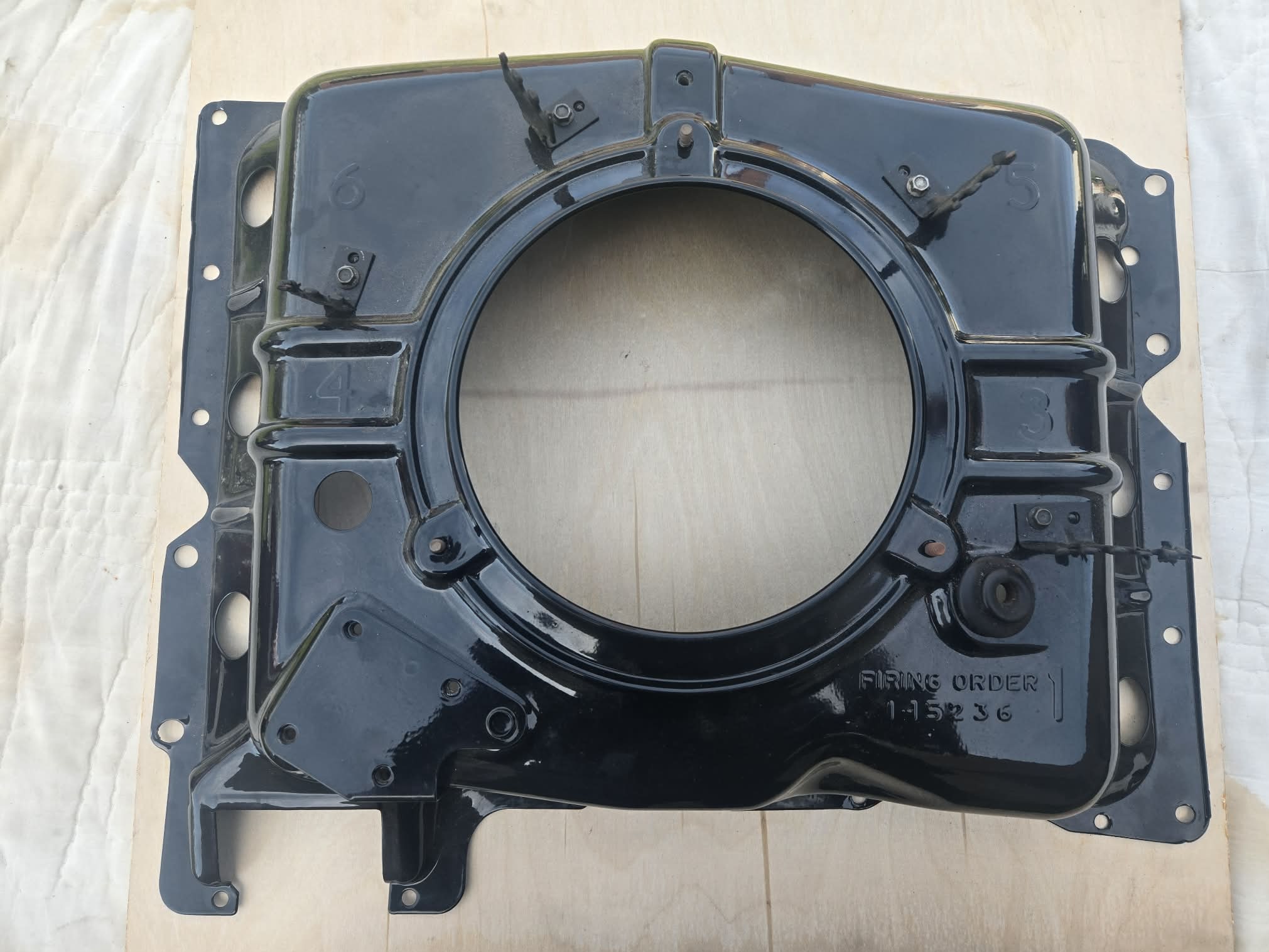
The following features are unique for the 1960 top shroud and were discontinued in 1961:
- Absence of holes for a heater hose on the front surfaces of the shroud.
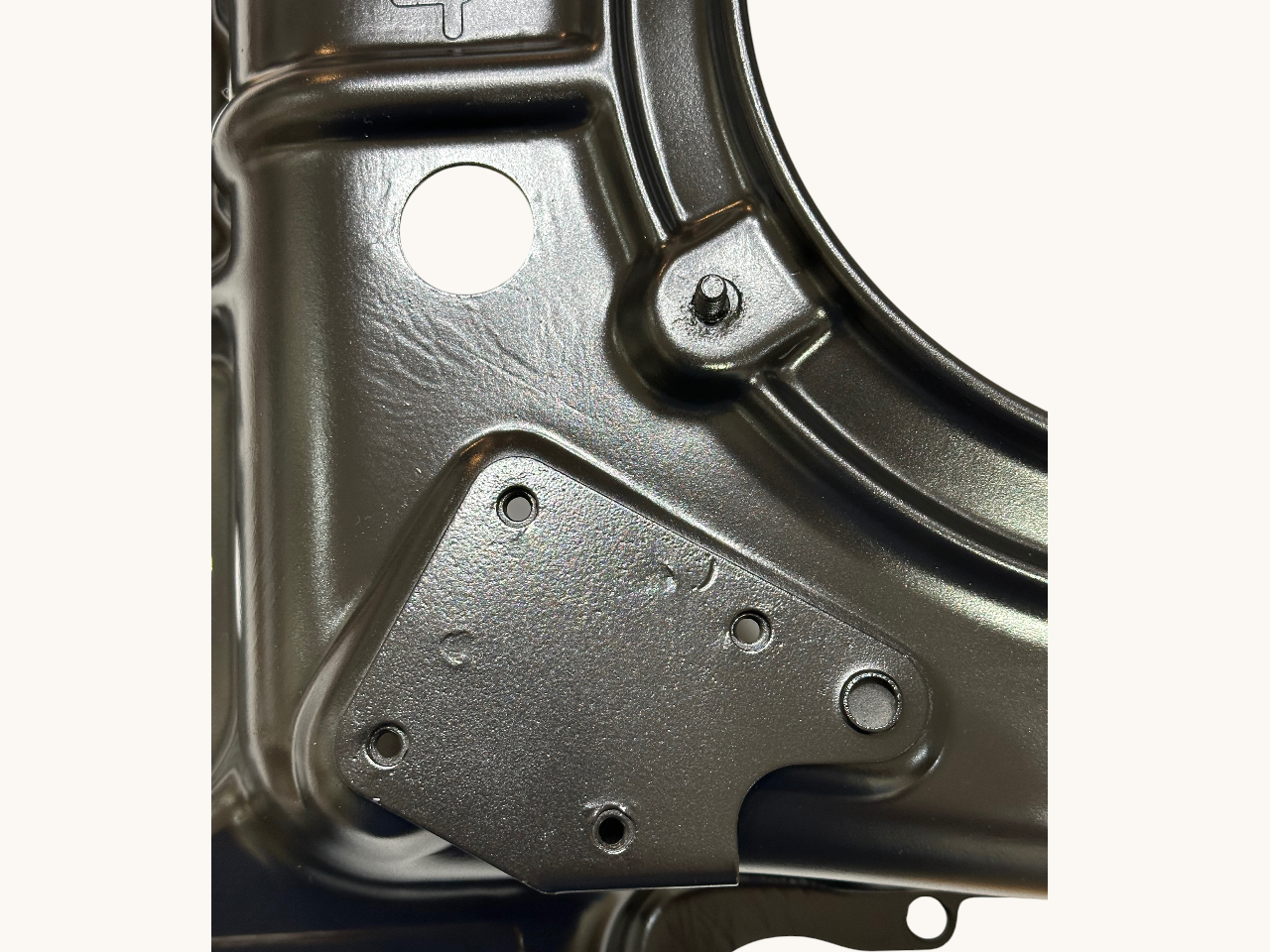
- Mounting pad, rear-left corner, for the blower air valve assembly.
- Hole for blower valve thermostat rod, just in front of mounting pad.
- Spark plug wires for left bank routed around the front of the blower opening.
- Four spark plug wire guides, secured by hex head machine screws.
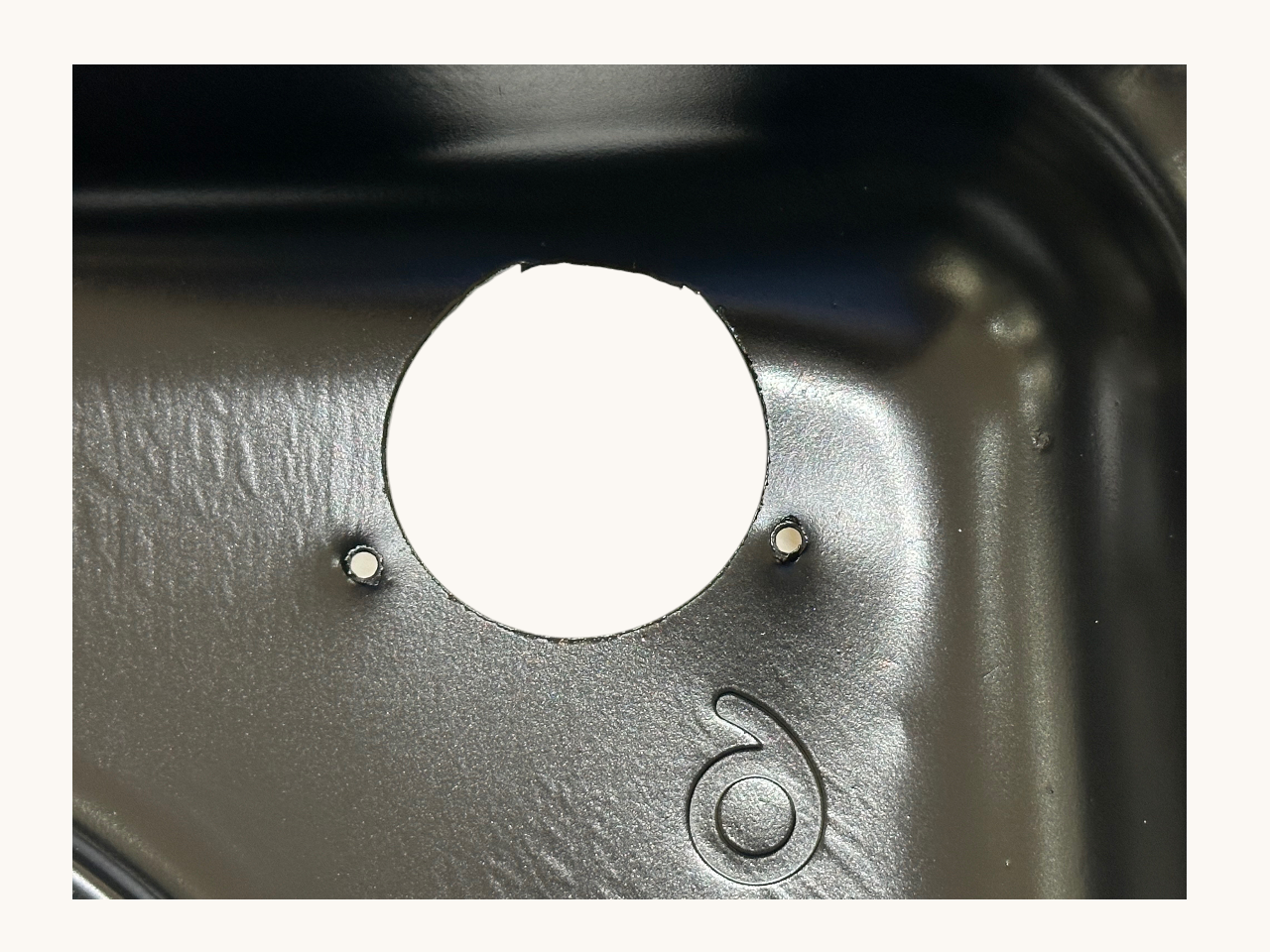
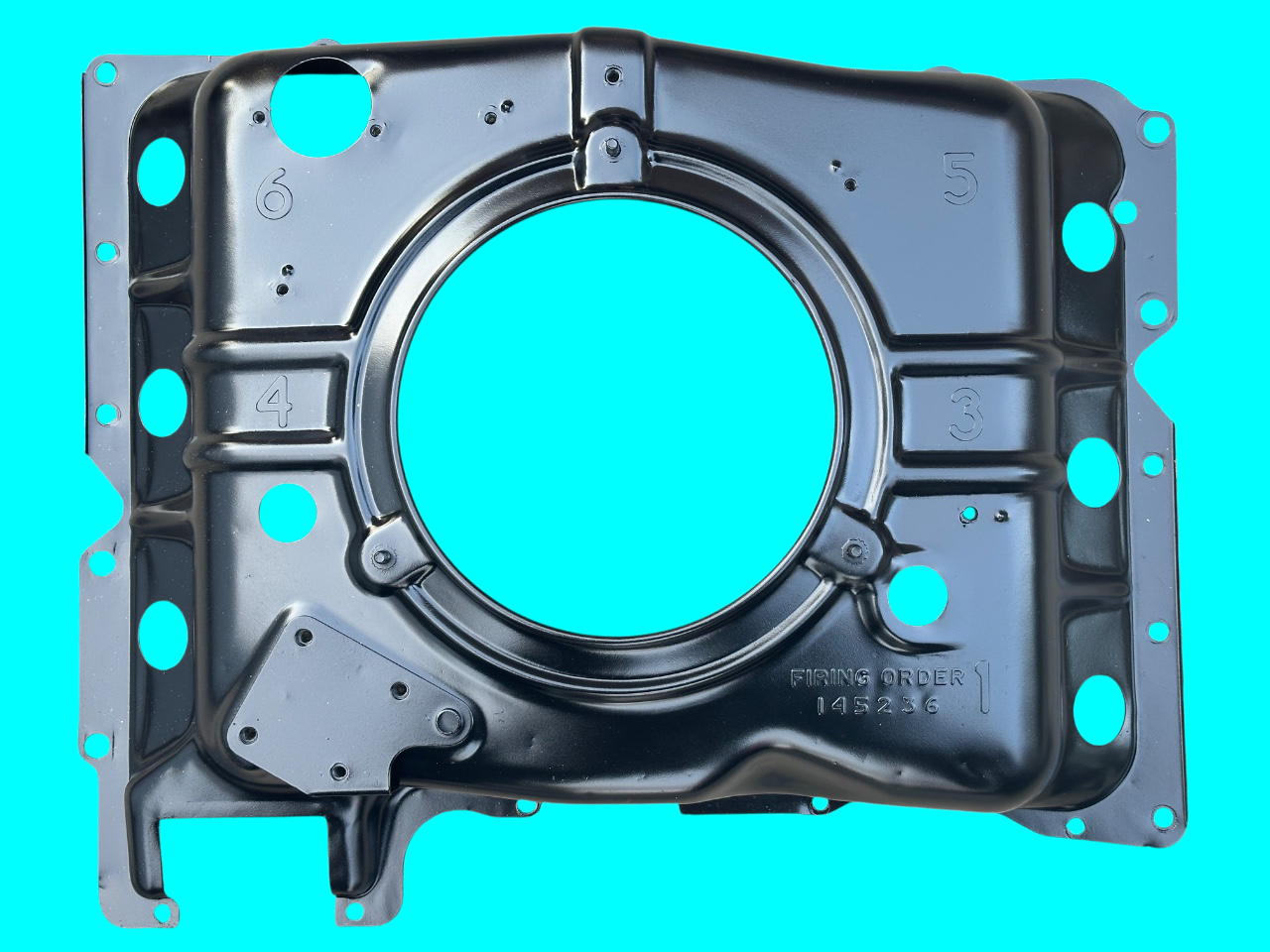
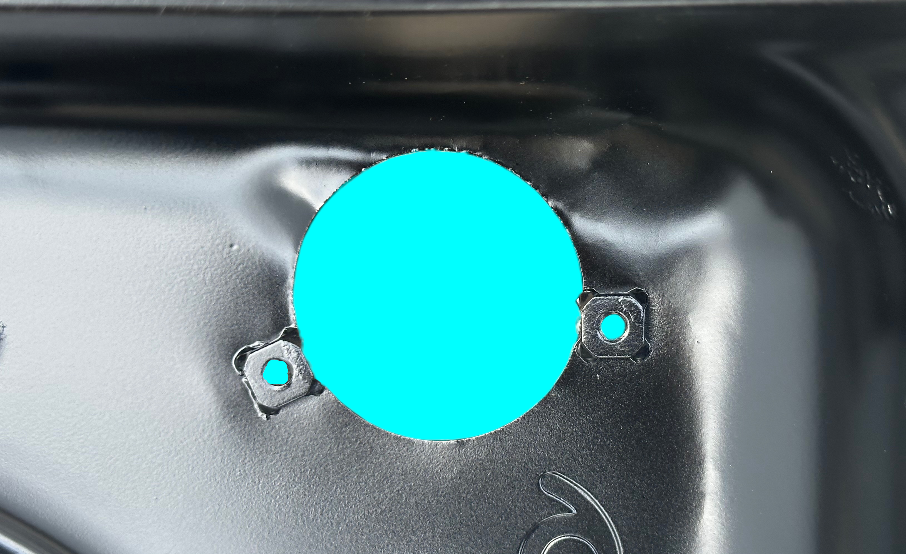
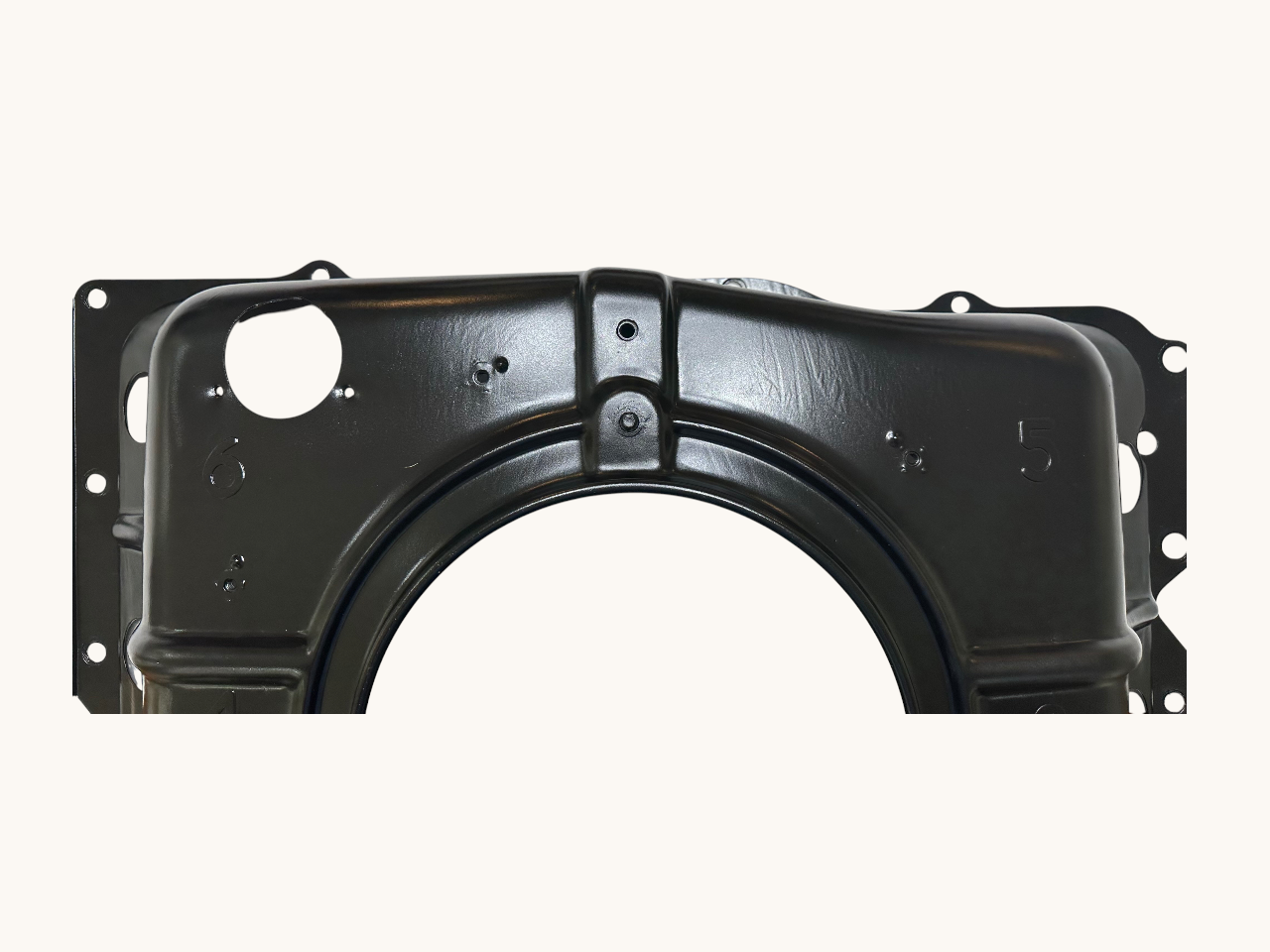
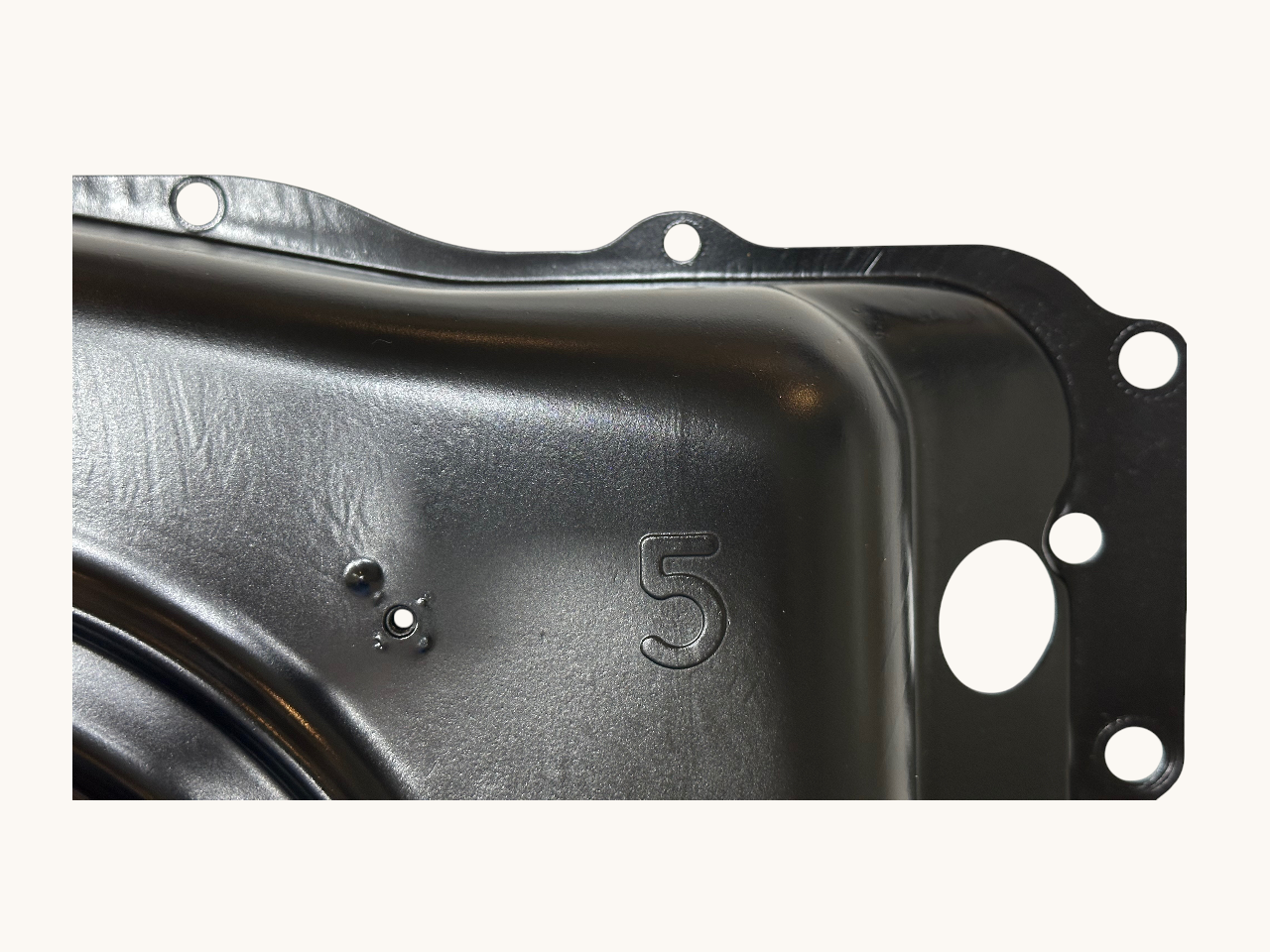
- A 2″ hole in left front top for Air Horn warm air tube. In December 1959 Technical Service Bulletin DR-424 announced a running change to prevent carburetor icing by adding a tube to draw warm air from the lower part of the engine into the air horn. Accordingly, late 1960 shrouds have a new hole in the left-rear corner of the shroud, either stamped at the factory with added weld nuts for machine screws, or manually cut at dealerships with holes for sheet metal screws for vehicles on the road.
These features of 1960 shrouds are shared with some other shrouds (as noted in parentheses):
- Upturned lip along the edge of the left and right sides of the shroud (1960-some 1961s)
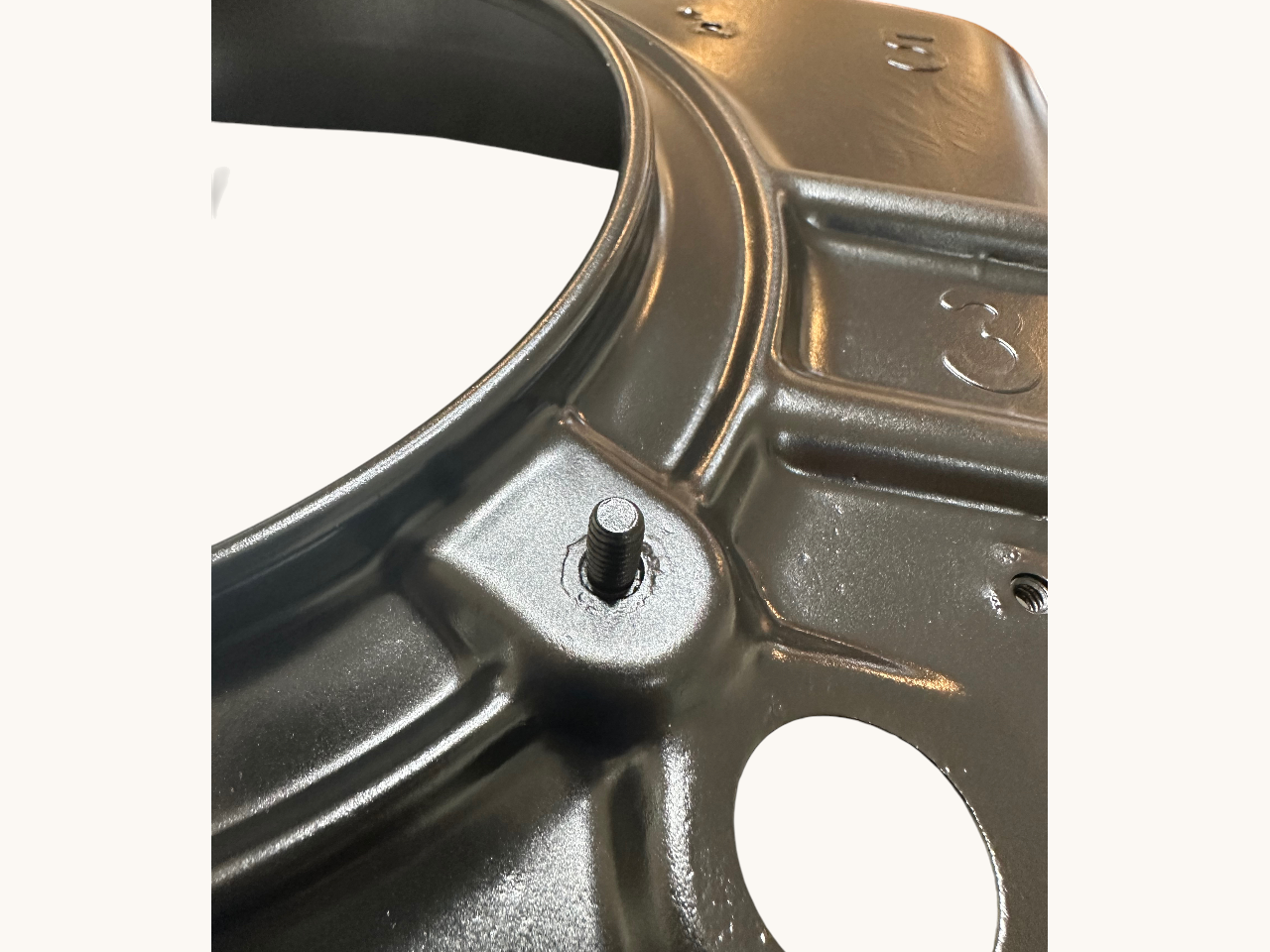
- Three studs around the blower outlet (1960, 1965-66 K46 “Desert Air”)
- A stamped depression and hole by #6 spark plug for choke heater tube (1962-69, for choke rods)
- No belt guard (1960-63, and 1965-66 K46 “Desert Air” shrouds)
- No hole for Crankcase Vent. (1960-62 engines used road draft tube for crankcase ventilation)
- 8-plate oil cooler opening (all years, most shrouds)
Thus, we identify three different versions of 1960 shrouds:

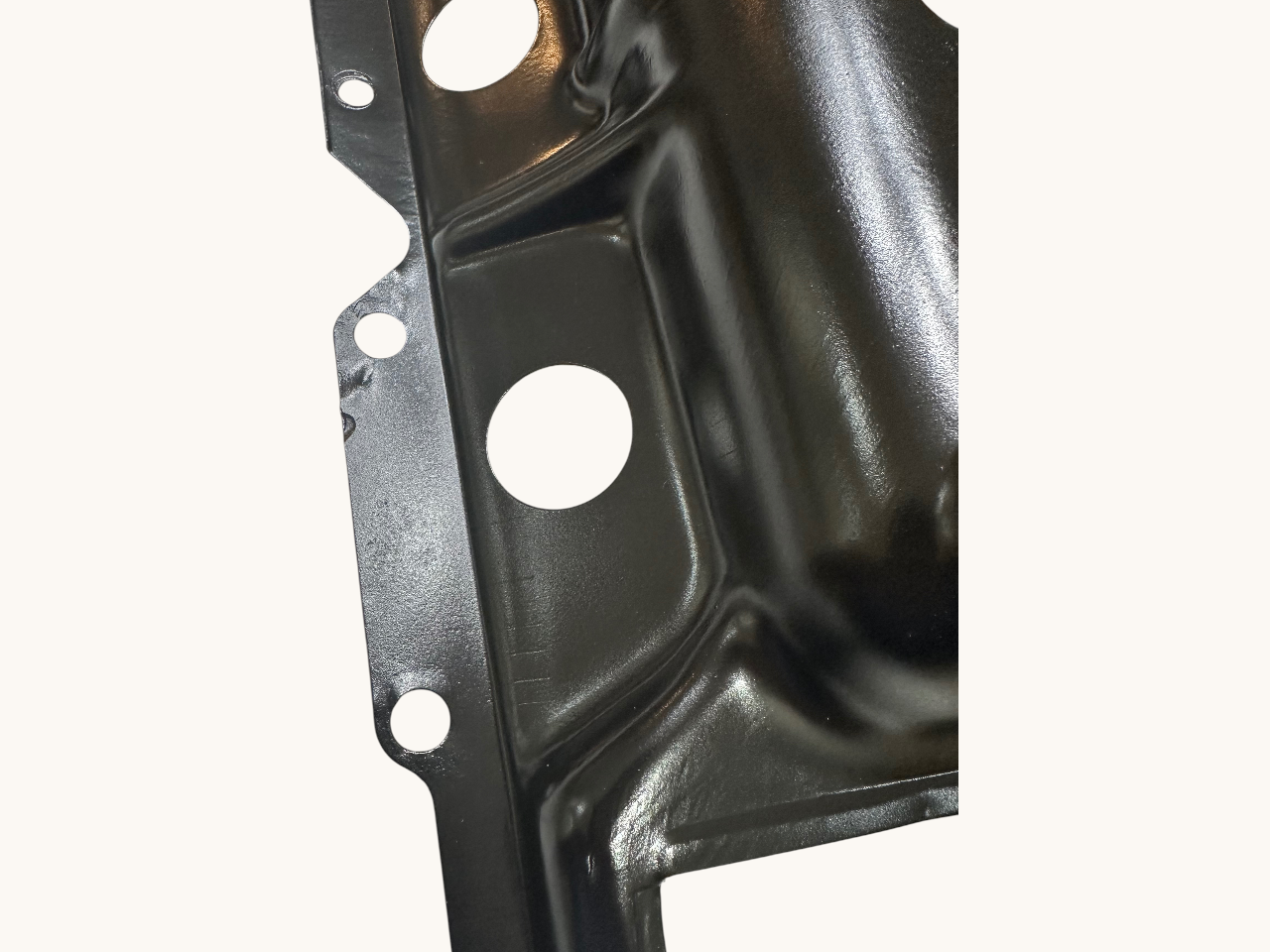
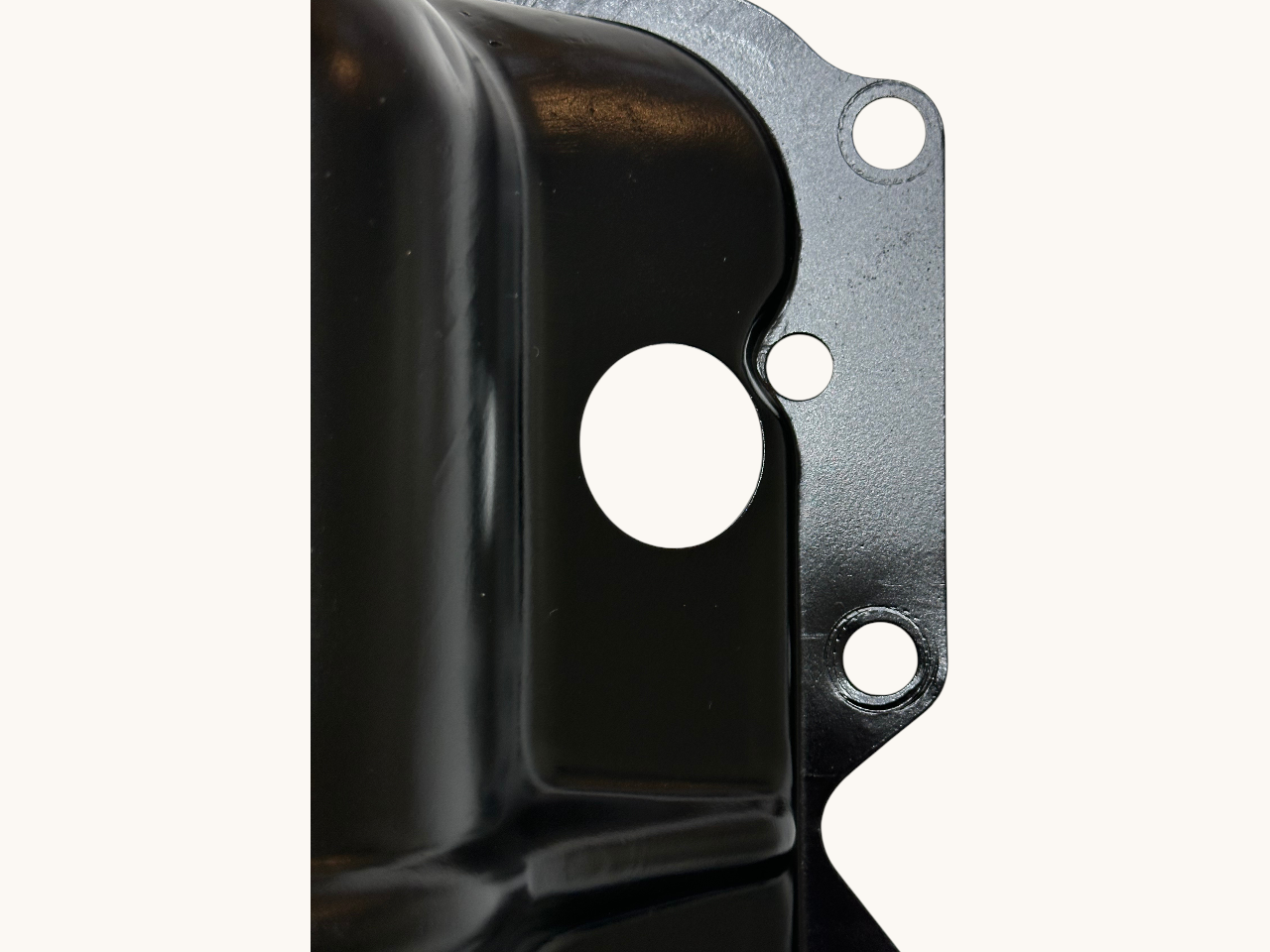
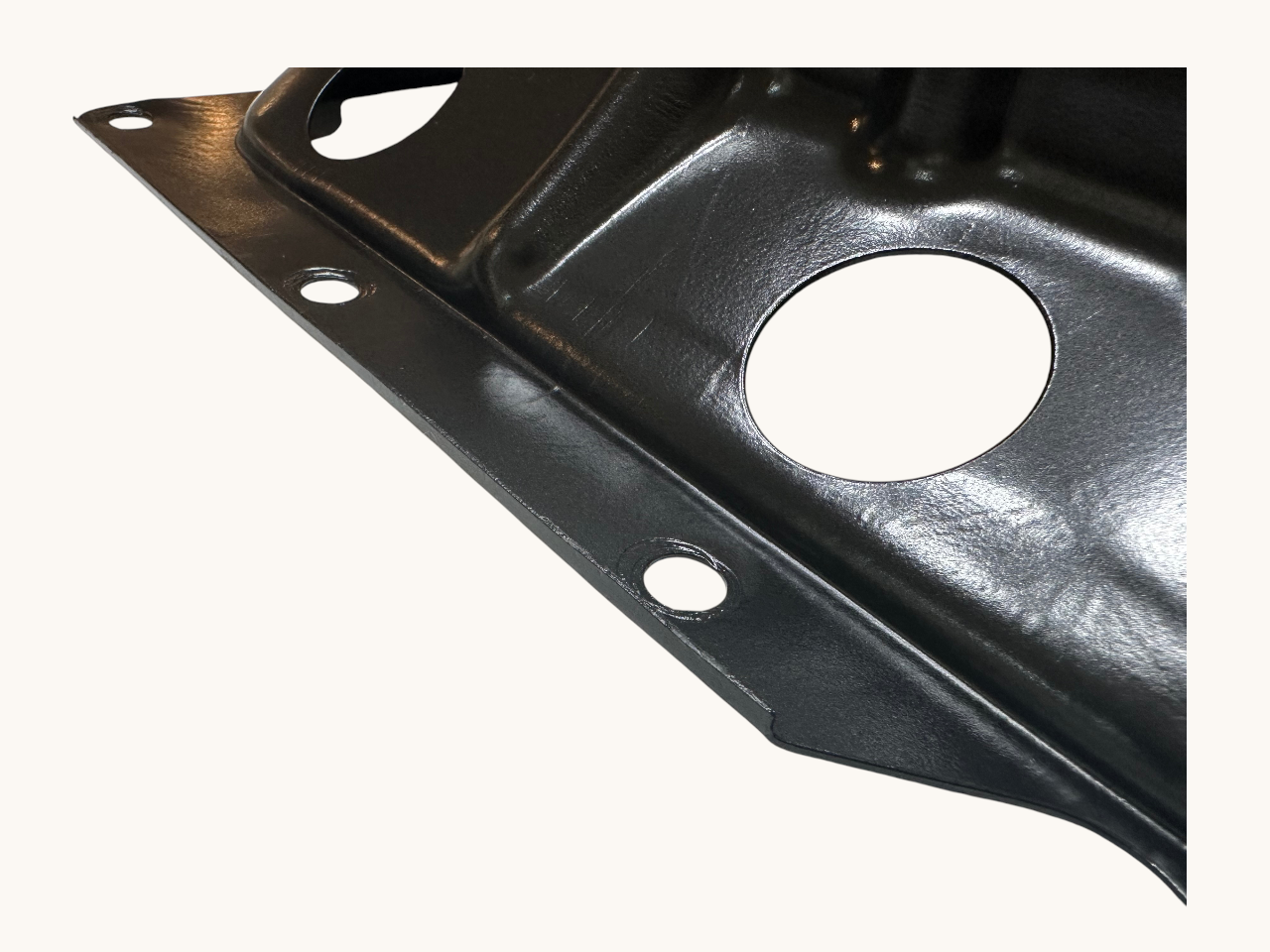
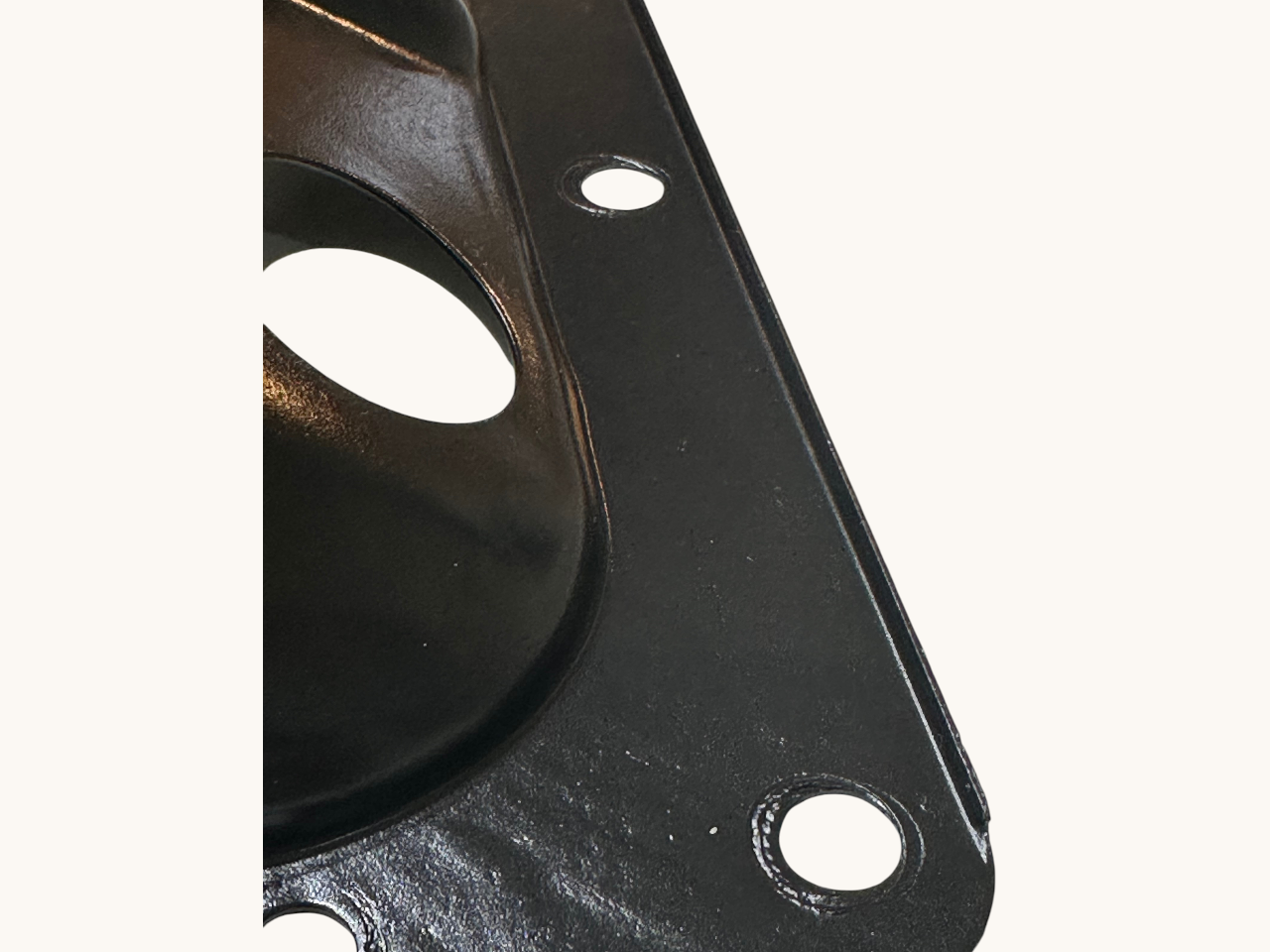
Images of 1960 top shroud features
1961
The following traits are unique for 1961 shrouds:
- A stamped depression but no choke hole on the right side; neither a stamped depression nor choke hole on the left side.
- Alignment dimples for two spark plug wire guides that were spot welded to the shrouds.
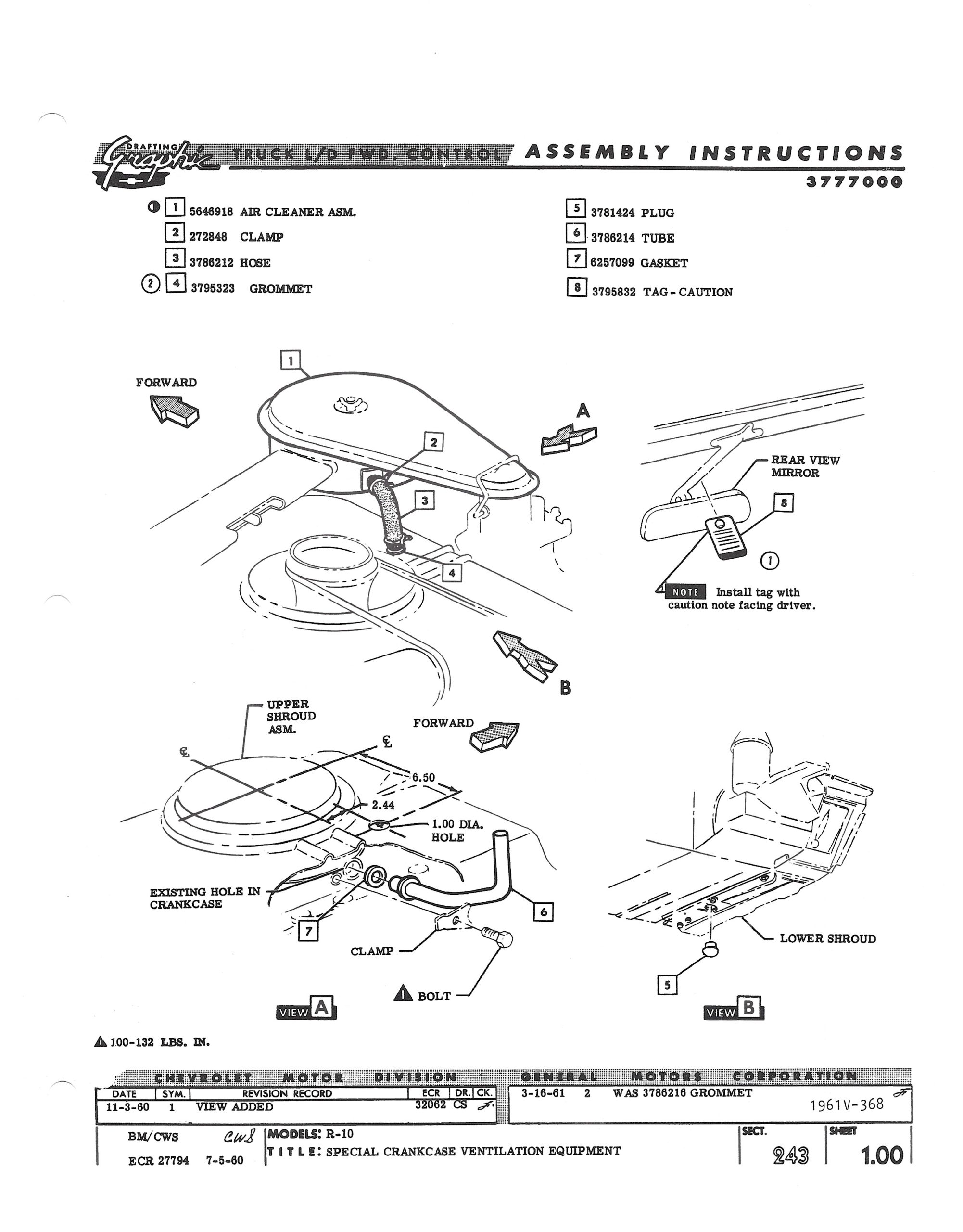
- (California-only) assembly-line cut 1″ hole in upper right front corner for Special Crankcase Ventilation System RPO 252 (cars) and 253 (FCs).
Shrouds for all other vehicles lack this hole and continued to use road draft tube through 1962.
These new features were also continued with later shrouds:
- Left bank spark plug wires and guides are routed to the rear of the blower opening
- Absence of a dipstick hole on shrouds for FCs and wagons; carried forward through the 1965 FC and 1962 wagon.
- A fresh air outlet on the shroud’s front right panel for the new Direct Air Heater.
There are 4 different upper shrouds in 1961 – none with choke holes:
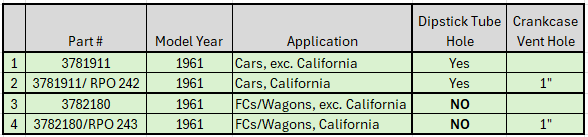
Images of 1961 Top Shroud features
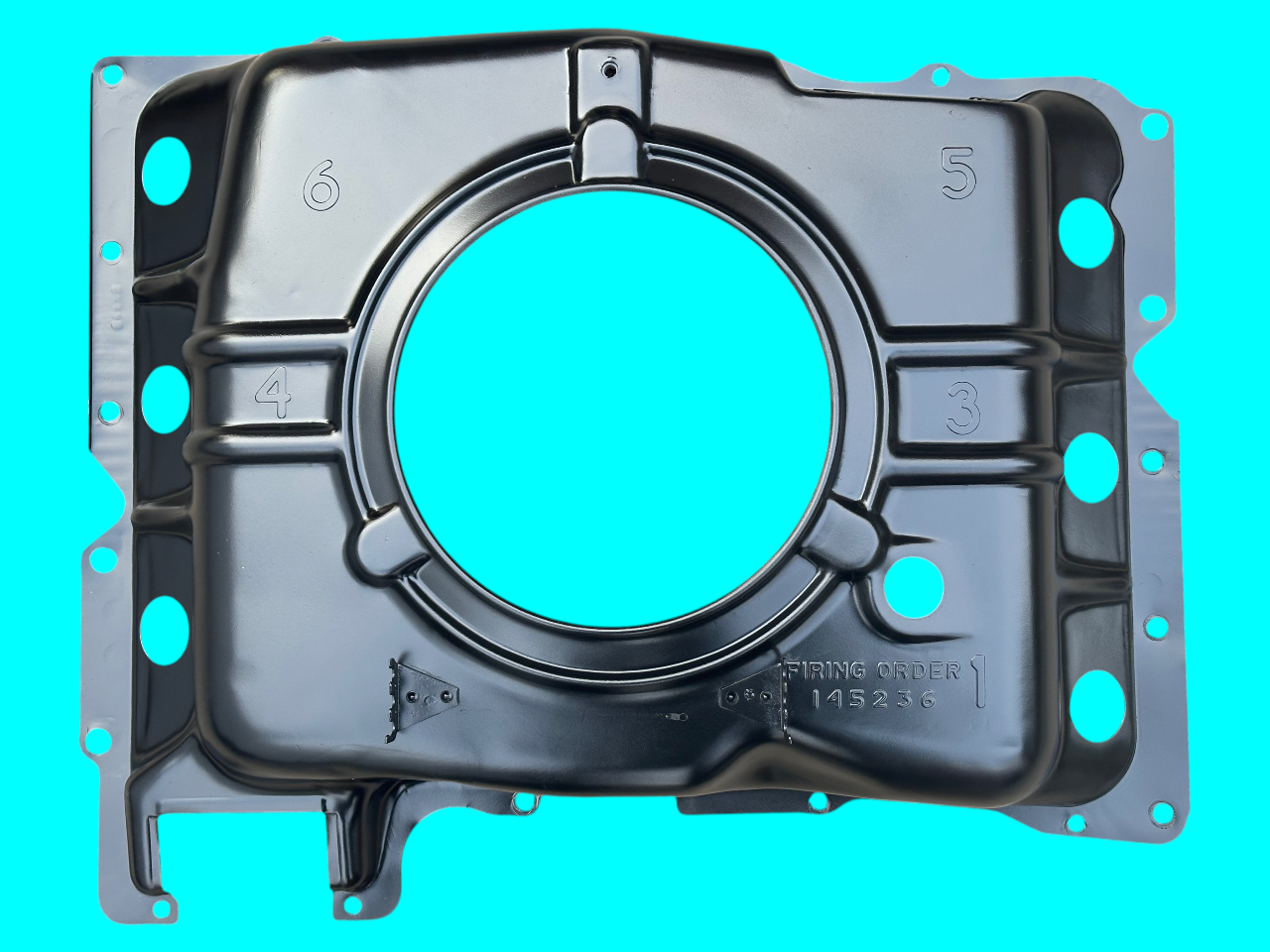
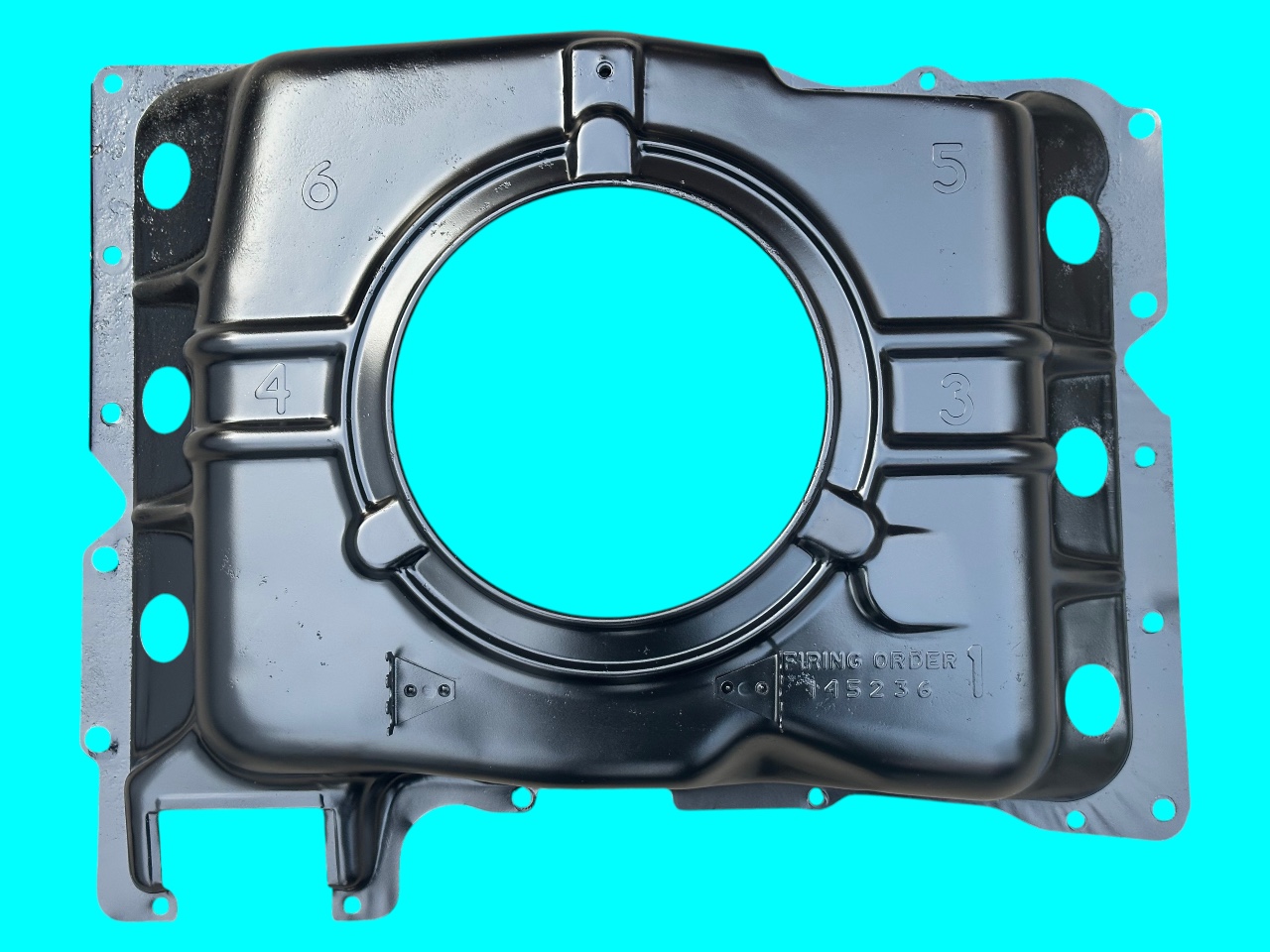
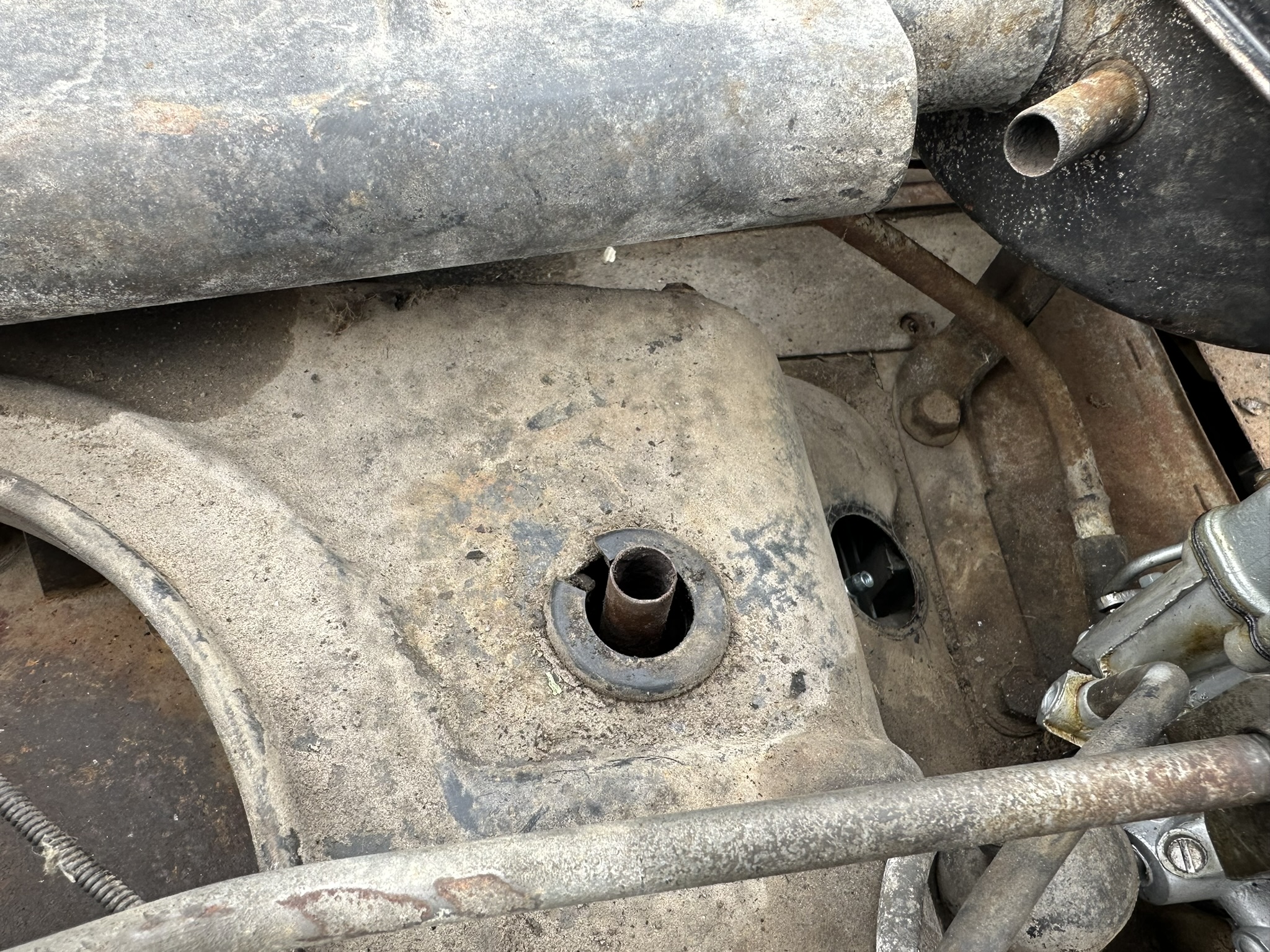
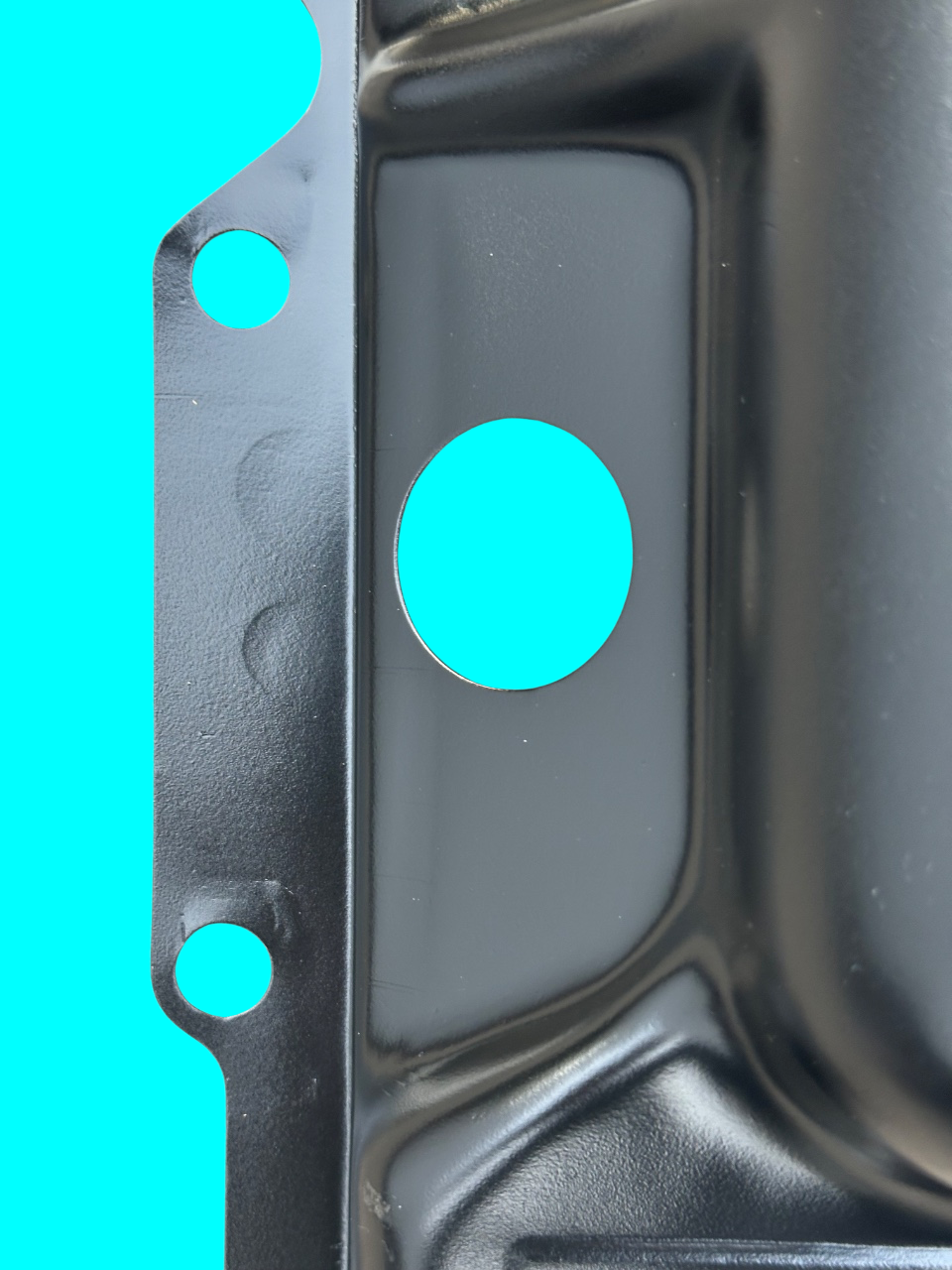
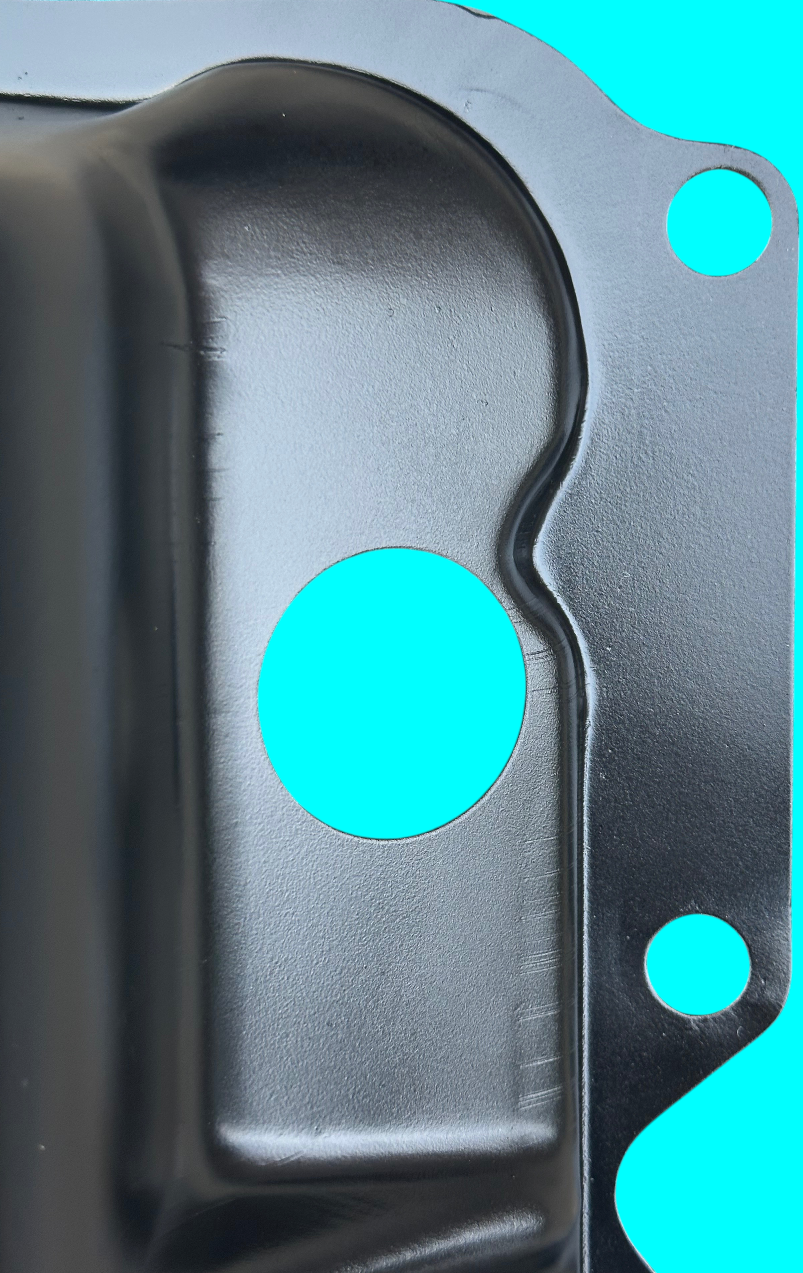
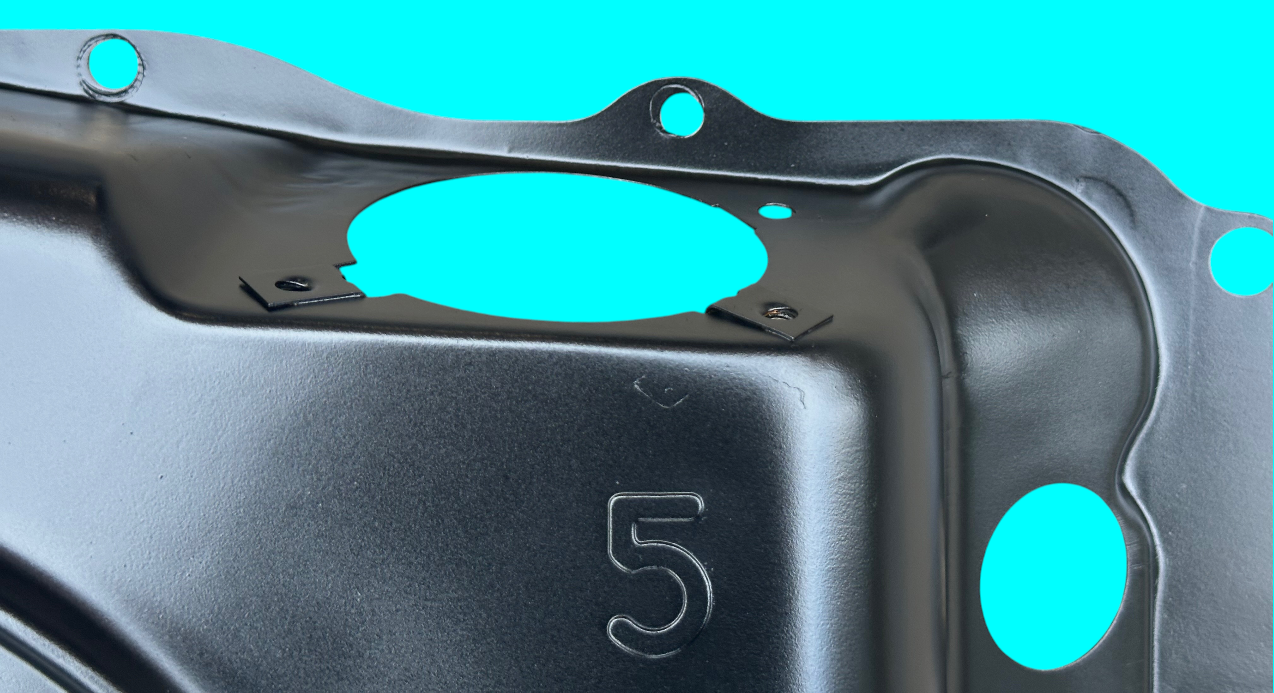

1962
New Features in 1962
- Stamped depressions with holes on both sides for newly introduced carburetor automatic choke rods; carried forward on all later shrouds.
- Holes stamped for riveting of the two spark plug wire guides. This design was carried forward to the end of Corvair production.
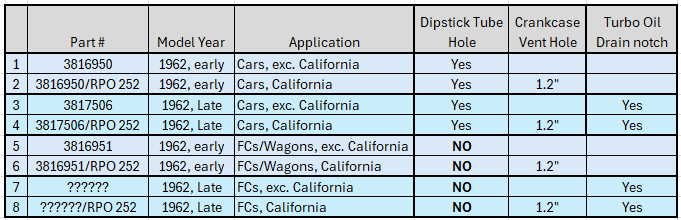
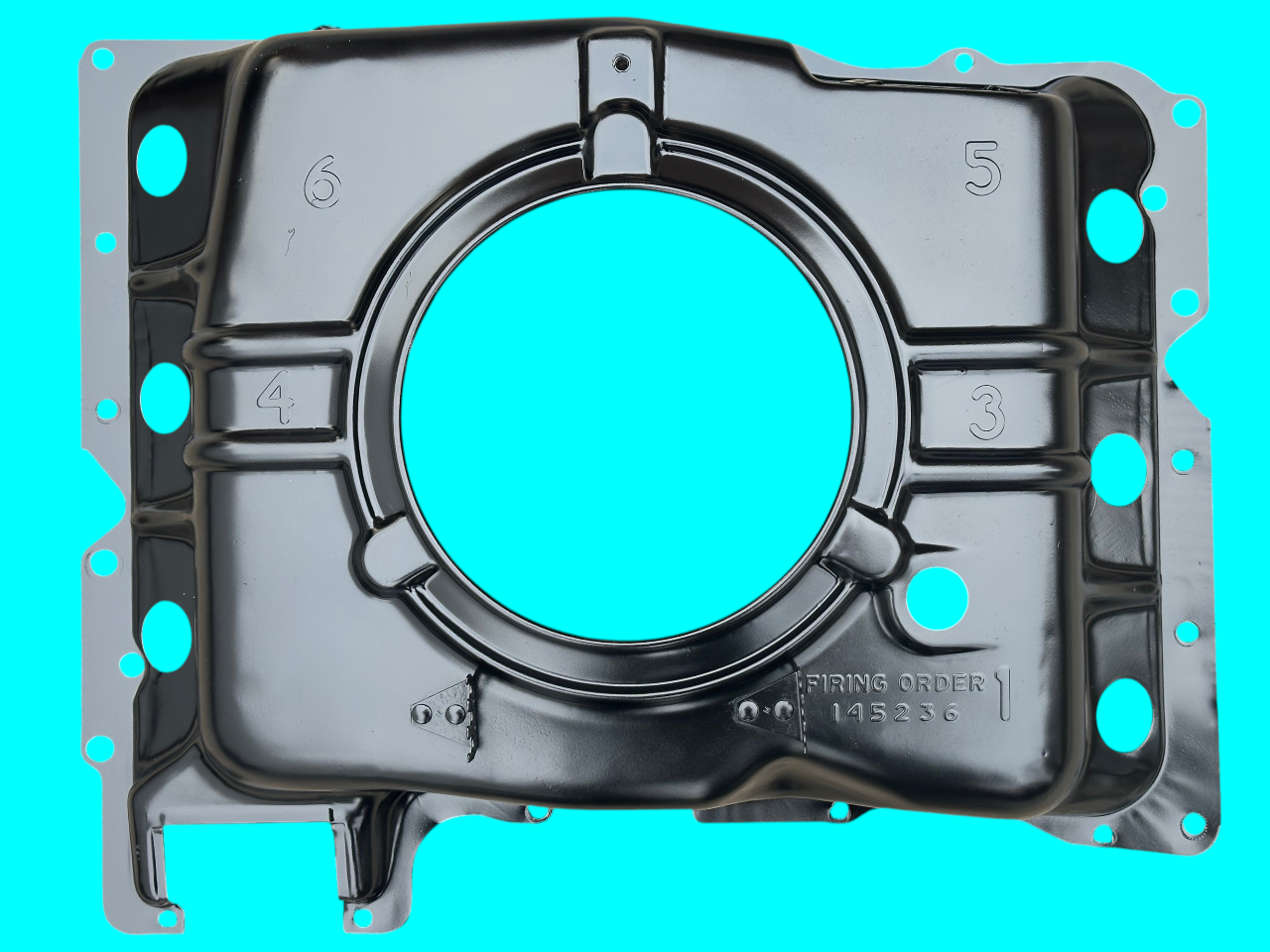
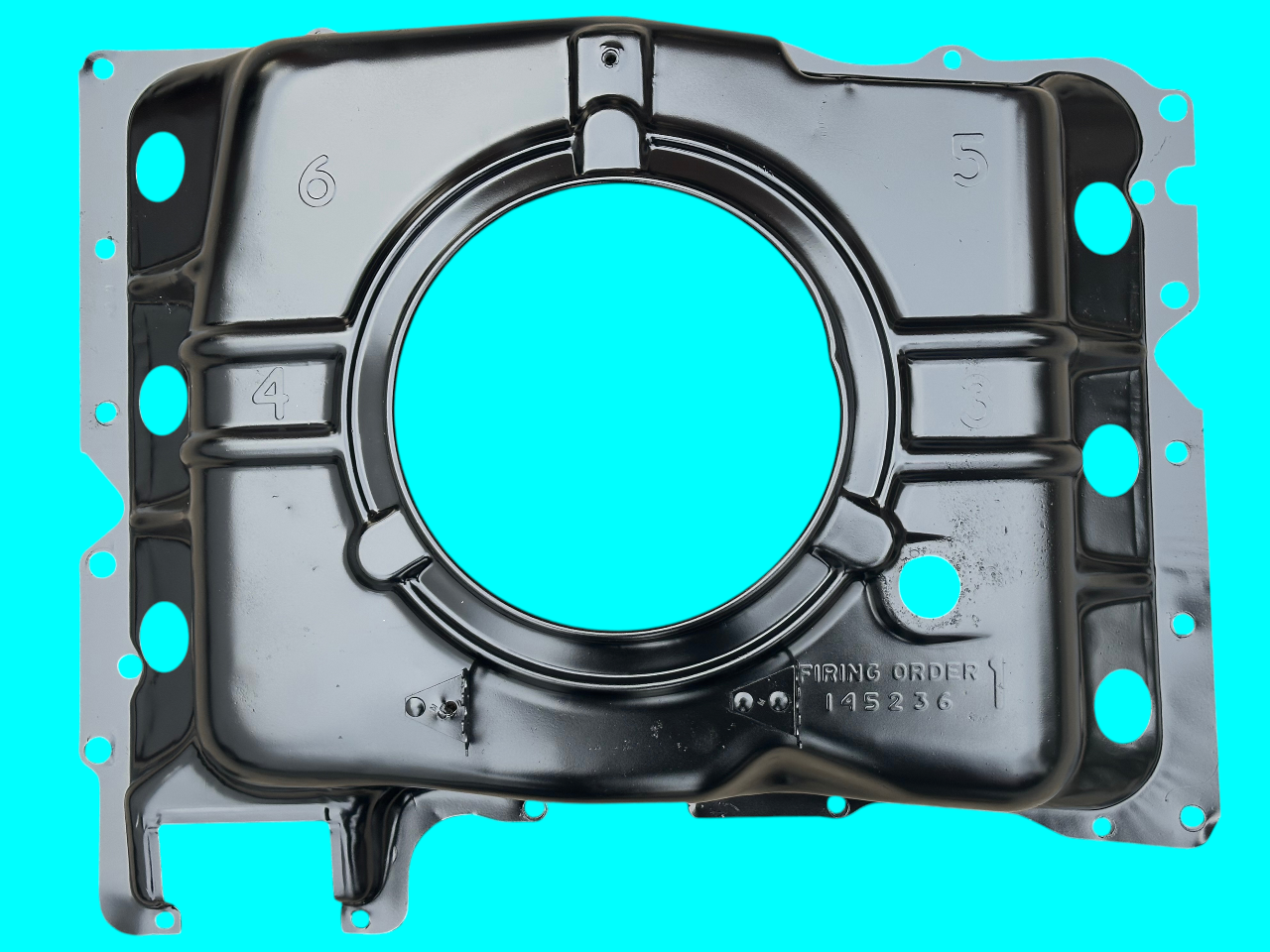
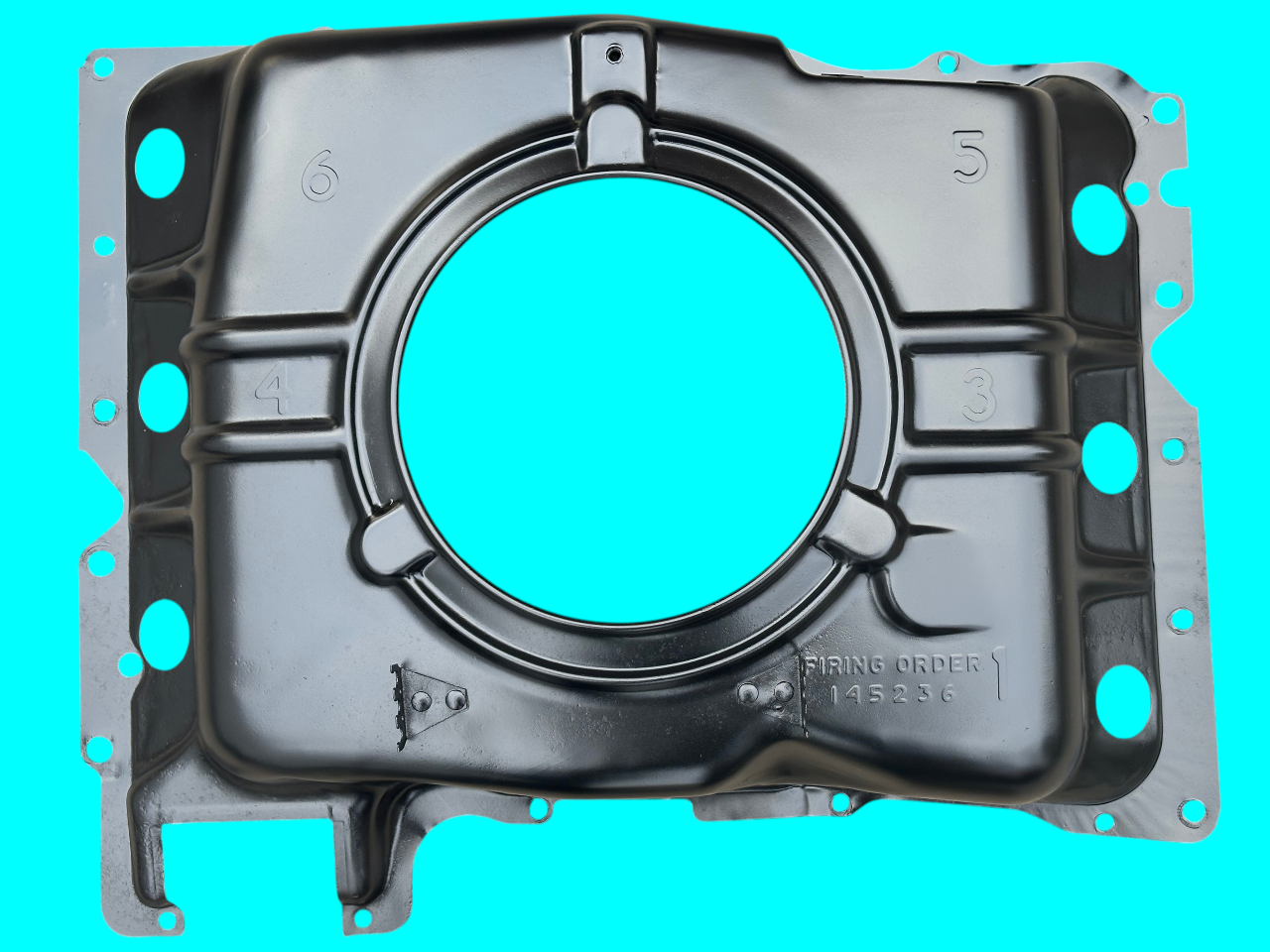
- Midyear Change: A 3/4″ notch near the right side choke tube hole, added in Spring 1962 for the turbocharger oil drain pipe of the Spyder; carried forward on all later shrouds.
These features carried forward from ’61 shrouds
- Absence of the dipstick hole for FCs and wagons. Wagons were discontinued mid-year, so any 1962 shrouds lacking a dipstick hole but having a turbo notch would technically be FC only.
- (California-only) assembly-line cut hole in upper right front corner for Special Crankcase Ventilation System RPO 252 (cars) and 253 (FCs); however, the hole was now 1.2″ diameter.
All other vehicles continued to use road draft tube and have no hole there
Concerning the Part numbers
The 1962 FC Assembly manual lists the FC Shroud as part number 3782180, same as 1961, but this is difficult to reconcile with the known requirements of the 1962 engine for bilateral choke holes. However, the car Assembly Manual has a part number for the wagon shroud (3816951) which should be identical to the FC shroud (and indeed 1961 Wagon and FC shrouds shared the same shroud number). As explained below in the “Replacement Shroud” section, 3816951 was also listed in a couple of P&A catalogs as a replacement shroud for ’61 car engines with a note indicating that it lacked the notch for the turbo oil drain tube. We have found a later version FC shroud that has the notch, and it is seems that it used the same part number as the earlier version, Perhaps that is because the addition of a turbo notch had no impact on the function of the shroud for the FC.
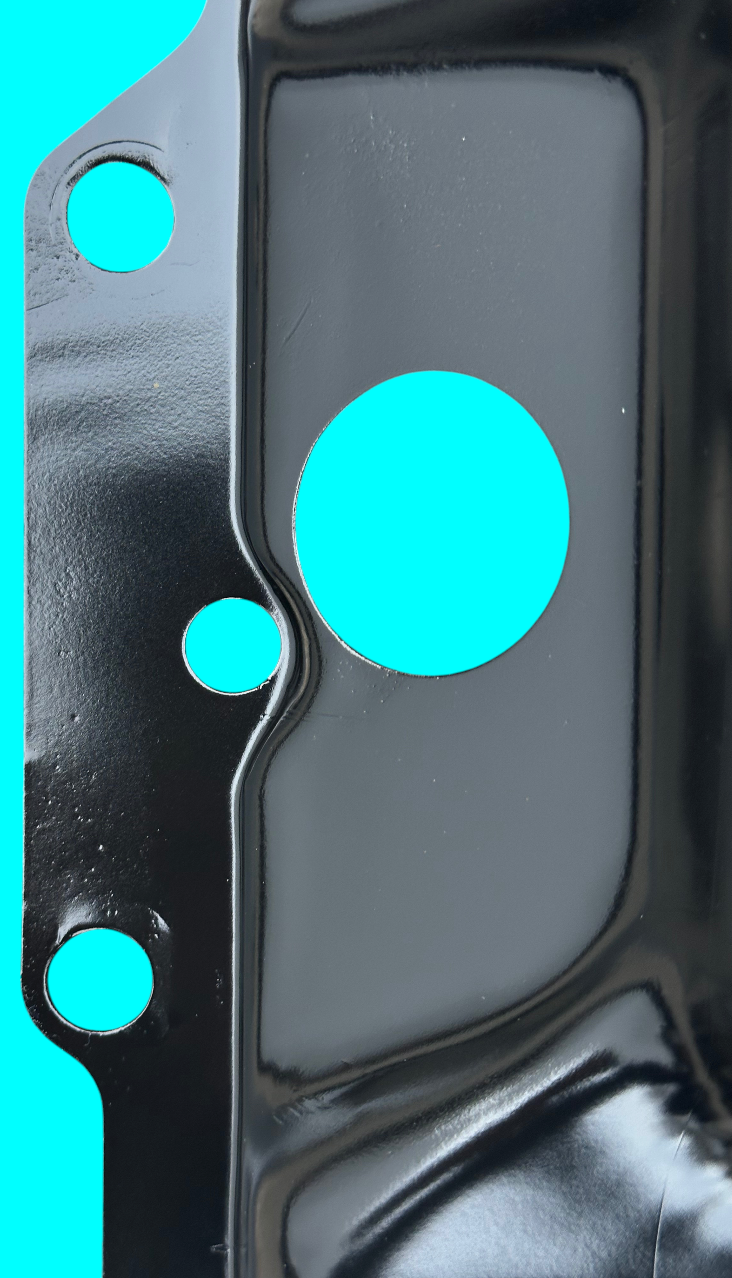
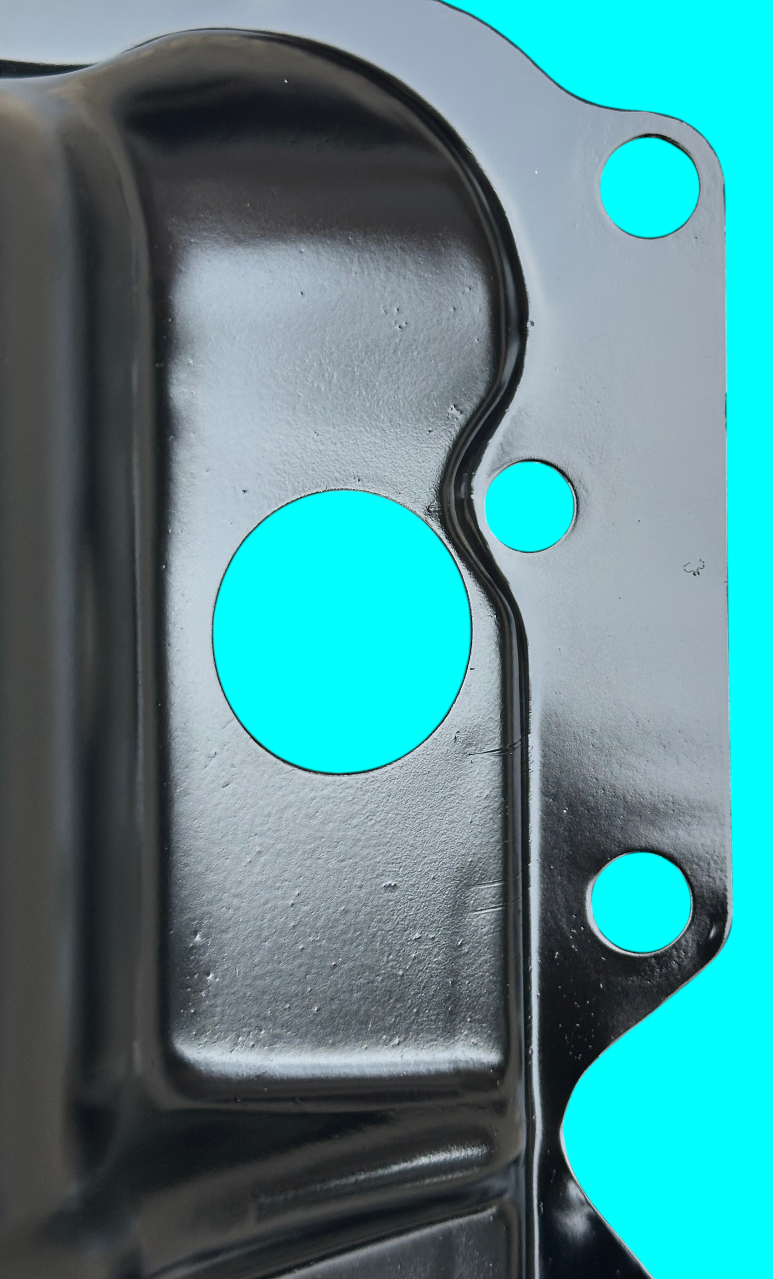
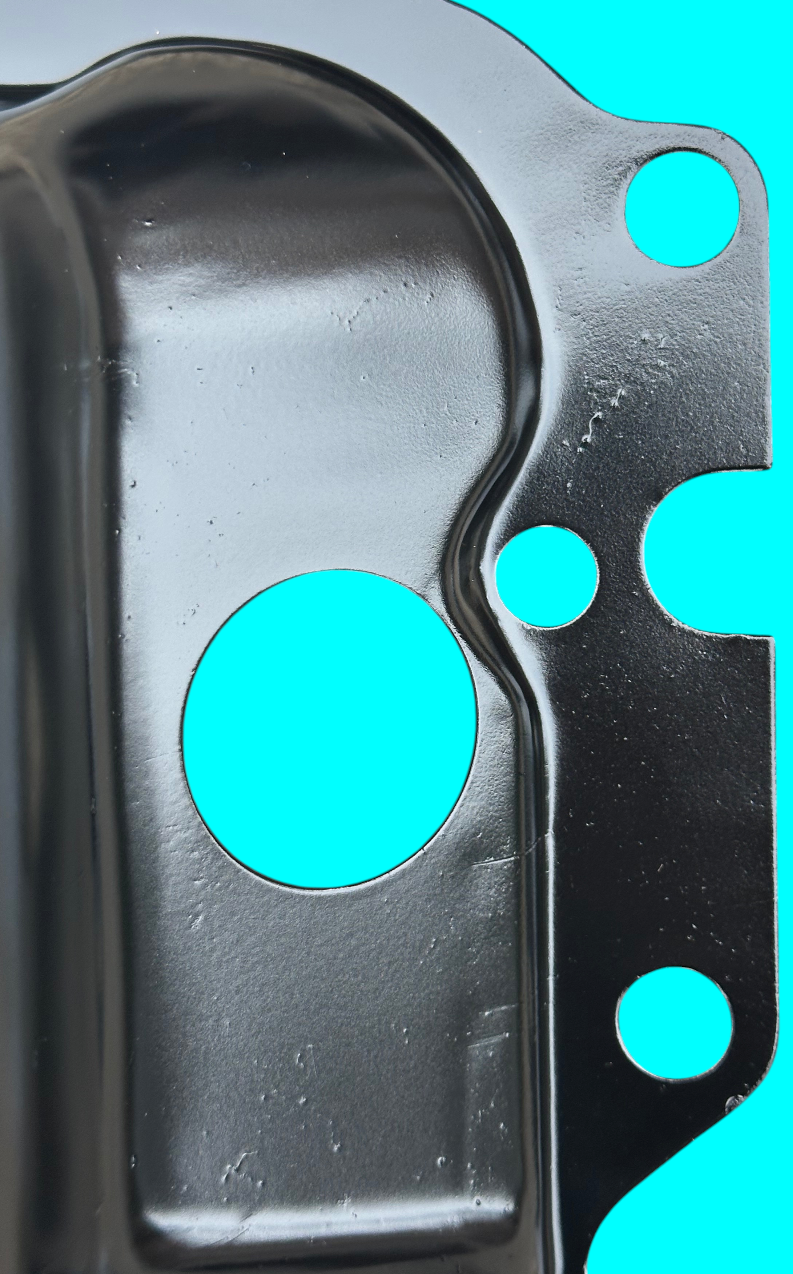
There are potentially 8 different versions of 1962 shrouds, all with the holes for automatic chokes:
1963
This is the new feature for 1963 shrouds
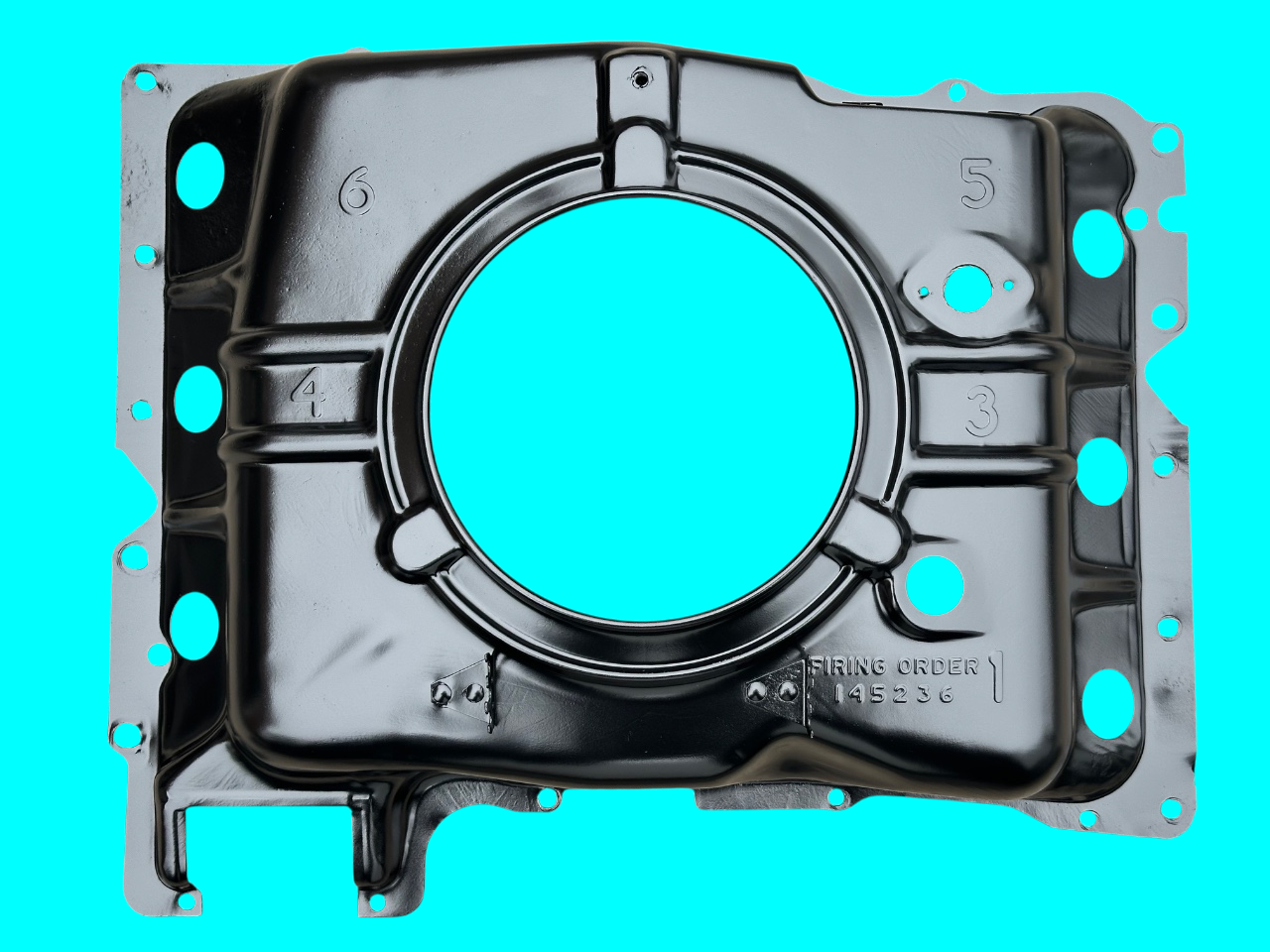
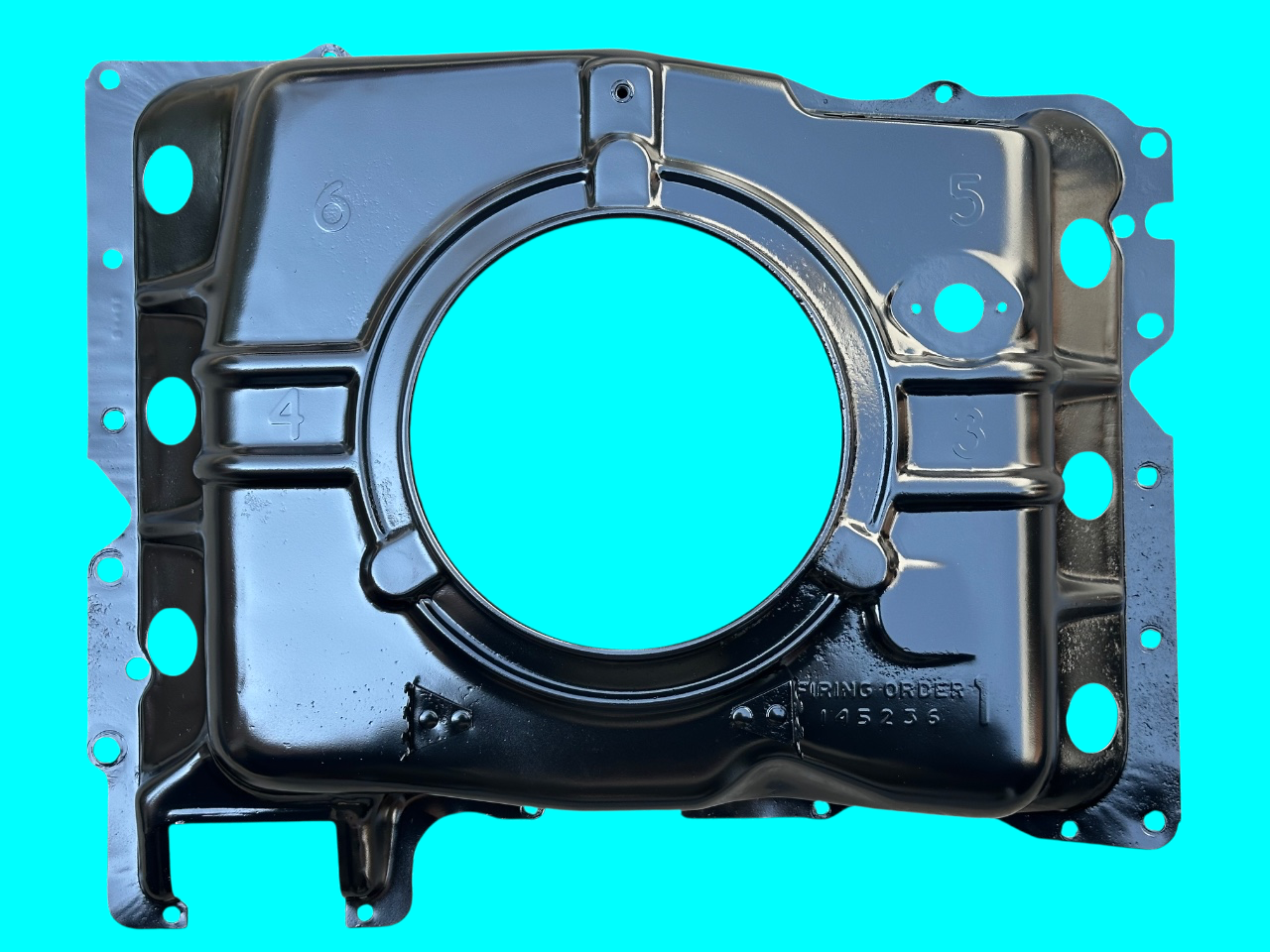
- A stamped hole, 7/8″ diameter, for the now standard PCV vent tube. The hole is centered on a diamond shaped flattened surround that partially depresses the nearby rib, making it easy to distinguish from holes cut on the line or by owners on earlier shrouds. This was carried forward on all later shrouds.
As we shall see, the car version carries over into the 1964 model year for a few months.
Concerning the Part Numbers
The 1963 Car Assembly manual does list the number for the car shroud, but the 1963 FC Assembly manual still lists the 1961 FC top shroud part number, which seems even less plausible due to the requirements for choke and PCV holes in 1963. There are no more wagons in 1963, so we have to rely on the Parts Catalogs, which identifies 3794216 as the part number for the ’63 FC shroud. As described below in the “Replacement Shrouds” section, this shroud was used extensively as a replacement for early car shrouds.
There are only two 1963 shroud versions:

1964
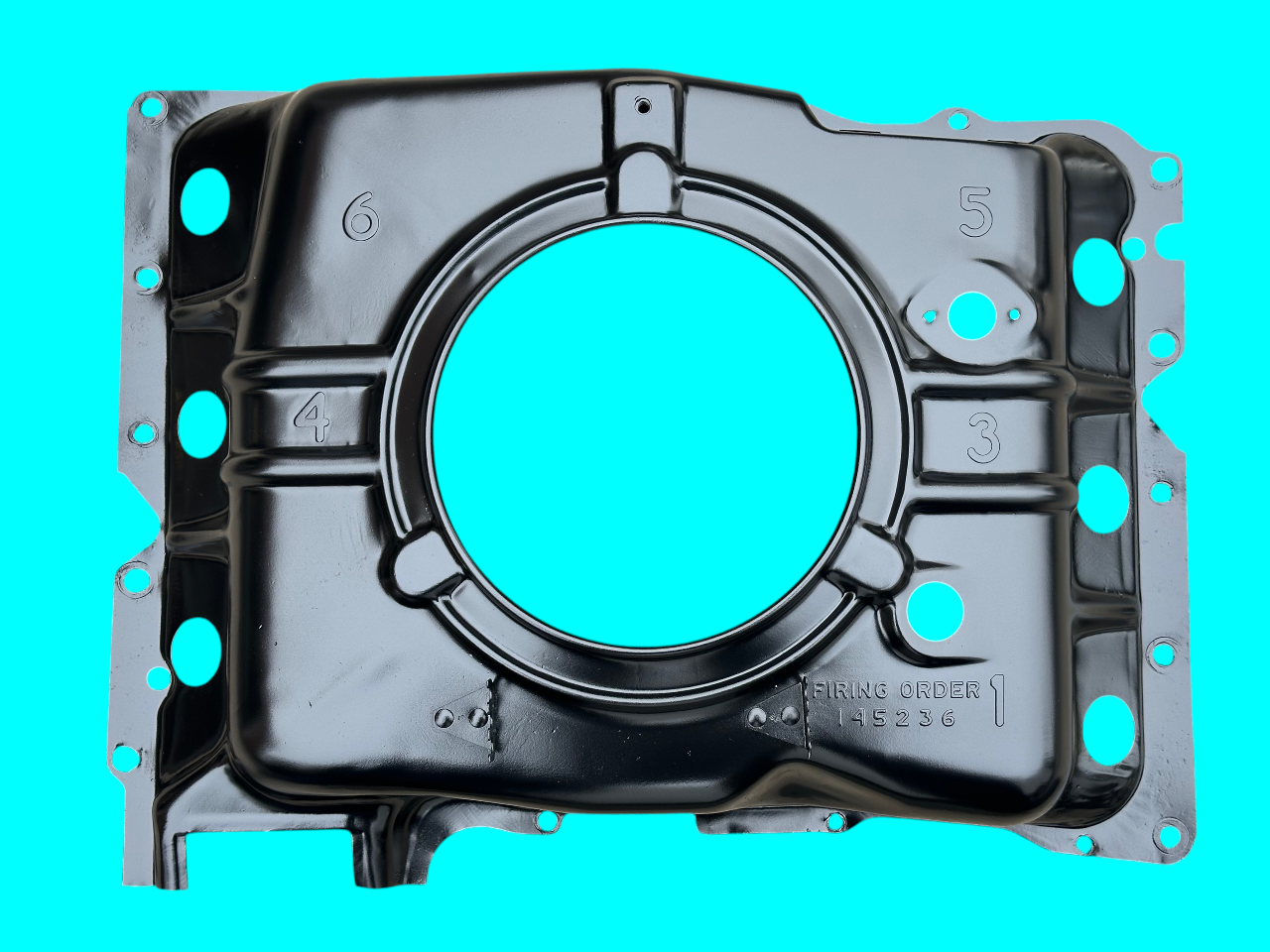
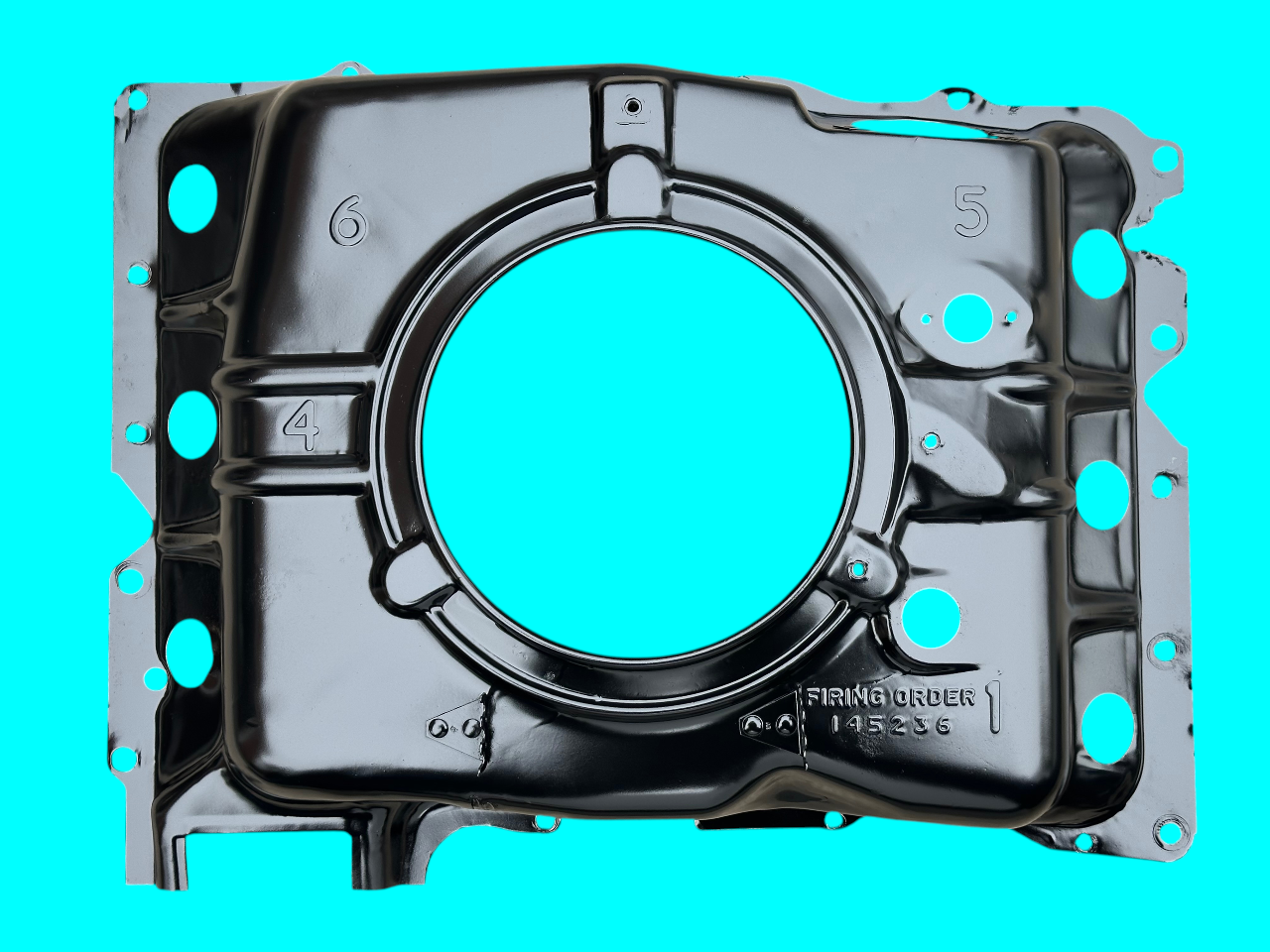
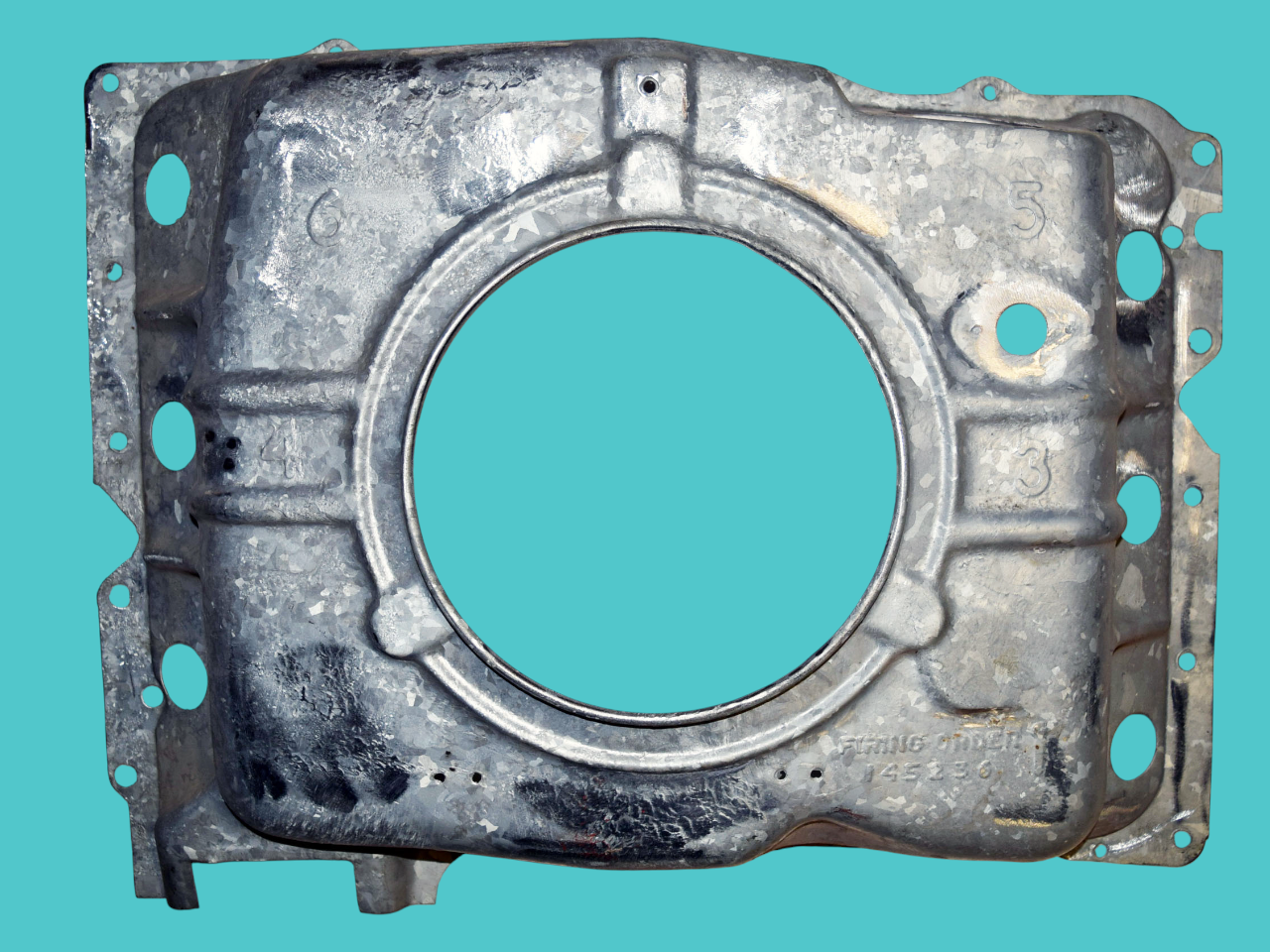
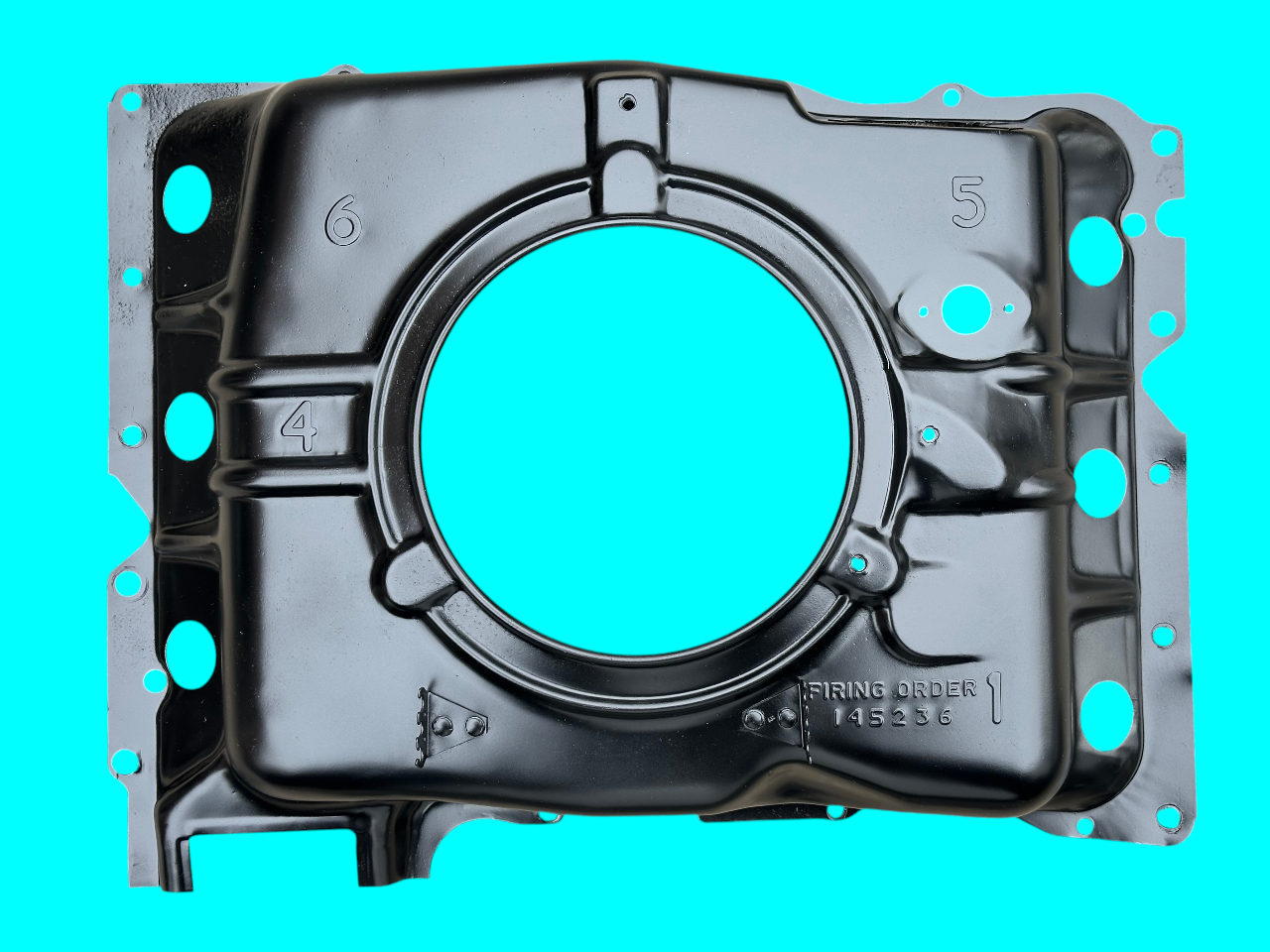
There were two new features for 1964
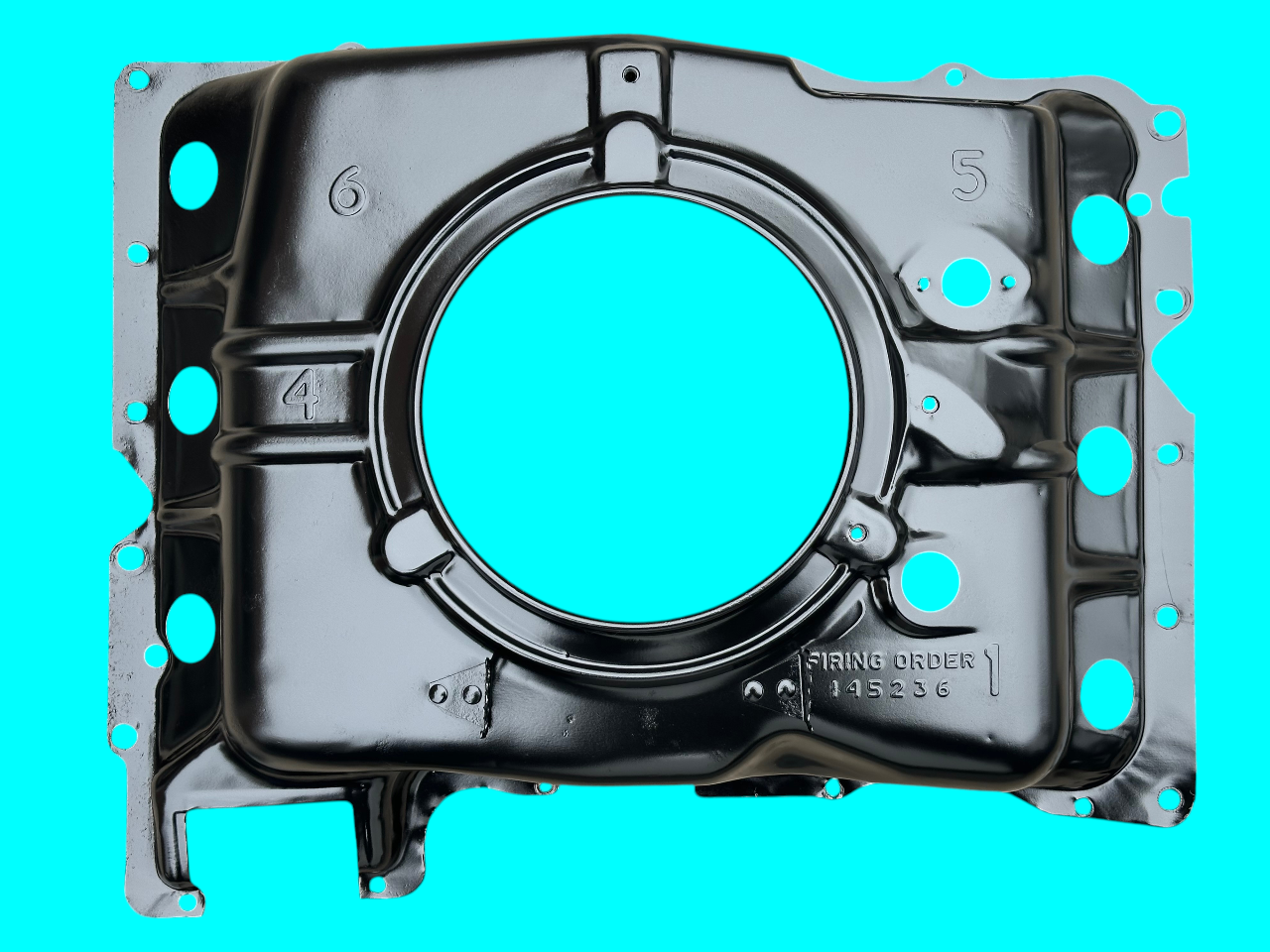
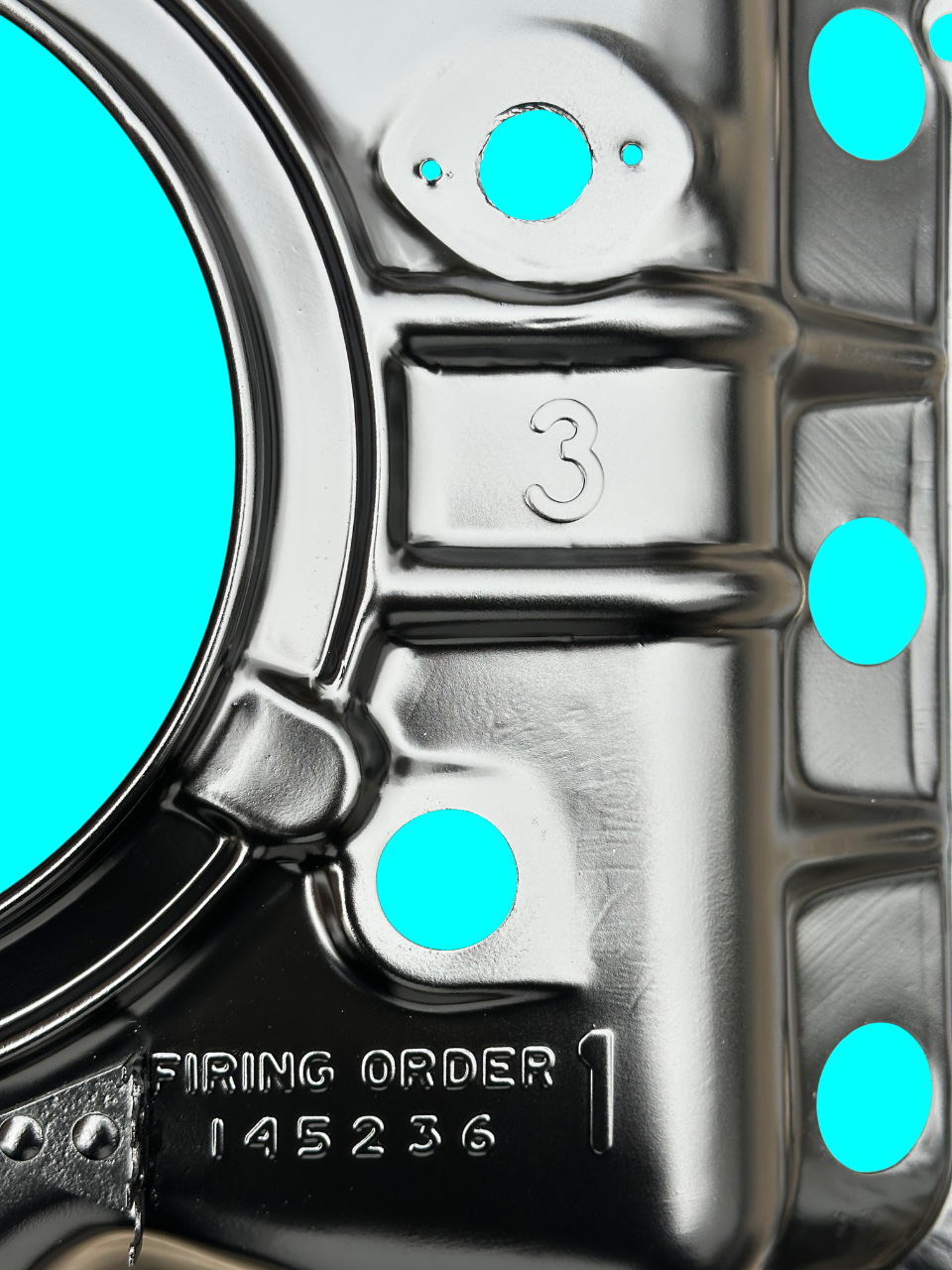
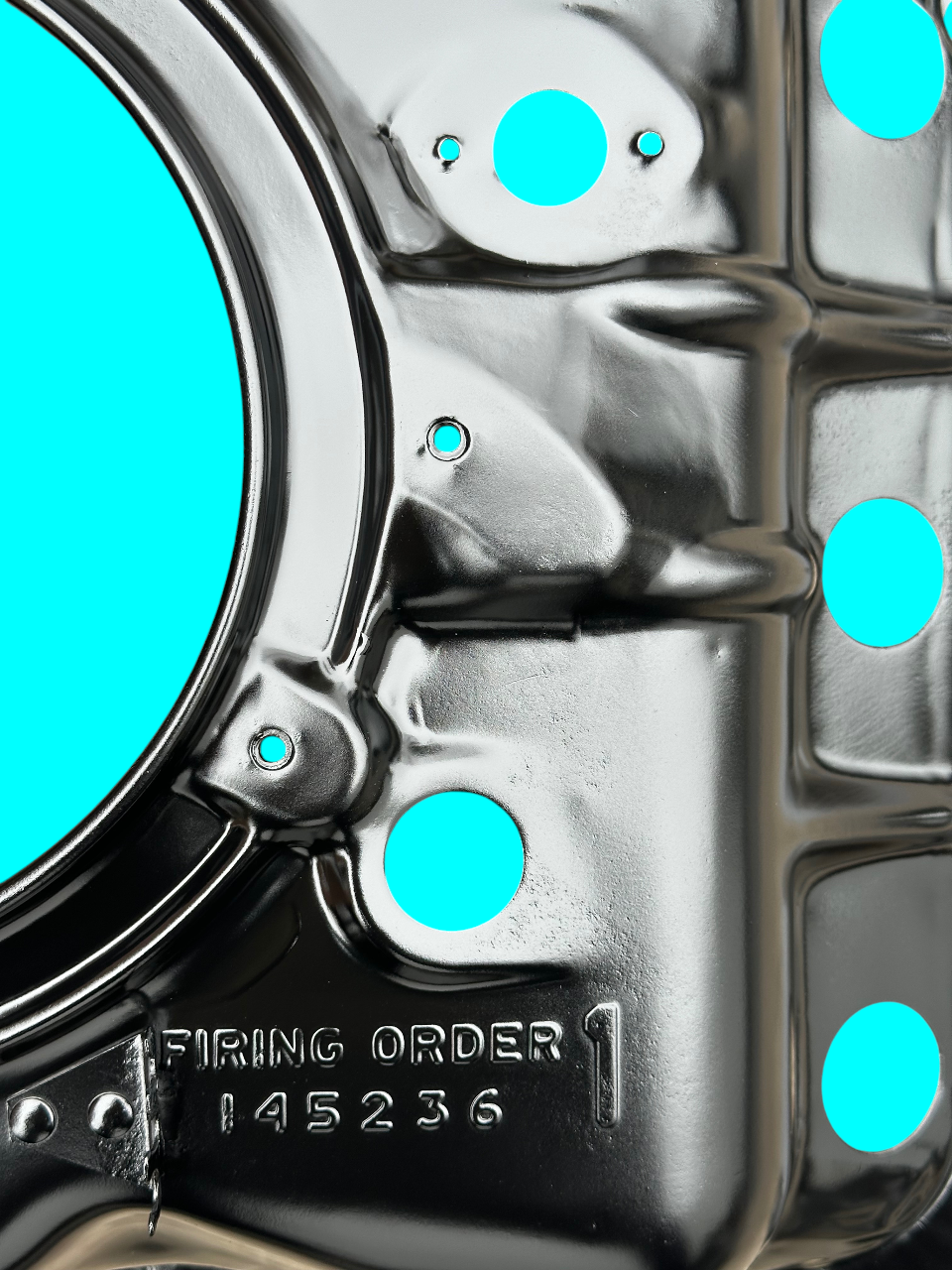
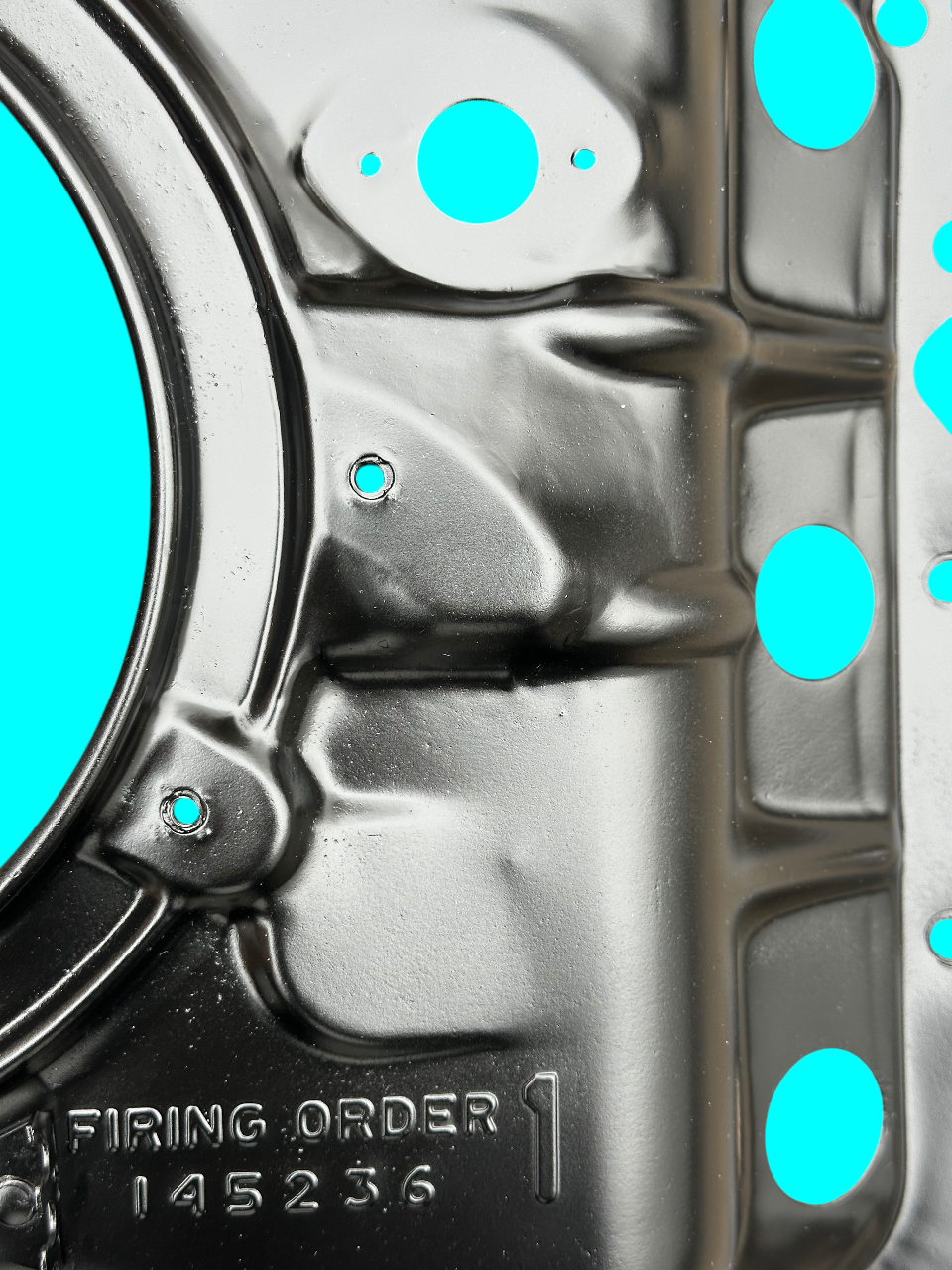
- Redesign for new 12 plate oil cooler, used on all FCs, Turbo and AC cars.
- Midyear change: Blower Belt guard added 11/29/63. Shrouds for 95/100 hp cars prior to 11/29/63 will be indistinguishable from 1963 car shrouds, but after that date they will have the blower belt guide.
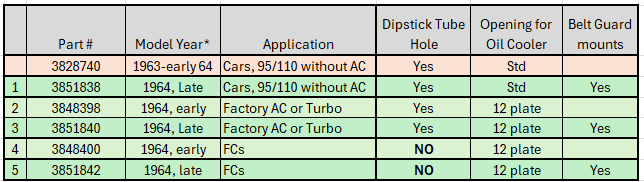
Concerning the part numbers
All of the part numbers shown in the table below are found in the assembly Manuals
This means there were 6 possible shrouds, 5 unique to 1964:
1965
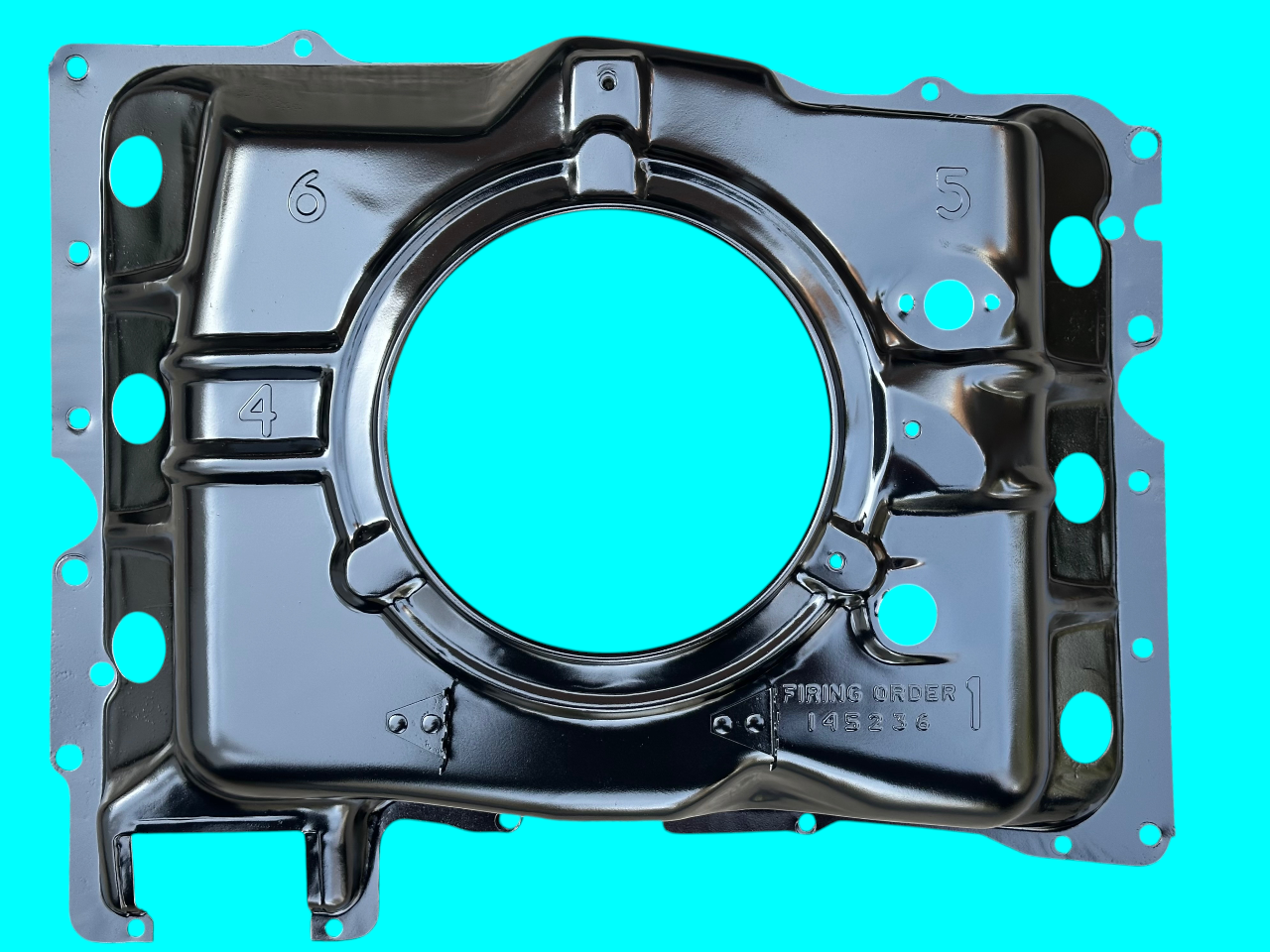
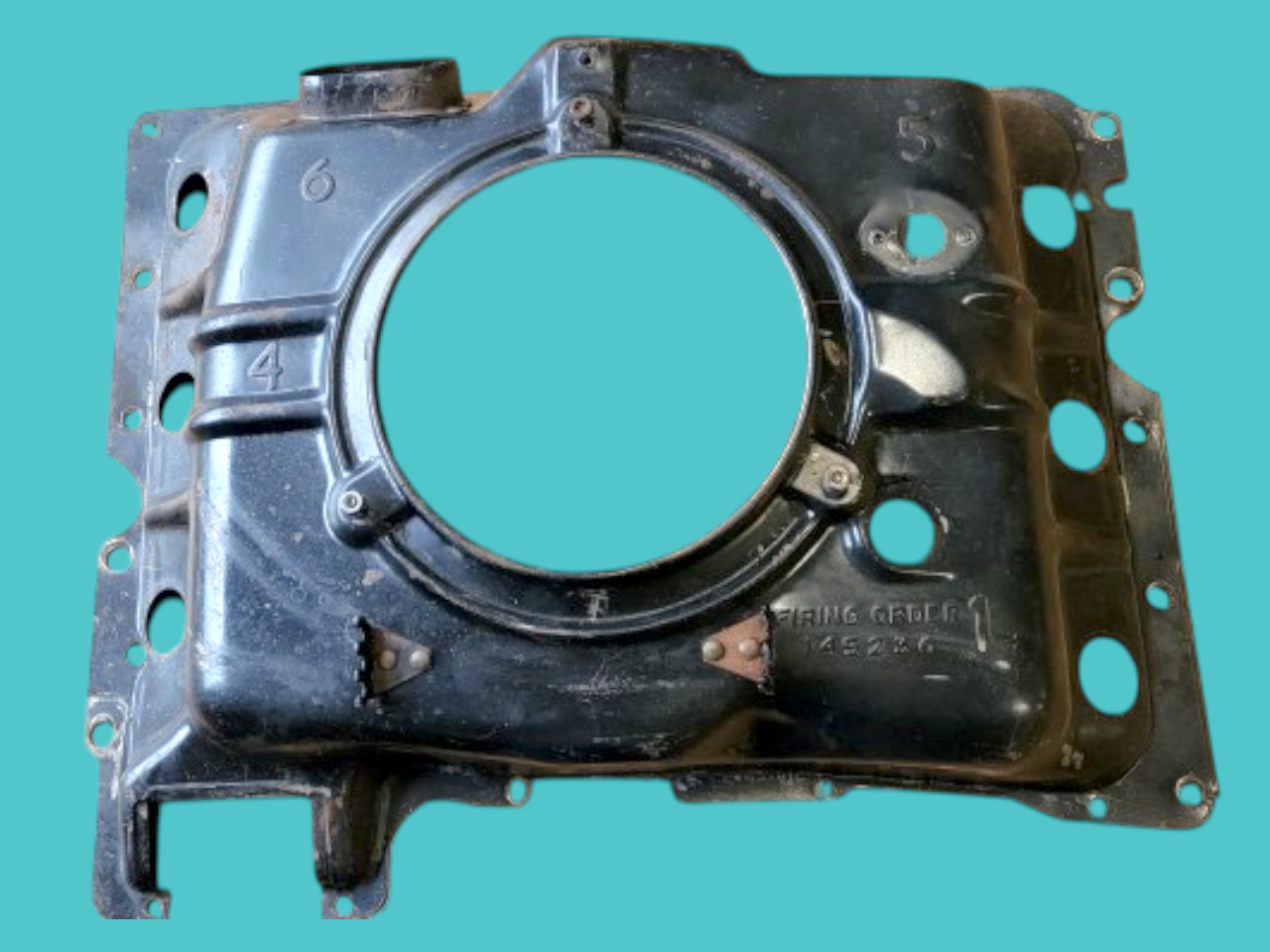
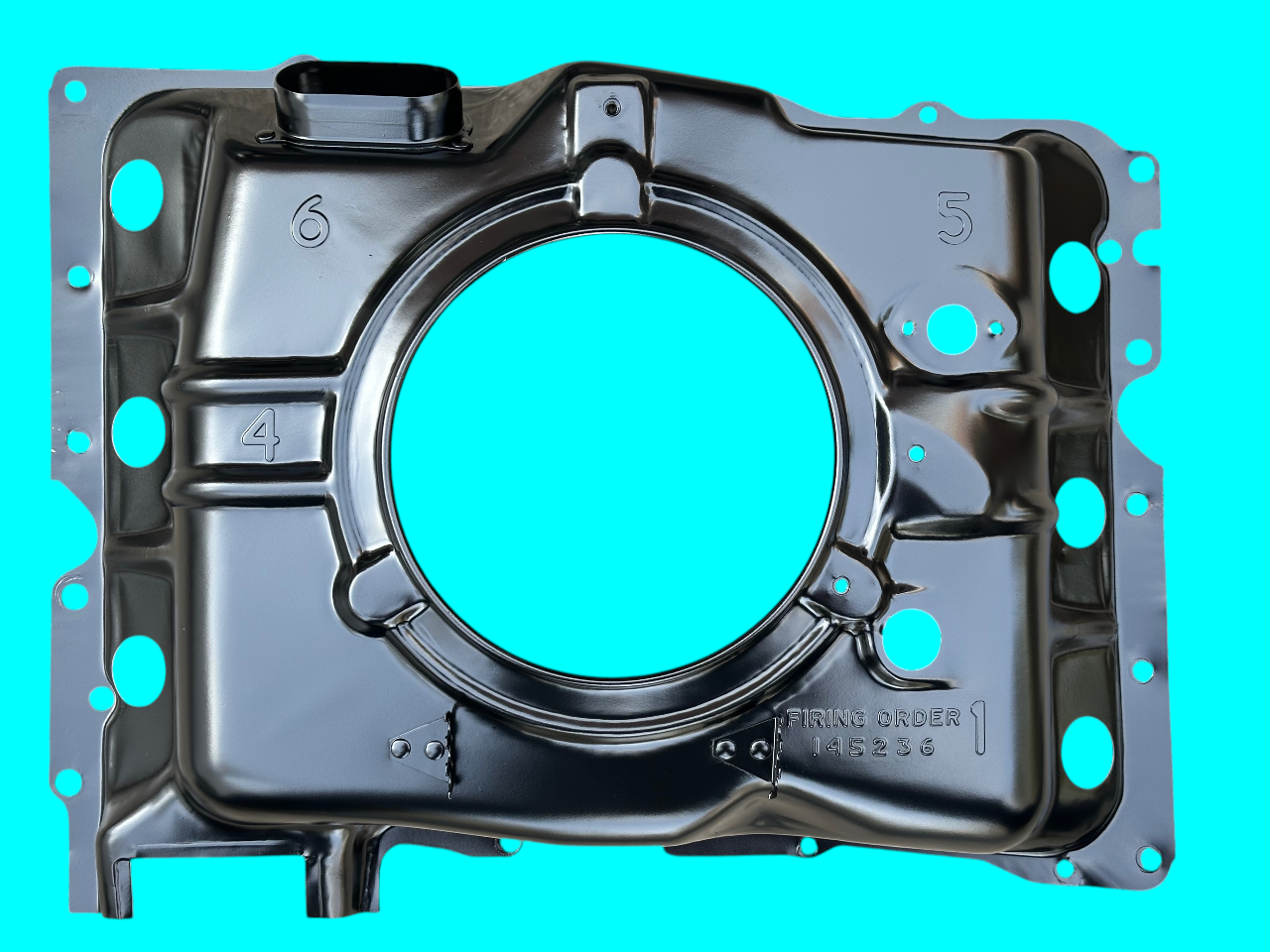
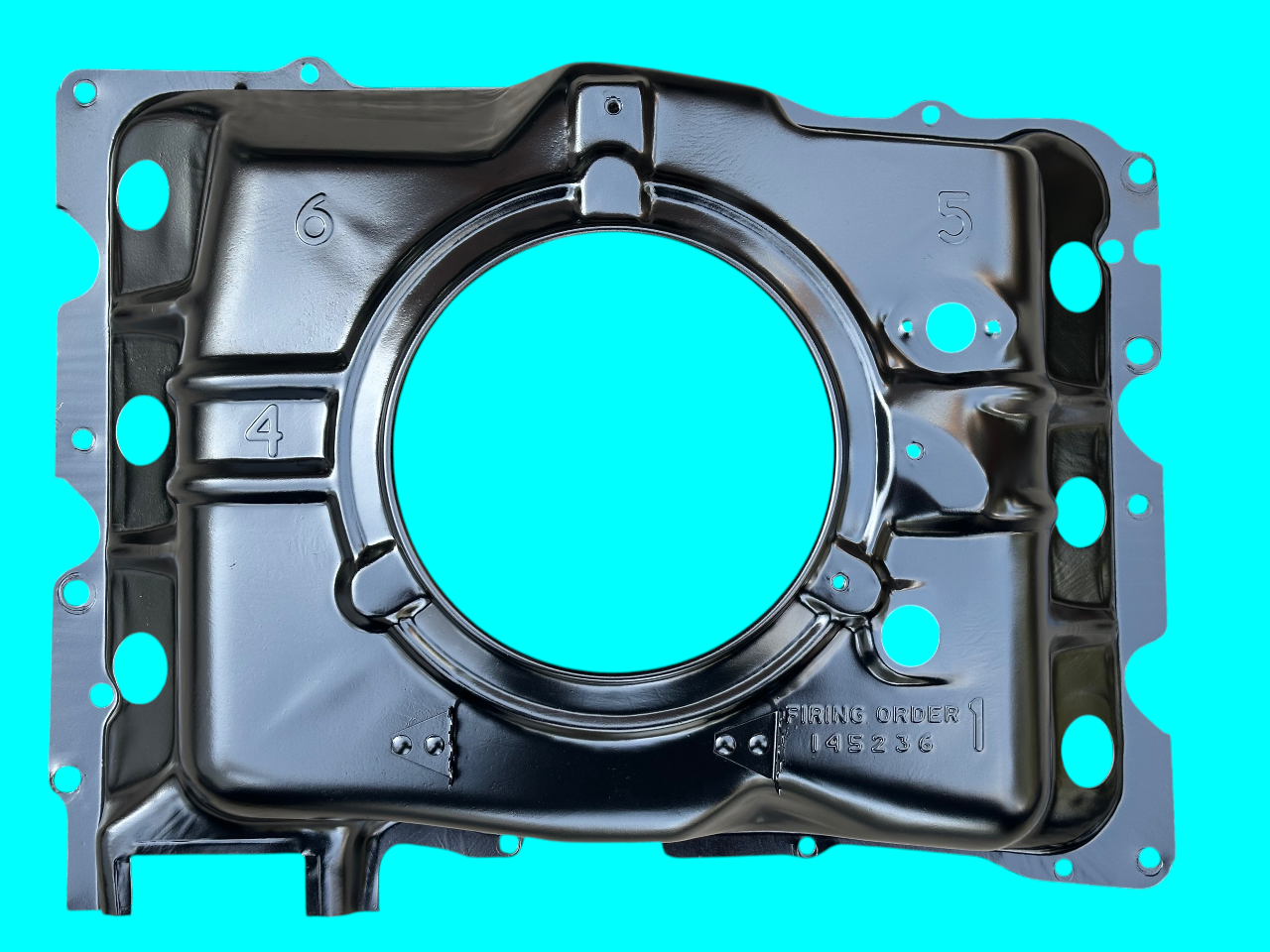
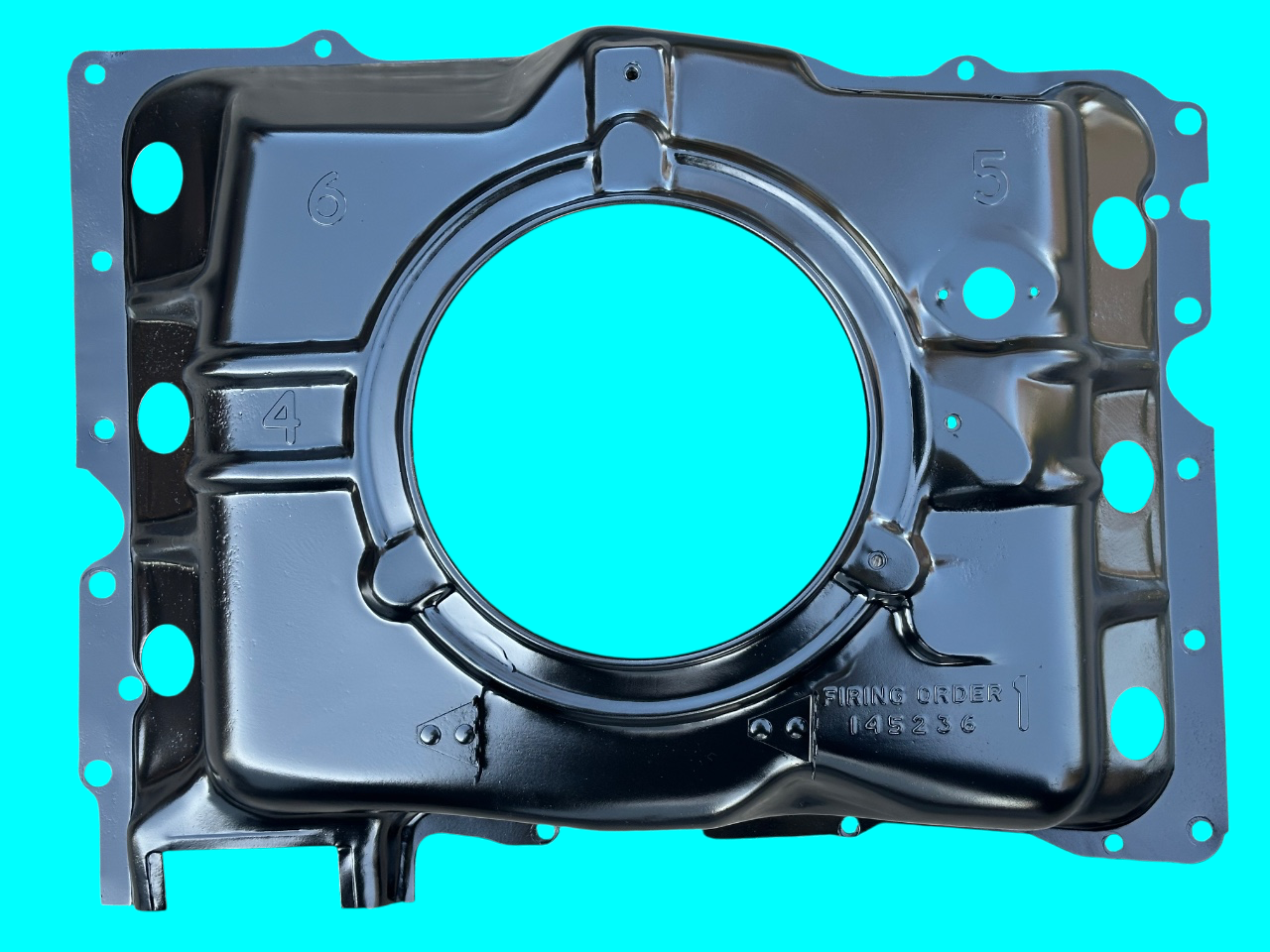
There were several new features for ’65:
- Carburetor notches were altered from the earlier triangular shape to a smooth curved shape, presumably to make it easier to install or remove the shrouds, as the earlier shape tended to jam up against the cylinder head carburetor bosses. Carried forward for all later shrouds.
- 3 Mounting studs around the blower intake – RPO K46 (“Desert Air”) only.
- Two carburetor notches per side – 140 HP engines only.
- Angled left front panel. Carried forward for all later shrouds. (This change was made to permit relocation of the fresh air heater hose to the left side.)
- Heater fresh air outlet on left side- Turbo, AC, and K46 cars only while all others continued to place the hose on the right side (see additional discussion below).
Concerning the Part Numbers
Part numbers for each of these shrouds are present in the ’65 assembly manual and P&A catalogs. It’s curious that the “late” 1964 FC shroud and the ’65 FC shroud have the same part number (3851842) in the assembly manuals and P&A catalogs. The ’65 shroud has the angled left-front panel which would not be present on the late ’64 shroud, so we believe that both versions of these FC shrouds shared the same part number.
These features represent five shrouds in 1965:

1965-66 Transitional Shrouds
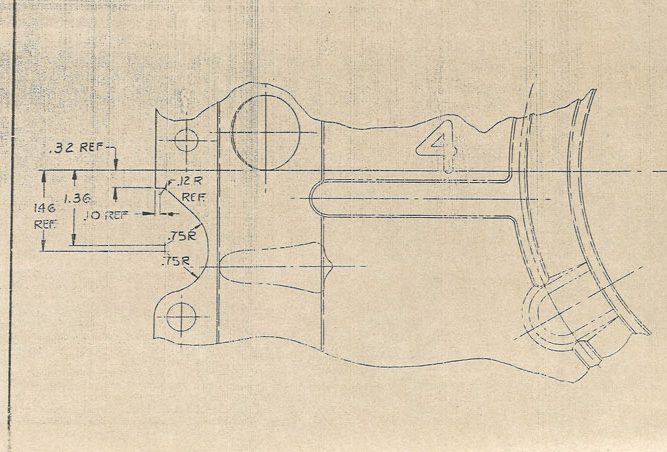
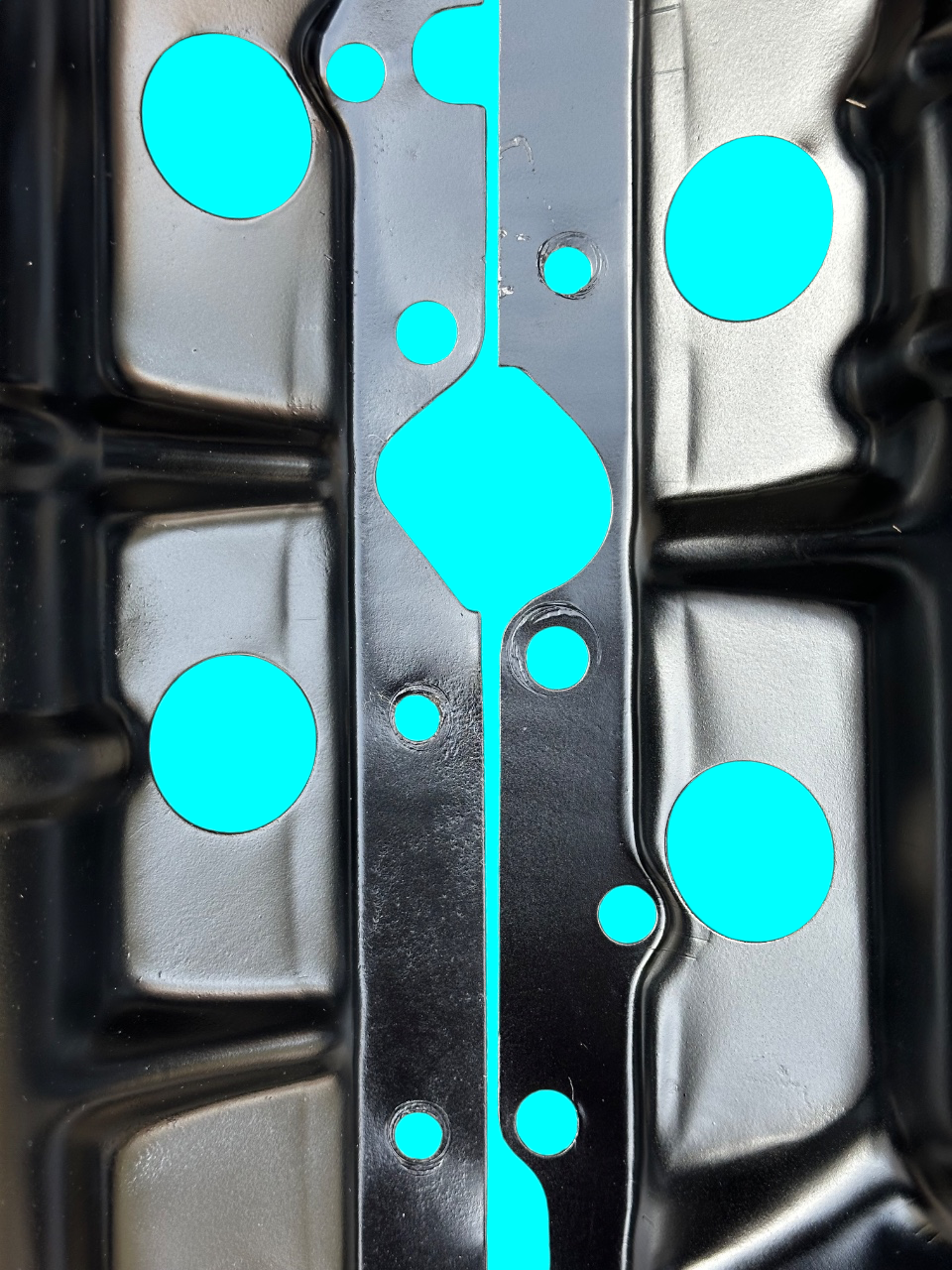
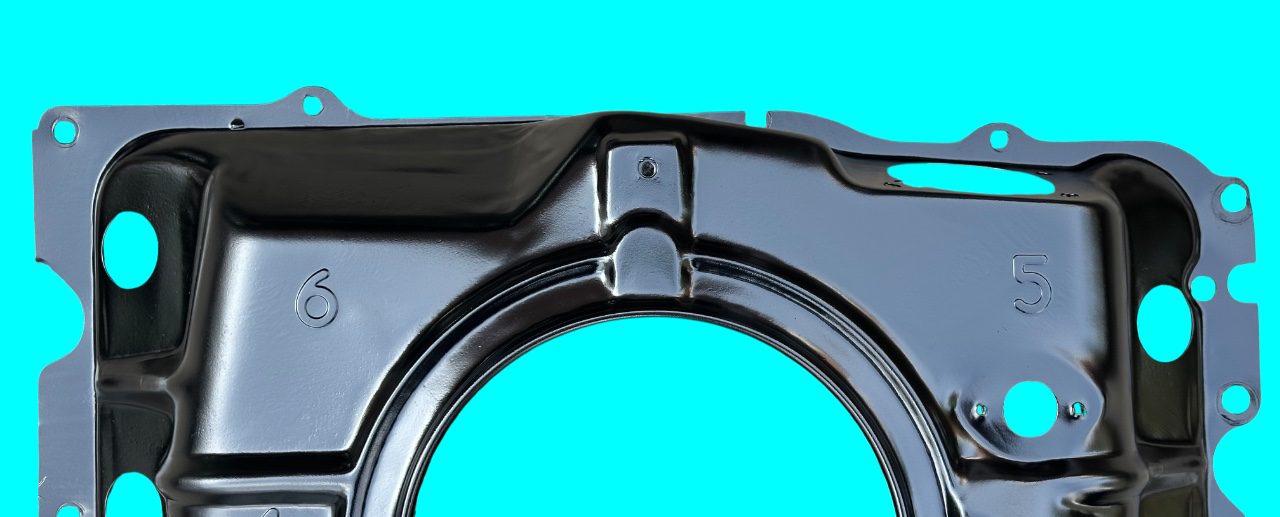
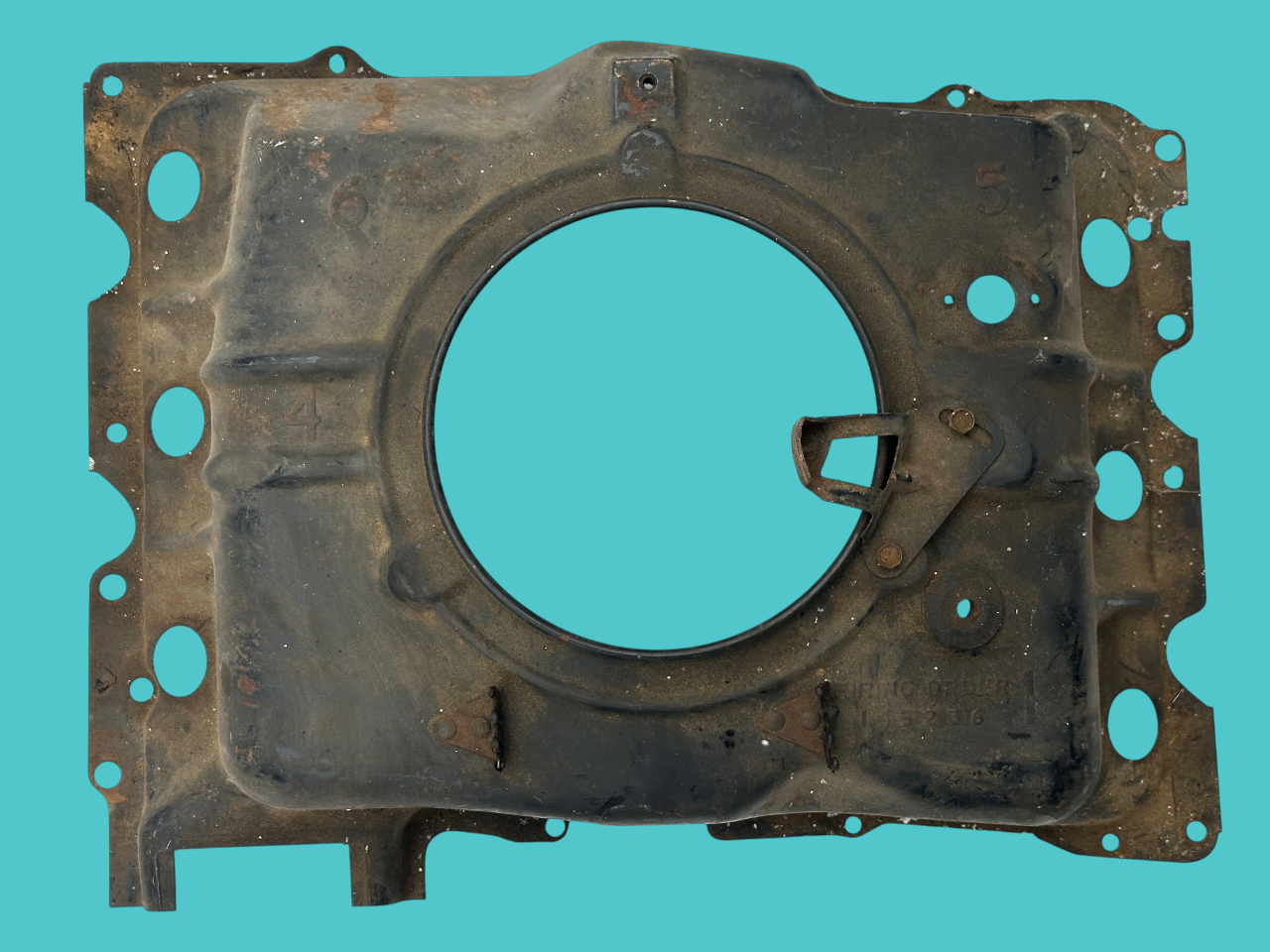
We found these two shrouds that have 1965 cylinder bolt holes but 1966 flattened rib. They were probably stamped late in the 1965 run but holes were cut to fit the existing 1965 heads.
1966
New features in 1966 are related to Air Conditioning and to California Emission Control requirements.
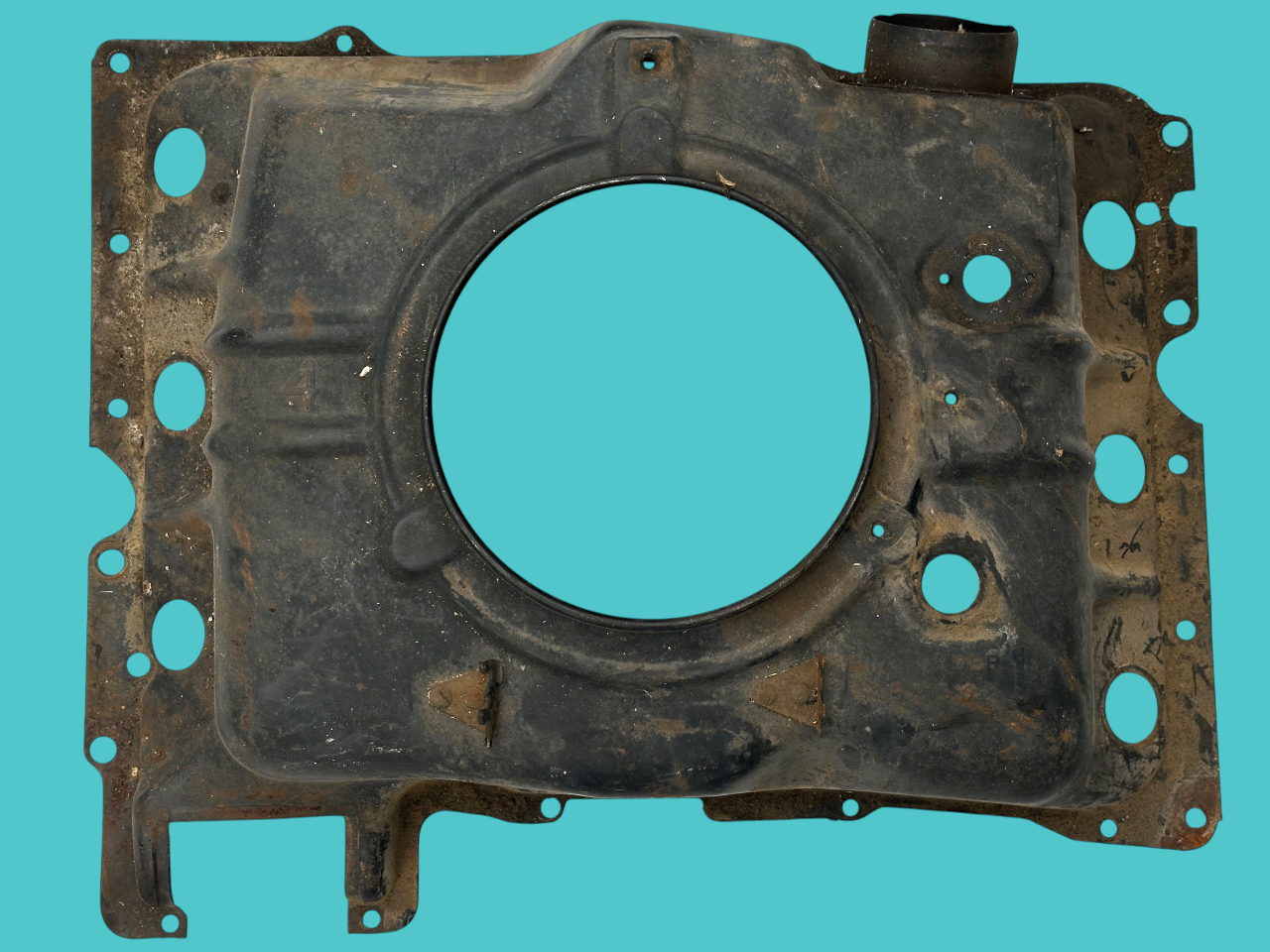
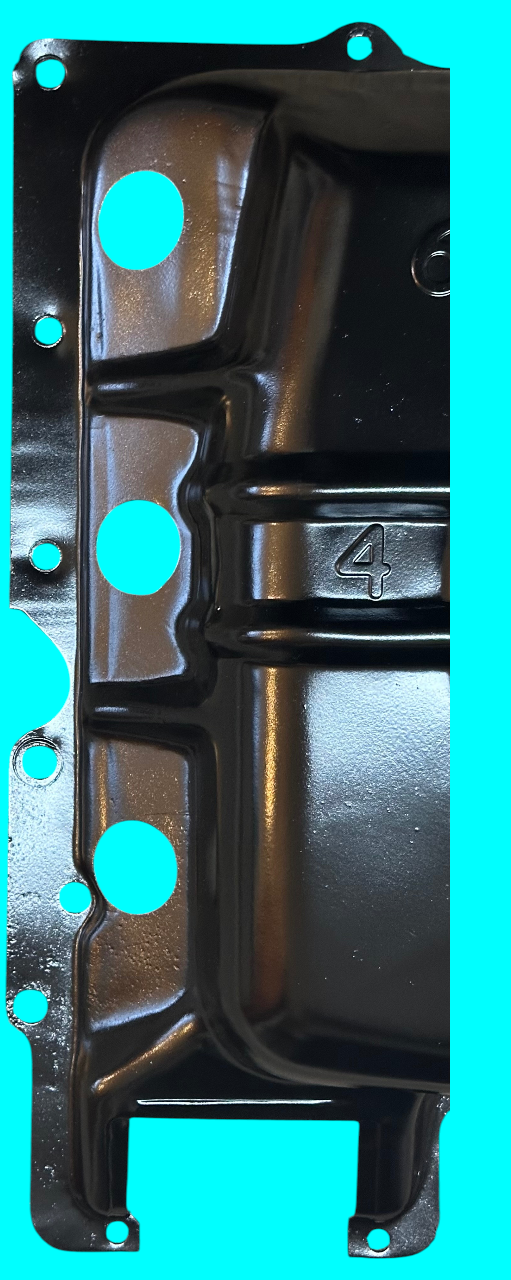
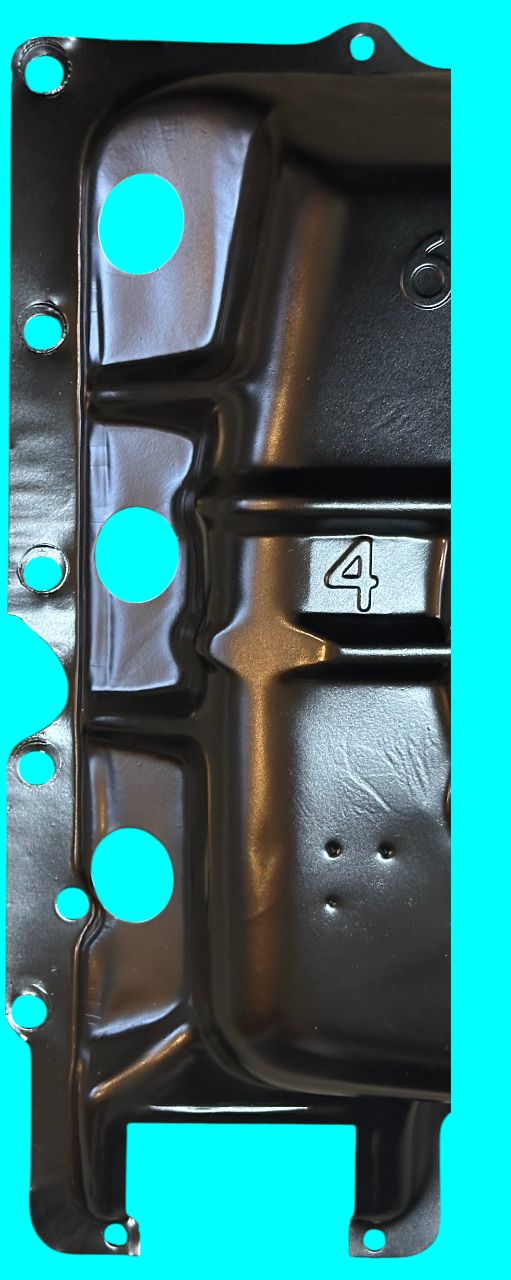
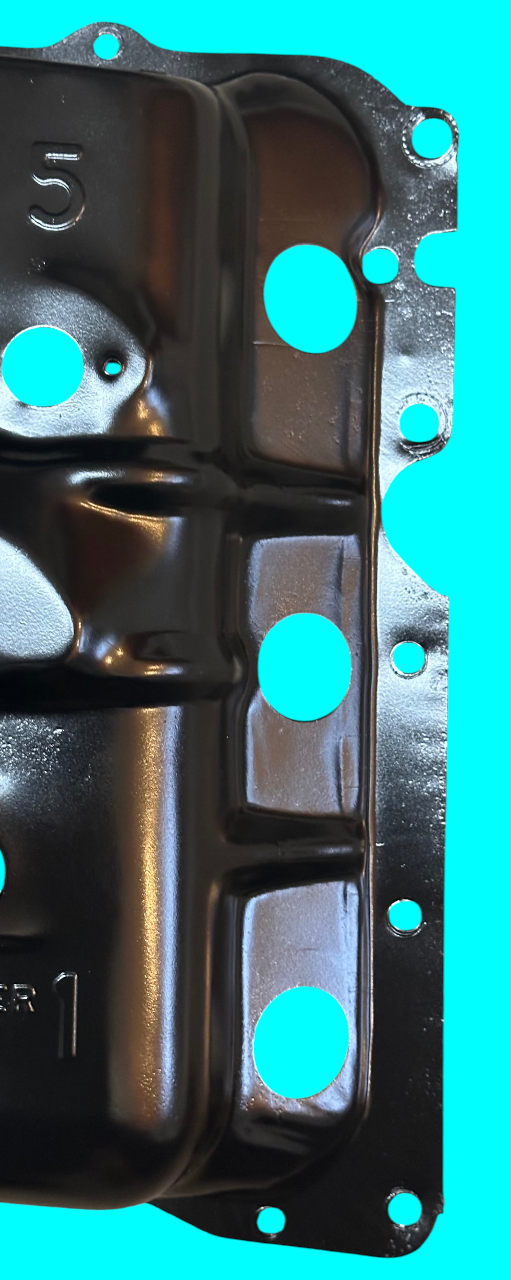
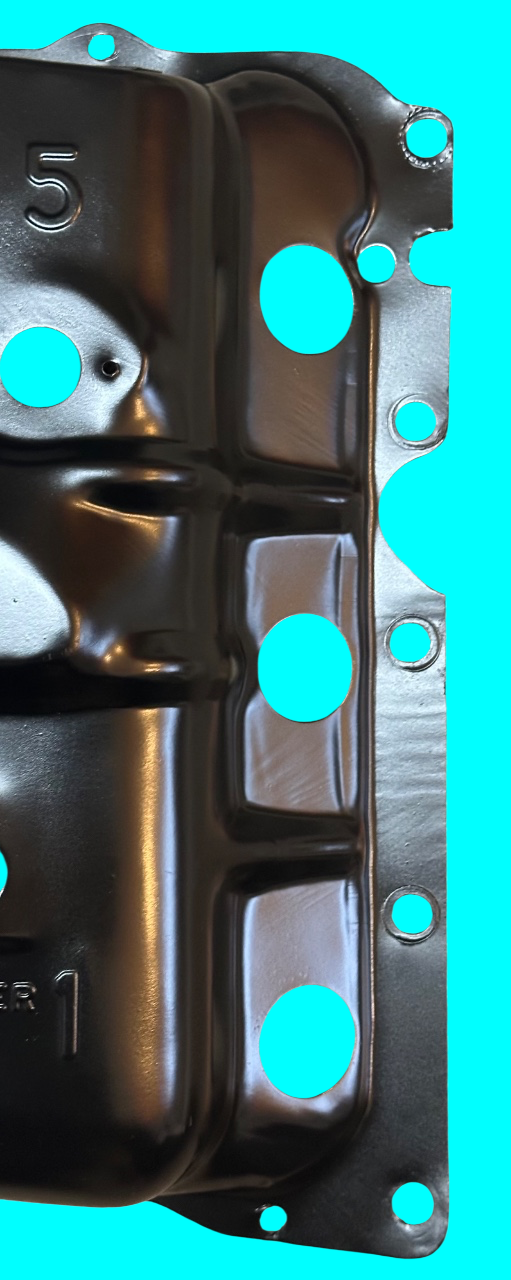
- All side bolt holes increased to accommodate 3/8″ bolts – carried forward to all later shrouds. Prior to 1966, all Cylinder heads had a mixture of 1/4″ and 3/8″ holes for attaching the lateral edges of the top shrouds as 2 larger bolt bosses (and bolts) were needed to secure the generator at the rear of the left bank. In 1966, the compressor mount was redesigned to permit the the ability to add AC to 140 engines. This new mount raised the compressor and moved it further outboard, putting more stress on the cylinder heard bolts. Thus, beginning in 1966, all bolt bosses were beefed up to permit 3/8″ bolts in all locations. The new, larger middle hole does not line up perfectly with the earlier, smaller hole.
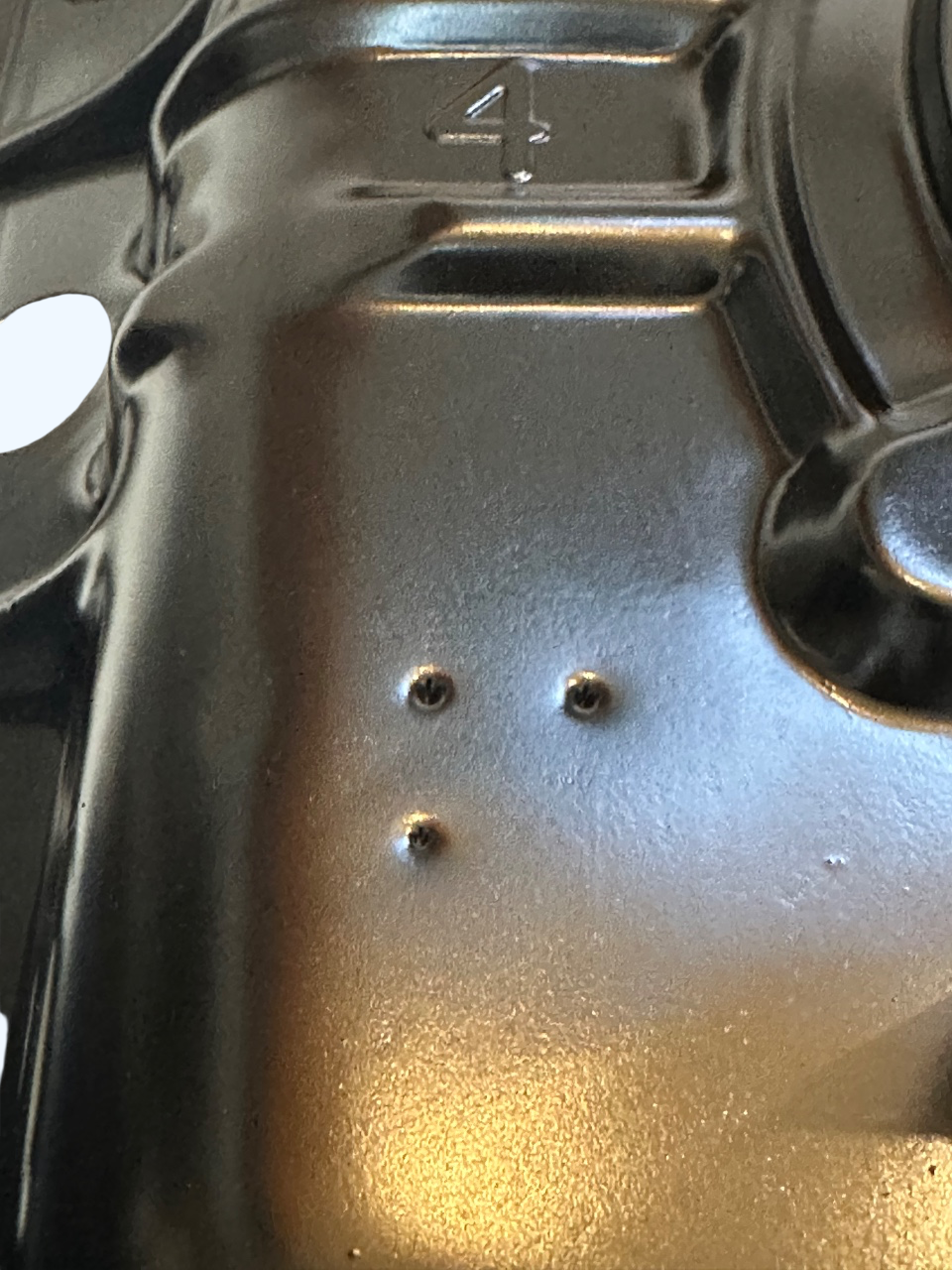
- Flattening of the left-rear rib and stamping of 3 dimples on the left rear corner and are carried forward to all later shrouds. On AC shrouds the dimples would be drilled out for installation of sheet metal screws to attach the new all-electric Idle Speed-Up Control.
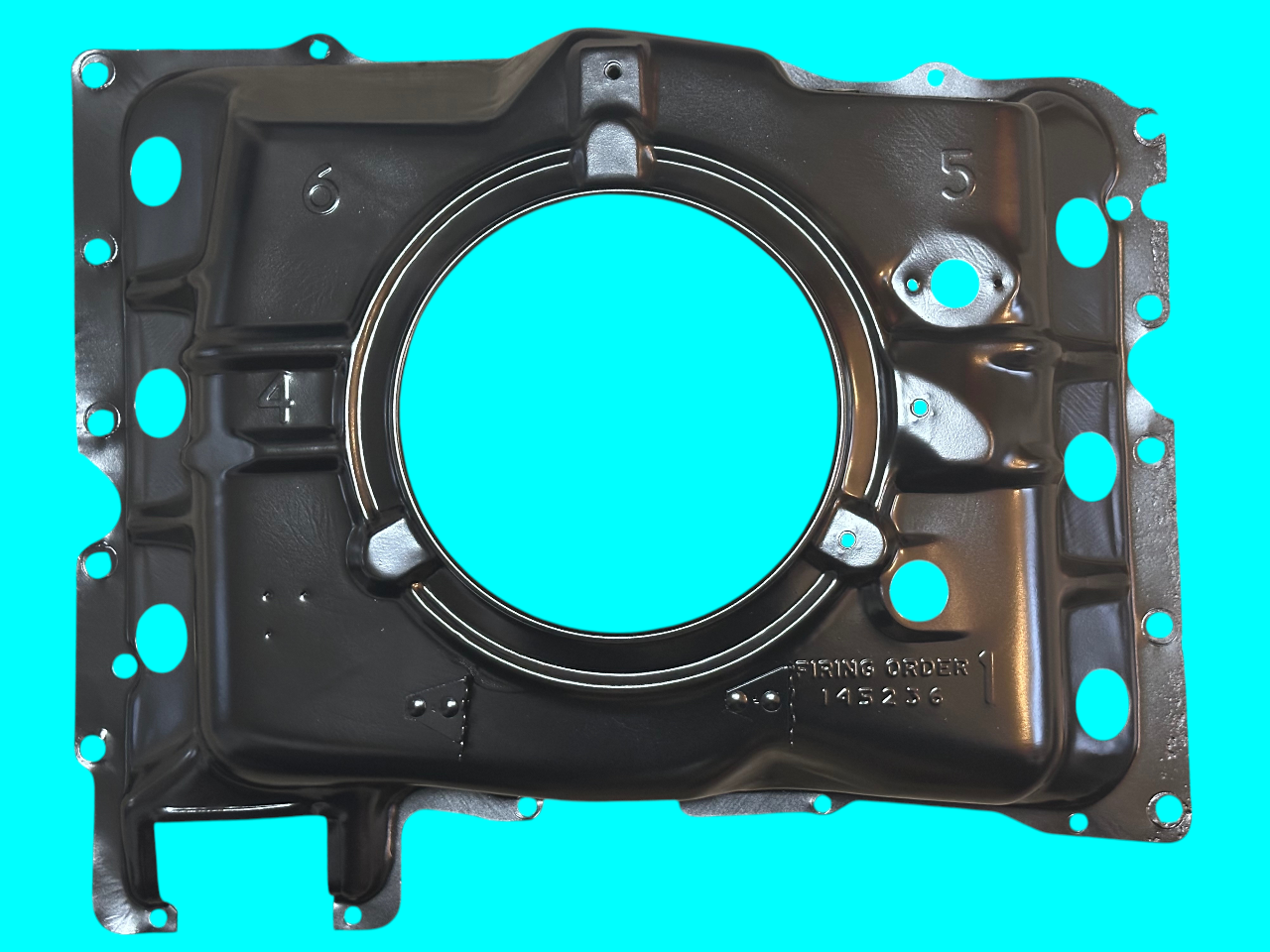
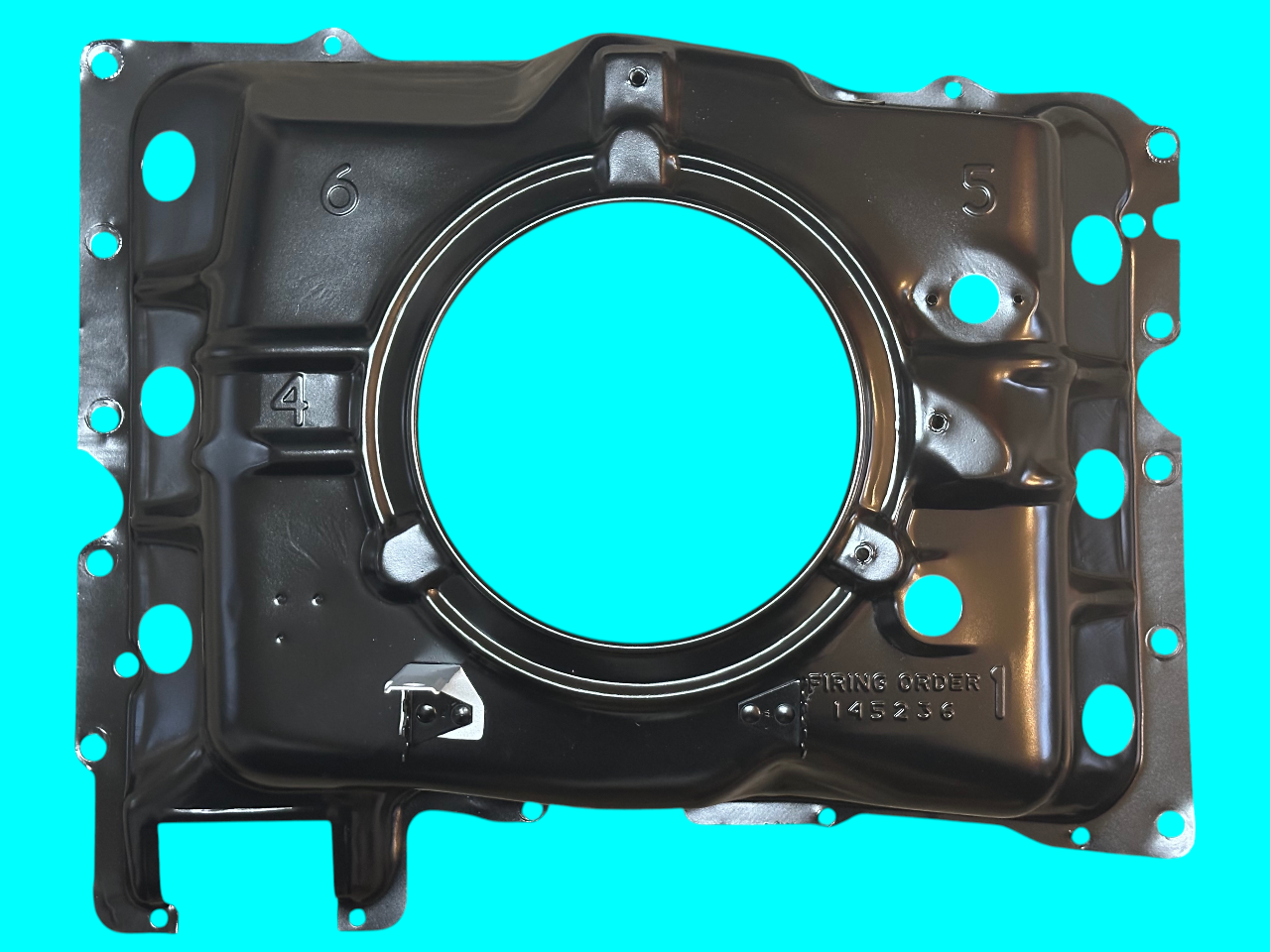
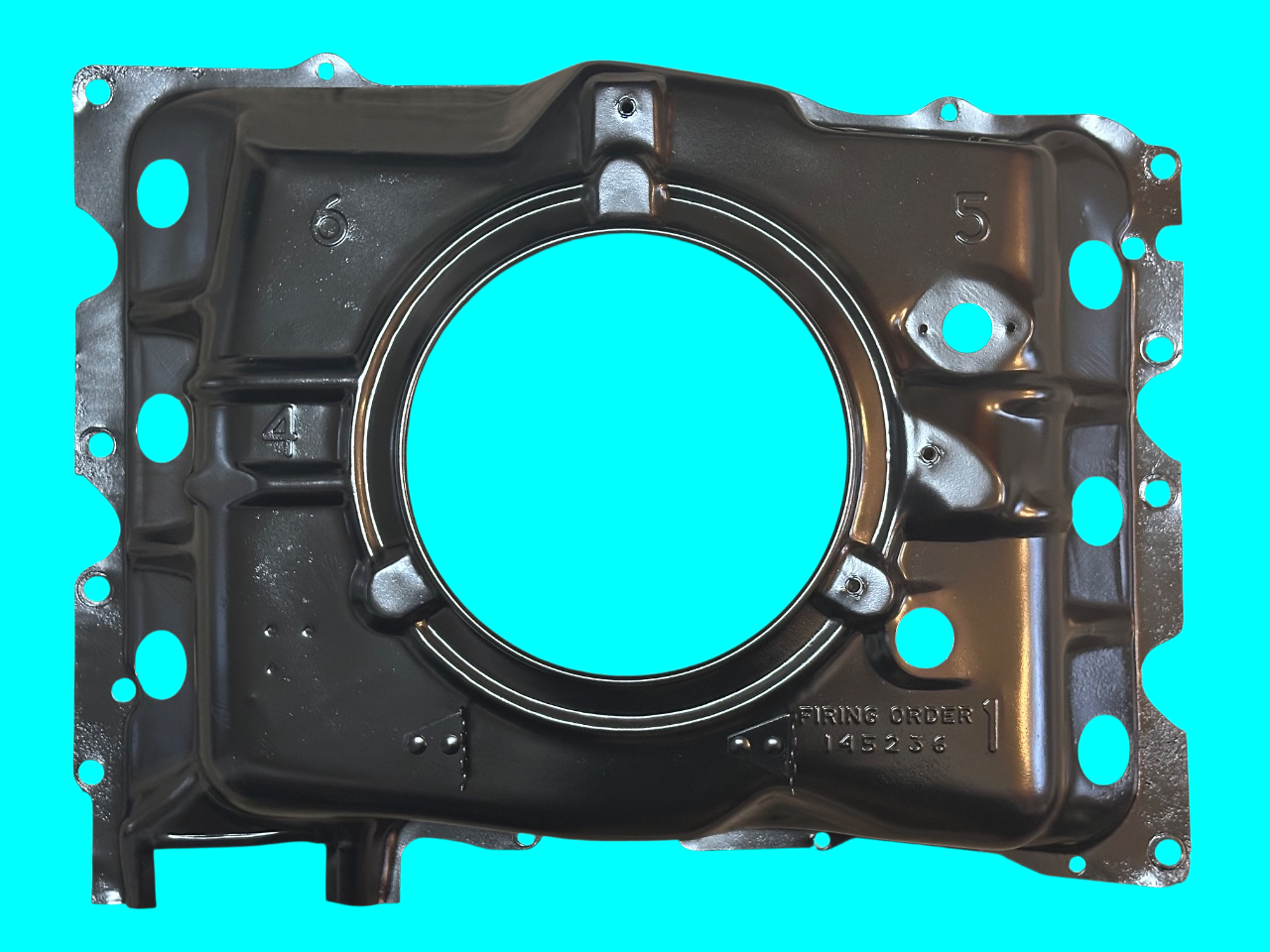
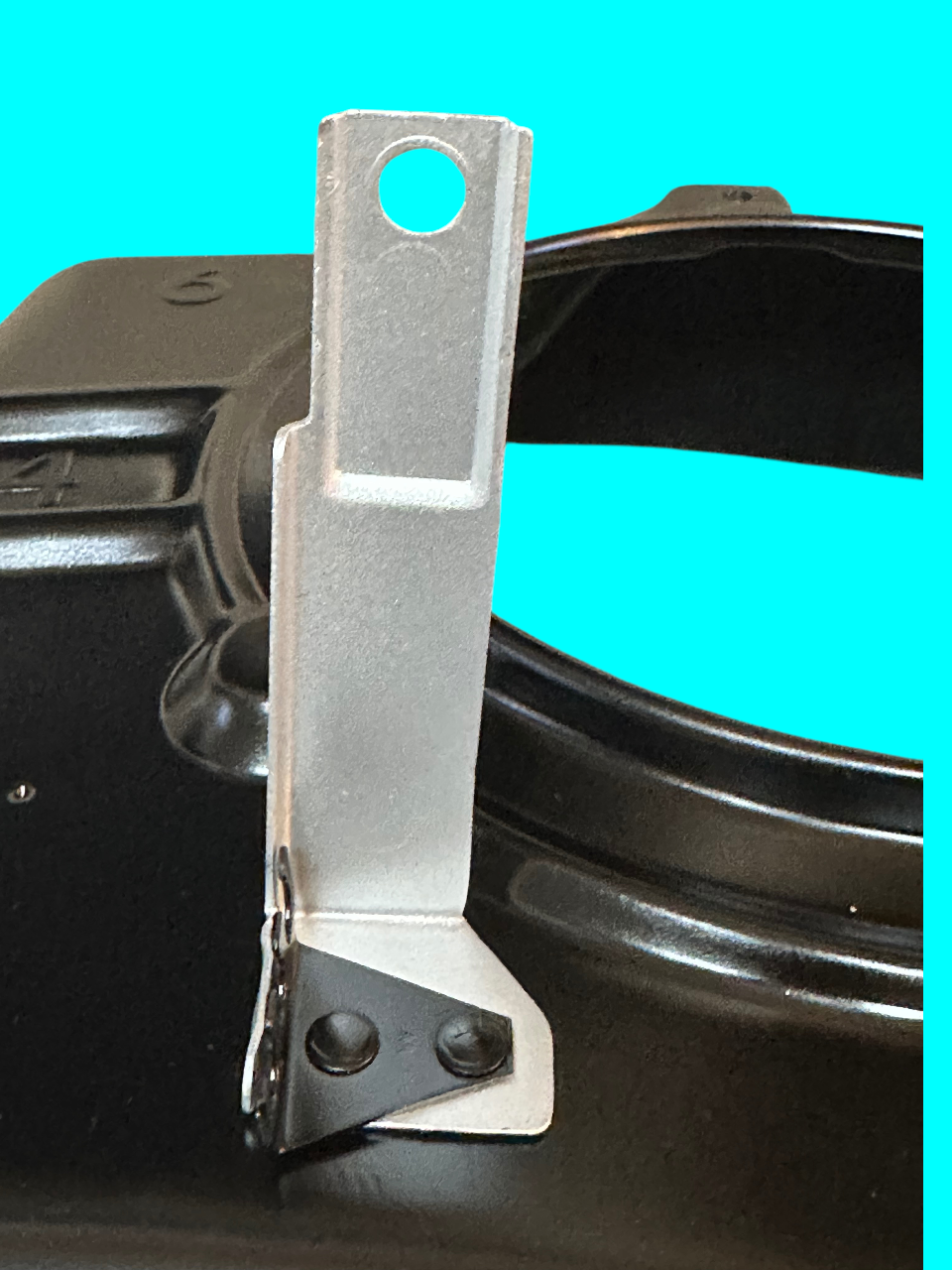
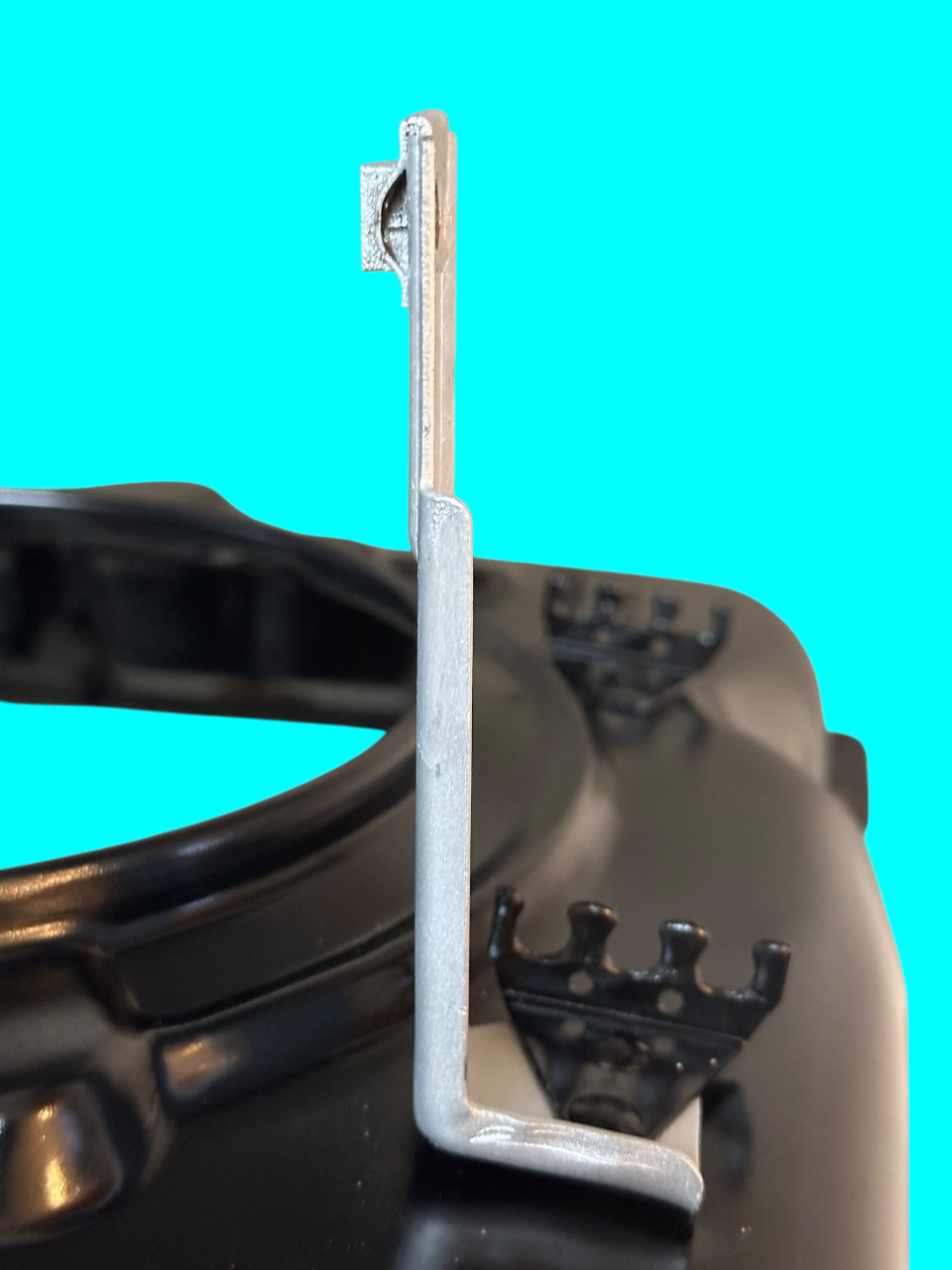
- (California-only) A.I.R. pipe bracket riveted under left spark plug wire guide. Standard production cars (non-turbo, non-AC) sold n California were required to have A.I.R. (Smog pumps), which required addition of a pipe bracket to the left-rear corner of the shroud. This modification was made on the assembly line to standard 95/110HP (with 8-plate oil coolers) and 140HP shrouds (with 12 plate oil coolers).
Concerning the part numbers
The part numbers for the shrouds listed below are from the 1966 Assembly Manual and concurrent P&A Catalogs. Since the modification for A.I.R. was made to existing shrouds, new part numbers were not assigned. Turbo and AC shrouds continued to share the same part number (3878538), the only difference being that the three dimples were drilled on the AC shrouds.
These features represent 6 shrouds for 1966

1967
Corsa models were discontinued, as were turbocharged, 140 engines and the K46 (Desert Air) option. The 140 engine was returned in January of 1967 as COPO 9551, without the option for Air Conditioning, and a small number of these engines were produced. A.I.R. was mandated for ALL cars sold in California, with no exemptions. The A.I.R. System was revised on May 1, 1967.
The Assembly Manuals and Parts Catalogs show that shrouds for these engines were continued from 1966:
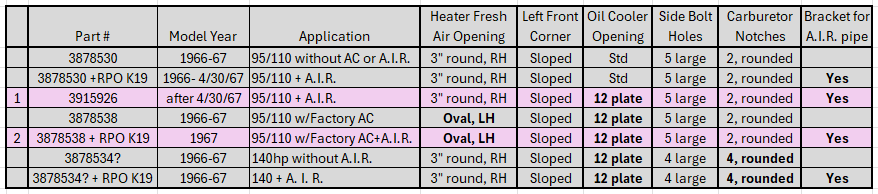
- 95/110 HP without AC (3878530)
- 95/110 HP + AC (3878538)
Determining which other shrouds were used is more challenging, as there is missing and confusing information in the literature. We would like to know which shrouds were used for 95/110HP engines + A.I.R. (with or without AC), and which shrouds were used for 140HP engines, with or without AIR.
Which shrouds were used for standard production California 95/110 + A.I.R. engines?
The ’67 assembly manual identifies 3878530 as the shroud for standard, 95/110 non-A.I.R. engines, so we believe that to be the shroud modified for 1st design A.I.R. cars sold in California. The July 1 and Nov 1, 1967 editions of P&A 34 list upper shroud part number 3915926 for “67 Corvair w/A.I.R. (exc. C.A.C.)”. We believe that this new shroud was introduced in late ’67 specifically for California 95/110 A.I.R. engines and this is supported by the ’68 Assembly Manual which has a revision note stating that 3915926 superseded 3878530.
How did 3915926 differ from 3878530?
We do not know for certain, but believe the change was to accommodate a 12 plate oil cooler. We have examples of ’66 A.I.R. shrouds with a RH side heater duct for an 8-plate oil cooler and P&A 34, October 1967, lists oil cooler side shields for both 1st and 2nd design “67 Corvair w/A.I.R. (exc. C.A.C.). Dimensions given indicate that 1st design systems used a narrower shield than 2nd design. This is supporting evidence that 1st design 95/110 + A.I.R. upper shroud (which we believe to be 3878530) was used with the 8 plate oil cooler, while 2nd design (which we believe to be 3915926) was used with the 12 plate cooler, both with the RH-side heater duct.
When did this change occur?
According to Technical Service Bulletin 67-T-37, the design of the A.I.R. system was changed during the 1967 model year. The 1st generation A.I.R. system was carried over from 1966 until May 1, 1967 when it was replaced by the 2nd generation system. This may have been when the shroud design was changed.
Which shroud was used for 95/110 engines with AC?
A.I.R. was mandated for ALL cars sold in California, so cars with or without AC would have required RPO K19 (A.I.R.). The ’66 and ’67 Assembly Manuals and P&A Catalogs give 3878538 as the shroud for 95/110 HP engines with AC. This shroud has an oval heater duct on the left-side and fits a 12-plate oil cooler. As stated above, Section K19 does not list a different upper shroud for the A.I.R. engines, so the AC + A.I.R. application would have also used 3878538 but with the required pipe support bracket riveted under the left-side spark plug guide on the assembly line.
Which shrouds were used with 1967 140 HP engines?
The ’67 Assembly manual contains only fragments (2 pages) of the 140 assembly section which do not include a shroud part number. We find no listing for 1967 140 upper shroud (without A.I.R. or AC) in the P&A Catalogs. While some P&A catalog listings refer to “1967 Corvair w/ A.I.R.” this is the 3915926 shroud mentioned above, which is almost certainly NOT a 140 shroud.
There is a sole listing for a ’67 140 HP shroud in the P&A catalogs – the October 1966 P&A catalog gives upper shroud part number 3904142 for “67 Corvair (Air Cond. w/Sp H/Per.)”. This is dubious for several reasons: the ’67 COPO 140 HP engine was not available at that time, it was not offered with AC, and there is no price listed for the shroud. It is questionable if this shroud ever went into production.
Thus, we believe it most likely the COPO 140 engines used the existing 3878534 1966 140 shroud.
From all of the above, we conclude that there are Two new shrouds this year:
- 3915926: 2nd design 95/110 AIR Shroud – now has 12 plate oil cooler.
- 95/110HP with BOTH Factory AC and AIR. Based on information in the Assembly Manual and Parts catalogs we can make an educated guess that this would be the same as the 1966 “Turbo/AC” shroud with the AIR Bracket added.
- All remaining 1967 shrouds are probably the same as their 1966 counterparts, although poor documentation prevents us from being certain.
About fresh air outlets in 1965-67 cars with Air Conditioning
There have been various discussions over the years about the placement of the heater hose for 1965-67 cars with Air Conditioning – whether it was always on the left (like turbos and K46) or on the right (like most other cars). As shown above, we conclude that, officially, all 1965-67 95/110 Factory AC cars used the shrouds with the left side oval heater duct, while shrouds for the 1966 140HP factory AC cars have the RH 3″ round heater duct.
That said, for a couple of reasons there could be versions of 1965-67 AC that do not follow this pattern, specifically:
- Dealer or Owner installed AC likely would have used the existing shroud with the RH heater duct.
- The Assembly line, dealer, or owner may have substituted or modified other shrouds to “make it work” (e.g. cutting extra carburetor notches on a 95/110 turbo/AC shroud to create a 140 shroud with LH heater duct or cutting oil cooler top to create a 95/110 AC shroud with RH heater duct).
1968-69
New Features for 1968 & ’69
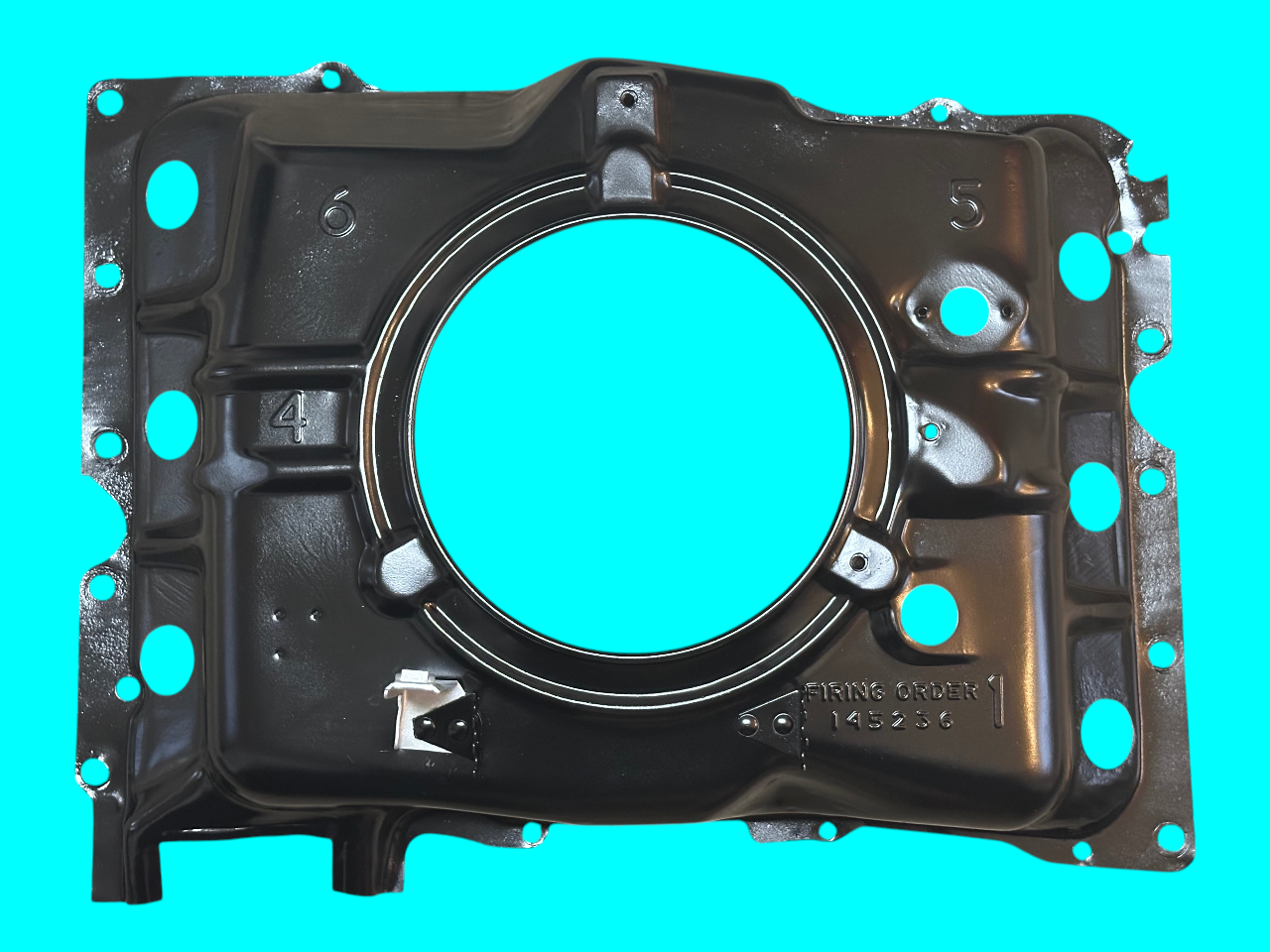
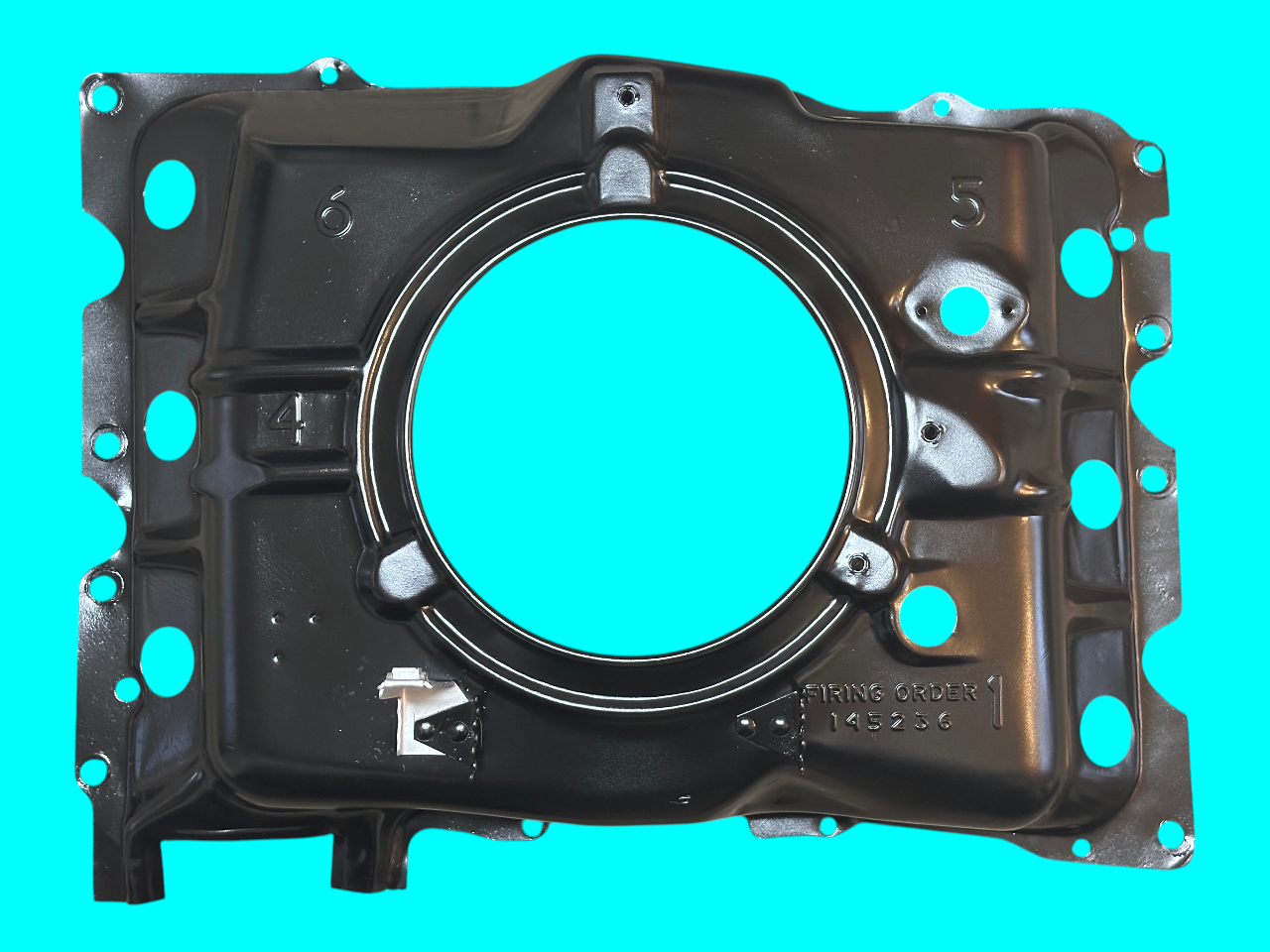
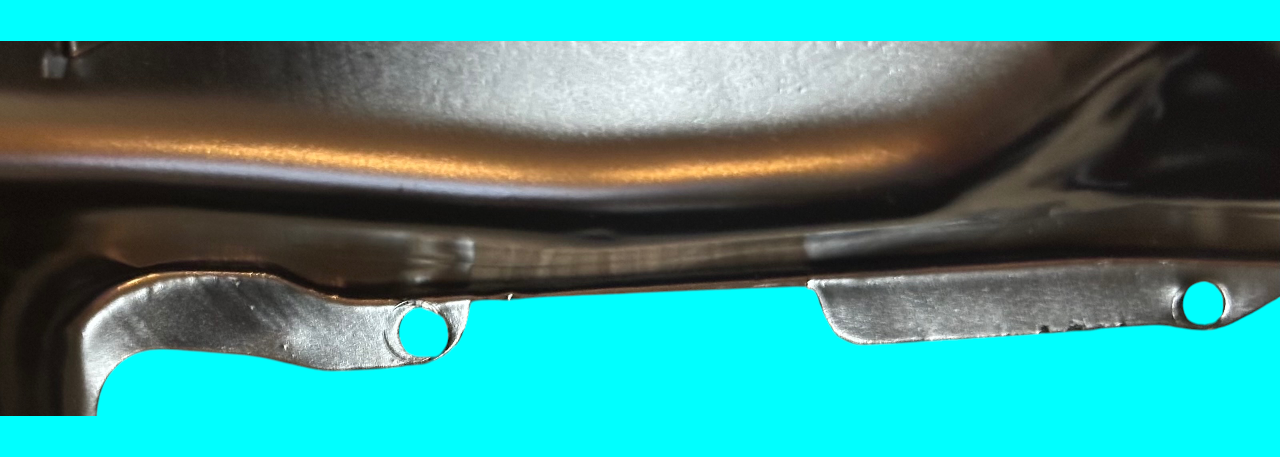
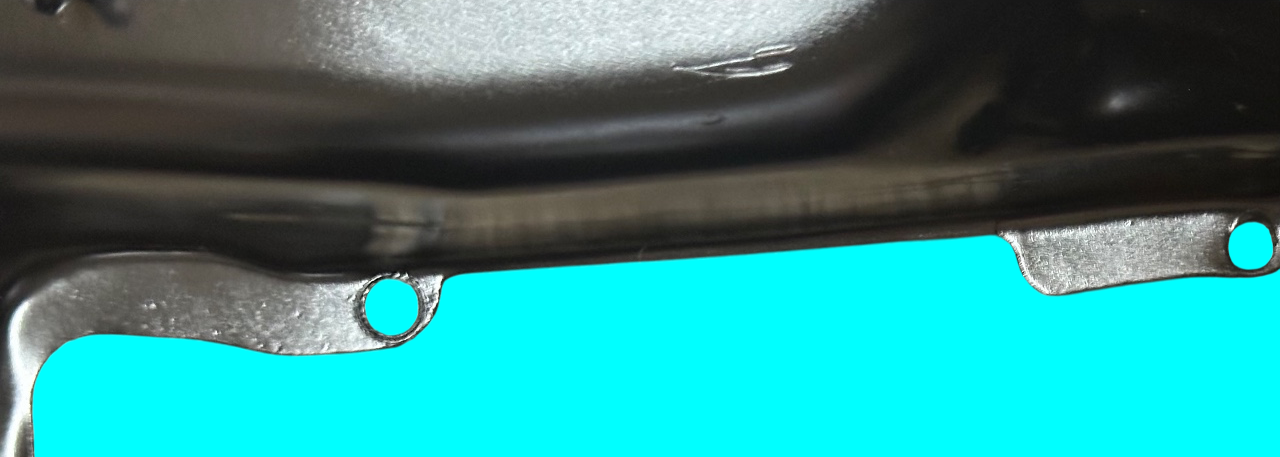
- The engine notch was widened. This is the indentation in the rear edge of the shroud that exposes the engine ID stamped on the block. This notch was widened to accommodate the engineID that now needed to include the vehicle VIN.
- A.I.R. was required on all engines, and air conditioning was discontinued.
Concerning the Part Numbers.
The 1968 Assembly Manual and P&A 34 Nov 1, 1967, list upper shroud number 3928982 for “68 Corvair w/Air Cond., but AC was never offered for 1968 (Assembly Manual page cancelled on 8-28-67). However, this number shows up again in later P&A catalogs as the replacement for 1965-66 Turbos and 1965-67 95/110 cars with AC. Unfortunately, the parts manuals do not describe the shroud, so we don’t know if it was an exact replacement for the earlier shroud or if it differed in some way. Logic suggests they wouldn’t have changed the part number without changing the part, although that doesn’t always hold true. So, it may or may not represent a different shroud.
There were two new shrouds for 1968 and ’69

At this point we have documented 37 “official” variations for the engine top shroud and possibly 38 if that last AC shroud is truly different. We have also documented at least 2 transitional shrouds and likely there are others (There are posts online claiming there are some ’61 shrouds that have the right choke hole carried over from the 1960 shroud). It is also possible that some listed versions do not actually exist (California FCs with turbo notch is currently unconfirmed). Further research is needed and it would be nice to find existing examples of any such shrouds to confirm.
The chart below is a summary of all 37 shrouds, arranged in chronological order within major groups:

Concerning superseded and replacement shrouds
One might wonder how much demand there was for a new top shroud; they didn’t “wear out” and rarely were damaged. Even if a replacement (XX) engine was ordered, shrouds from the original engine could be used. But, nonetheless, the GM parts division needed to have them available.
When looking for original part numbers, such as for top shrouds, it is best to start looking in P&A catalogs dated for the same year at the part’s introduction. When original shrouds were discontinued, the P&A catalogs would generally list a different shroud as the substitute. Undoubtedly this avoided having to maintain stock for a large number of similar parts.
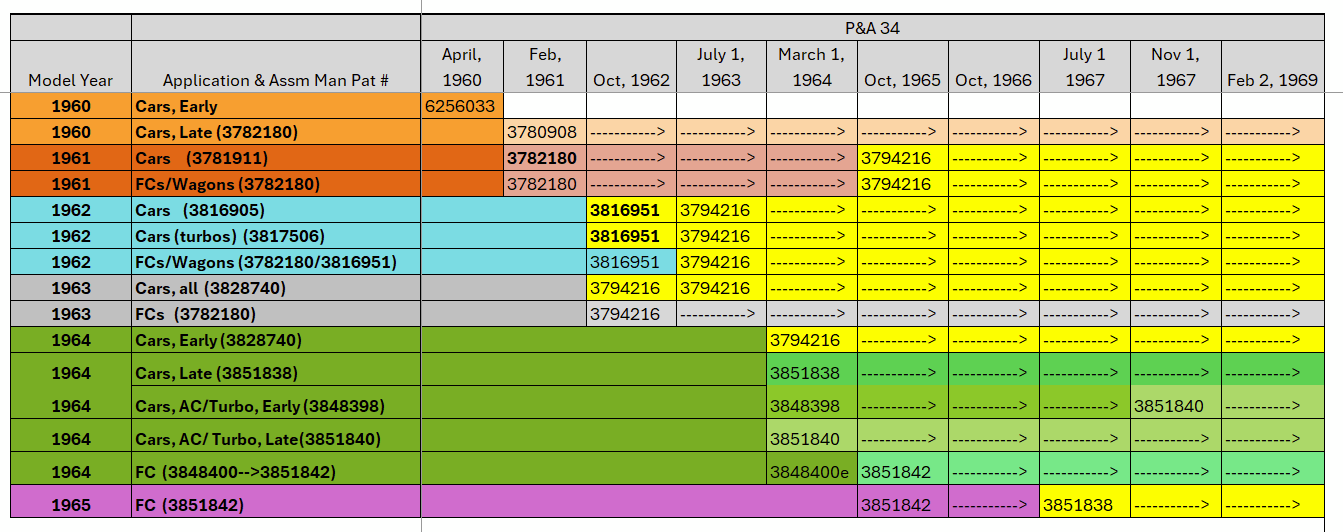
Most commonly, when an earlier shroud was superseded by a later shroud, the P&A catalogs eventually listed only the later shroud. We consider a “replacement shroud” as one that was originally intended for a different application and which required modification to serve the new usage. We saw replacement shrouds only being listed from 1961-’65, and the three shrouds used as replacements were 3794216, 3816951, and 3851838, highlighted in yellow in the table below.
The FC/wagon shroud 3816951 is only listed in the P&A catalogs briefly as the replacement shroud for the 1962 cars. The Canadian parts catalog (621A, Jun ’62) has notes stating:
- When used on cars engines: “. . . it will be necessary to cut out a 1-1/8 IN dia hole for Oil level gauge“
- when used on turbo engines: “Add 3/4 Slot for Turbo Charger Attachment“.
The FC shroud 3794216 was eventually used as the replacement for all the car shrouds from 1961-’63 and the early ’64 standard car shroud. There are similar P&A notes for this shroud, although sometimes stating these changes “may be necessary”. Some of the P&A catalogs also indicate for this shroud:
- When used for ’61 and ’62 engines: “When using on jobs not equipped with Crankcase Ventilation it is necessary to plug ventilation pipe hole“.
This showed that this shroud has the PCV equipment as expected for a ’63 vehicle. The other replacement shroud was 3851838, which was a car shroud used to replace the ’65 FC shroud. Accordingly, the instructions were:
- “When using in place of 3851842, cut off approx 1 1/16 at the oil cooler area and plug oil gauge hole with 4804861“
In the years after Corvair production ended, shroud replacement became more rampant as original shrouds were discontinued.
References and Resources
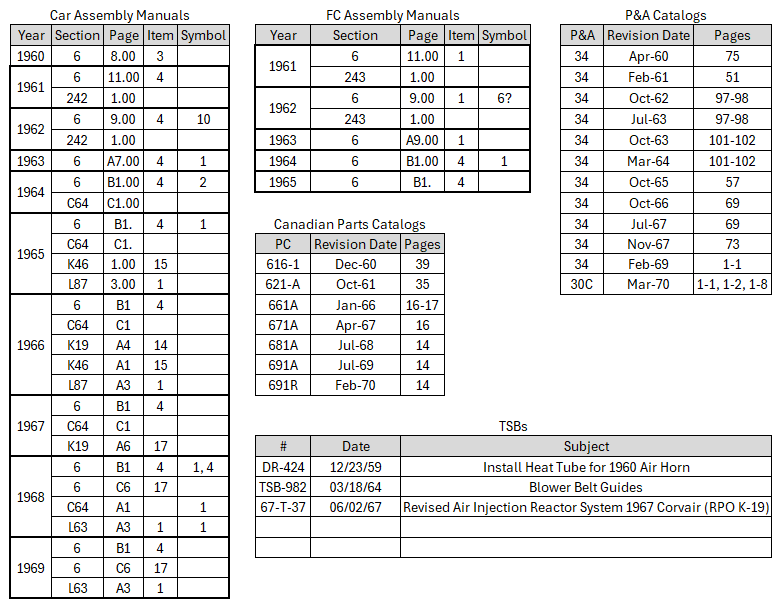
Research for this article included a review of 15 Corvair Assembly Manuals, 18 vintage Parts Catalogs, prior and current posts on various Corvair online forums, on-site inspection of shrouds at Corvair Ranch, and discussions with other Corvair experts. The tables below cite the specific historic written sources.